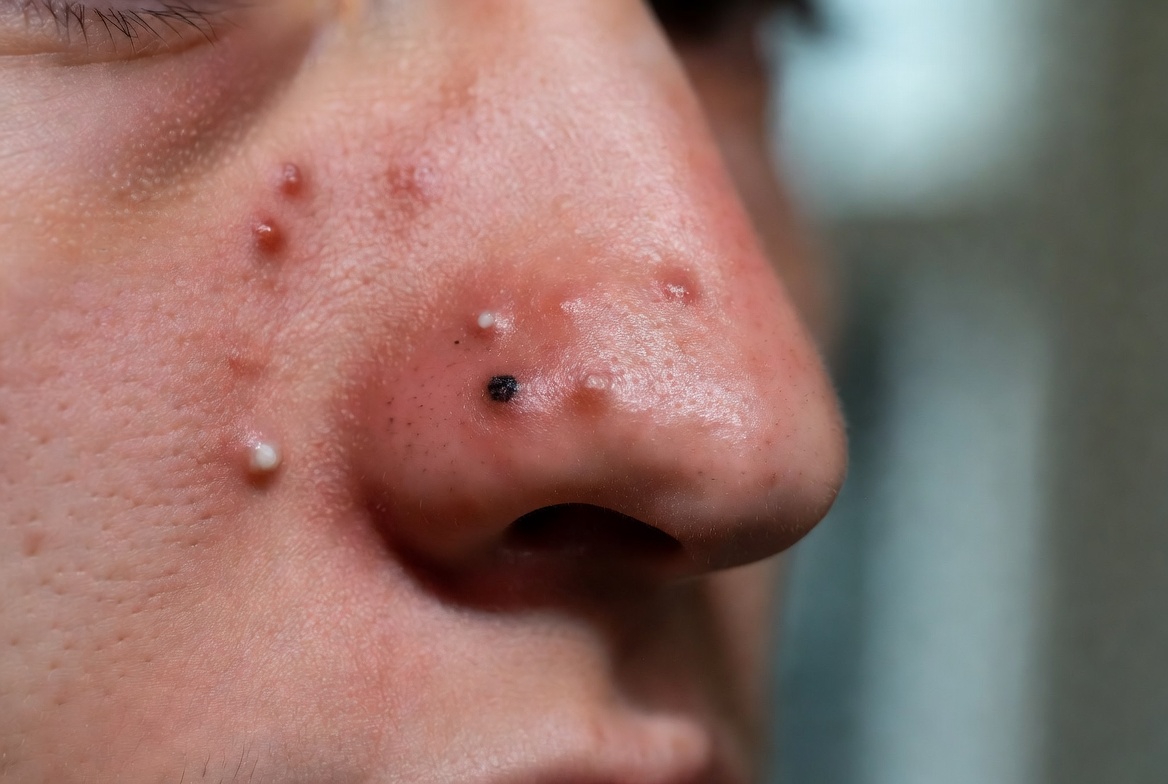
Acne can appear almost anywhere on the face, but the nose seems to be a particularly frequent hotspot. If you’ve ever wondered why breakouts love this area
and whether they’re trying to tell you something
about your health—you’re not alone. Let’s break down the science, myths, and practical solutions.
Why the Nose Is Prone to Acne
1. High Oil Production
The nose sits in the center of the T-zone (forehead, nose, chin), which naturally produces more oil (sebum) than other parts of the face. This excess oil can easily mix with dead skin cells and clog pores—creating the perfect environment for acne.
2. Larger Pores
The pores on your nose tend to be larger and more visible. Bigger pores mean:
- More oil can accumulate
- More debris can get trapped
- Greater chance of blackheads and pimples forming
3. Frequent Touching
People often touch their noses without realizing it—adjusting glasses, scratching, or resting their face. This transfers bacteria and dirt from your hands directly onto your skin.
4. Sweat and Environment
The nose is exposed and often collects:
- Sweat
- Pollution
- Makeup residue
All of these can contribute to clogged pores if not properly cleaned.
Different Types of Nose Acne
Not all acne on the nose is the same. Understanding the type helps you treat it effectively:
- Blackheads: Open clogged pores filled with oxidized oil
- Whiteheads: Closed clogged pores under the skin
- Papules/Pustules: Red, inflamed pimples (sometimes with pus)
- Cystic acne: Deep, painful lumps under the skin
What Nose Acne Really Means (Myths vs Reality)
The “Face Mapping” Myth
You may have heard that acne on the nose is linked to specific organs (like the heart or liver). This idea comes from traditional face mapping, but modern dermatology doesn’t support it scientifically.
What It Actually Indicates
Instead of internal organ issues, acne on the nose usually reflects:
- Excess oil production
- Clogged pores
- Bacterial buildup
- Hormonal fluctuations
- Poor skincare habits
However, in some cases, frequent breakouts could be linked to:
- Stress
- Diet (high sugar or dairy for some people)
- Hormonal imbalance
Common Triggers
- Heavy or comedogenic (pore-clogging) skincare products
- Incomplete makeup removal
- Oily skin type
- Humid climates
- Dirty phone screens or pillowcases
- Overwashing (which can increase oil production)
How to Treat and Prevent Nose Acne
1. Cleanse Gently (But Consistently)
Wash your face twice daily with a gentle cleanser. Avoid harsh scrubbing—it can irritate the skin and worsen acne.
2. Use Targeted Ingredients
Look for products containing:
- Salicylic acid – clears pores
- Benzoyl peroxide – kills acne-causing bacteria
- Niacinamide – reduces oil and inflammation
3. Exfoliate (But Don’t Overdo It)
Chemical exfoliants (like BHAs) work better than physical scrubs for the nose area.
4. Avoid Touching Your Face
Keep your hands off your nose as much as possible to reduce bacteria transfer.
5. Keep Things Clean
- Wash pillowcases regularly
- Clean glasses and phone screens
- Replace makeup tools frequently
6. Use Non-Comedogenic Products
Choose skincare and makeup labeled “non-comedogenic” to avoid clogging pores.
When to See a Dermatologist
If your nose acne is:
- Painful or cystic
- Persistent despite treatment
- Leaving scars
…it’s worth consulting a professional. Prescription treatments or tailored skincare may be needed.
Final Thoughts
Acne on the nose is common—not because it signals something mysterious about your body, but because it’s an oil-rich, high-exposure area. While myths like face mapping can be interesting, the real causes are much more straightforward: oil, pores, bacteria, and habits.
With consistent care and the right products, nose acne is very manageable—and often preventable.