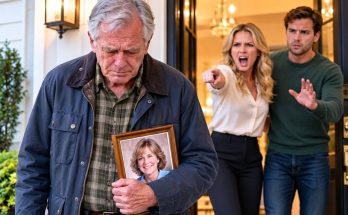
I arrived home three hours ahead of schedule and discovered my sick mother struggling over a hot stove, holding my trembling two-year-old daughter while my son clung to her leg.
My husband sat drinking beer, and his mother lounged on my couch barking orders. When I pushed up Mom’s sleeve, I saw bruises that looked exactly like fingerprints. Ryan believed I was his obedient wife who occasionally vanished for mysterious government assignments. He had no idea his wife was a colonel in the United States Army.
I’d been at the Pentagon for eleven days, leaving my sixty-seven-year-old mother, Margaret, at our house.
She suffered from severe rheumatoid arthritis. Before I left, I’d made Ryan promise she wouldn’t have to do any work.
“Don’t worry,” he assured me. “We’ll look after her.”
I trusted him.
Then I returned early.
I hadn’t even reached the kitchen when I heard my mother-in-law, Vivian, yelling.
“Margaret! That dinner won’t make itself!”
My stomach knotted.
Mom was standing at the stove, covered in sweat, trying to grip a spoon with her swollen fingers. Emma was crying against her shoulder, and Oliver was holding tightly to her leg.
Then I saw the long sleeves Mom was wearing.
“Push your sleeve up.”
“Claire—”
“Mom.”
She did as I asked.
Deep bruises marked her wrist and forearm.
Fingerprints.
Another bruise on her cheek had been concealed beneath makeup.
“Who did this to you?”
“I fell.”
Vivian’s voice suddenly rang out from the living room.
“Margaret! Make sure you don’t burn that roast!”
Ryan chuckled.
“And don’t forget to iron my blue shirts after you’re done with the laundry!”
I felt something inside me turn cold.
I stepped into the living room.
Ryan was sitting with his feet propped on the coffee table, holding a beer.
Vivian seemed irritated by my arrival.
“Why are you home?”
I didn’t acknowledge her question.
“What happened to my mother?”
“She’s always been clumsy.”
Behind me, Mom spoke softly.
“She said if I wanted to live here without paying, I needed to earn my keep.”
Vivian whirled around.
“Watch yourself.”
My mother visibly recoiled.
I’d seen enough.
I took out my phone.
Ryan narrowed his eyes. “What are you doing?”
I immediately froze every supplementary card tied to my accounts.
His phone sounded.
Vivian’s followed.
“My card just got declined!” she shouted.
“That card doesn’t belong to you.”
Ryan rose from his seat.
“Reactivate them.”
“No.”
“You can’t ruin our lives over a few bruises on your mother.”
The room fell completely silent.
Ten minutes later, I was standing outside with Mom and my twins.
Ryan came after us.
“Where do you think you’re going?”
I headed across the street toward the massive gated mansion Ryan had spent years admiring.
I placed my thumb against the biometric scanner.
The gates swung open.
Ryan stared in disbelief.
“Why can you get into that house?”
“Because I own it.”
His expression went blank.
“How could you possibly afford that?”
“With my money.”
“There’s no way you could afford this. What do you even do?”
We’d been married seven years, and he still didn’t know.
I opened my identification wallet.
His gaze dropped to the lettering:
**UNITED STATES ARMY.**
Then he saw my photograph.
**COLONEL CLAIRE BENNETT.**
“I’ve been serving for eighteen years, Ryan.”
His lips parted.
“I’m a colonel.”
Vivian’s face lost its color.
“Those Pentagon assignments you’re always complaining about aren’t consulting work.”
Ryan moved toward me.
“Claire, hold on. We have to talk.”
“We will.”
A glimmer of hope appeared in his eyes.
“With our attorneys.”
The security gates started closing between us.
“You’re actually divorcing me?”
I glanced at my injured mother, then down at my children.
“My mother and my children are never spending another night under the same roof as you or Vivian.”
Ryan seized the gate.
“Claire!”
But the gates continued closing.
For seven years, he’d confused my quiet nature with weakness and treated my generosity as though I depended on him.
Now he finally understood who he’d married.
And soon, he would learn exactly how much of the life he’d always called his had belonged to me all along.
The first thing I did inside the mansion was lock the door.
Not because I thought Ryan could get through the gates. The security system had been designed to prevent exactly that.
I locked it because Oliver was watching me.
At five years old, my son had already learned to listen for footsteps, slammed doors, and raised voices.
He stared at the entrance with his little fists clenched.
“Mommy, is Daddy coming?”
I crouched in front of him.
“Not tonight, sweetheart.”
“Is he mad?”
I looked at my son’s frightened face and realized that the damage in our house had started long before I’d discovered the bruises on my mother’s arms.
“He’s upset,” I said carefully. “But you haven’t done anything wrong.”
Oliver lowered his eyes.
“Grandma Vivian said I was bad because I spilled juice.”
My mother made a small sound behind me.
I turned.
She stood beside the staircase, holding Emma against her shoulder. Her face was pale, and the swollen joints of her hands looked painfully stiff.
“Mom, sit down.”
“Claire, I can help you get the children—”
“Please.”
Something in my voice finally made her stop.
She sat on the nearest couch.
I took Emma from her arms, settled Oliver beside her, and brought them both blankets.
Then I called my attorney.
Daniel Foster answered on the third ring.
“Colonel Bennett. I thought you were in Washington until Thursday.”
“Plans changed.”
He heard something in my voice.
“What happened?”
“I need you to prepare a divorce petition, an emergency custody application, and a plan to protect my financial accounts. My mother has visible injuries. My children may have witnessed abuse.”
There was a brief silence.
“Are they safe right now?”
“Yes.”
“Have you contacted the police?”
“Not yet.”
“Then that’s your next call. Get your mother examined. Preserve everything. Don’t return to the house alone, and don’t argue with Ryan about property.”
I glanced through the windows.
Across the street, Ryan was still standing outside our old house with his phone pressed to his ear.
Vivian was beside him, gesturing furiously toward the mansion.
“Daniel?”
“Yes?”
“I want this handled properly. Every financial transaction. Every account. Every piece of property.”
“Understood.”
“And Daniel?”
“Go ahead.”
“Don’t let me make decisions out of anger.”
His voice softened.
“That’s why you called me.”
After I hung up, I called the police.
Then I called a physician I trusted to arrange a medical evaluation for my mother.
I hadn’t commanded soldiers for eighteen years by ignoring evidence, skipping procedures, or confusing anger with judgment.
I wasn’t going to start now.
But when I returned to the living room, my mother was crying.
Not loudly.
She was sitting perfectly still, with tears moving down her cheeks while Oliver leaned against her.
I sat beside her.
“Mom?”
She shook her head.
“I’m sorry.”
Those two words hurt worse than anything Ryan had said.
“What are you apologizing for?”
“For making trouble.”
I stared at her.
“Mom, someone hurt you.”
She looked down at her hands.
“Ryan said you worked so hard because money was tight. Vivian said I was an extra mouth to feed. I thought if I did enough around the house, they wouldn’t resent having me there.”
My throat tightened.
“Money was never tight.”
She blinked.
“What?”
“Mom, I’ve been paying nearly every household expense for years.”
She looked bewildered.
“Ryan said the house was his responsibility.”
I closed my eyes.
Of course he had.
Ryan hadn’t merely taken advantage of my absence.
He had built an entire version of our marriage around my silence.
And somehow, while I was managing military operations at the Pentagon, my husband had convinced my own mother that she was a burden in the home I paid for.
“Tell me what happened to your wrist,” I said.
Mom hesitated.
“Vivian grabbed me.”
“When?”
“Three days ago.”
“Why?”
She glanced toward Oliver.
I understood.
“Oliver, sweetheart, could you take Emma over to the playroom? There are some toys in the cabinet.”
He looked uncertain.
“You’re staying here?”
“I’m not going anywhere.”
He nodded and took his sister’s hand.
Once they were out of earshot, Mom finally spoke.
“Emma was crying. She was hungry, and Vivian told me to finish cleaning the kitchen before feeding her.”
I felt my chest tighten.
“I picked Emma up and tried to make her something. Vivian got angry because I hadn’t folded the towels.”
Mom swallowed.
“She grabbed my arm and pulled me away from the refrigerator. I lost my balance and hit the counter.”
I looked at the bruise on her cheek.
“And that?”
“She slapped me yesterday.”
For a moment, I couldn’t hear anything except the hum of the refrigerator in the adjoining kitchen.
“Why?”
“I told her not to yell at Oliver.”
My mother’s voice broke.
“He’d wet his bed. He was frightened, Claire. Vivian kept telling him he was disgusting, and I told her to stop.”
I pressed my palms against my knees.
“Did Ryan know?”
She nodded.
“He was there.”
“What did he do?”
“He told me I was making everyone uncomfortable.”
That was the moment I understood I wasn’t dealing with a husband who had simply failed to notice his mother’s cruelty.
Ryan had watched it happen.
He had allowed it.
And by telling my sick mother to iron his shirts while she struggled to care for our children, he had participated in it.
I reached for Mom’s hand.
“Listen to me carefully. You are not a burden. You have never been a burden. You raised me by yourself after Dad died. You worked two jobs so I could go to college.”
Her lower lip trembled.
“You gave me a home when I had nothing. Now it’s my turn to make sure you have one.”
She looked around the enormous living room.
“All of this is yours?”
“Yes.”
“Why didn’t you tell me?”
I took a breath.
“Because I thought keeping my personal life separate from my career would make things simpler.”
I looked toward the playroom.
“I was wrong.”
The police arrived forty minutes later.
Two officers took statements while a medical team examined Mom.
They photographed the bruising on her wrist, forearm, and cheek. Mom described the incidents slowly, occasionally stopping when her hands trembled.
I stayed beside her.
When one officer asked whether Ryan had ever physically threatened her, Mom hesitated.
Then she nodded.
“He told me that if I complained to Claire, he’d make sure she sent me to a nursing home.”
I turned toward her.
“Mom—”
“He said you couldn’t afford to keep supporting me.”
I felt sick.
The officer continued taking notes.
I forced myself to remain quiet.
My rank didn’t give me authority over civilian investigators.
My anger didn’t make me a witness to incidents I hadn’t seen.
What I could do was make sure my mother had medical care, legal support, and somewhere safe to sleep.
After the officers finished their initial interviews, I checked the security cameras at the old house.
There were several.
Ryan knew about the front-door camera and the driveway camera.
He’d apparently forgotten the interior cameras we’d installed when the twins were babies.
I opened the recording archive.
The first clip was from four days earlier.
Vivian stood in the kitchen while Mom struggled with a basket of laundry.
“You’re folding those shirts wrong,” Vivian snapped.
Mom tried to explain that her fingers were stiff.
Vivian seized the basket and dumped its contents onto the floor.
“Then get down there and do it properly.”
The next recording showed Ryan entering the room.
He looked at his mother.
Then at Margaret.
Then at the laundry scattered across the tiles.
And he walked straight to the refrigerator for a beer.
I watched the clip twice.
The third recording was worse.
Oliver stood beside the kitchen table, crying.
Vivian was pointing at him.
“Big boys don’t behave like babies!”
Mom stepped between them.
“He’s only five.”
Vivian grabbed her wrist.
The camera captured Mom losing her balance.
Her cheek struck the counter.
I stopped the recording.
For several seconds, I couldn’t move.
Then I exported copies, preserved the originals, and sent the relevant files securely to Daniel and the investigating officer.
I didn’t need to raise my voice.
The evidence was already speaking.
At 9:17 that evening, Ryan called.
I let it ring.
He called again.
Then came a message.
Claire, you’re overreacting. Mom didn’t mean anything. Come home and we’ll discuss this like adults.
I stared at the screen.
My mother had bruises.
My son was afraid.
My daughter had spent the afternoon crying in the arms of a woman who could barely hold a spoon.
And Ryan wanted to discuss my reaction.
I forwarded the message to Daniel.
Then I turned off my phone’s notifications.
The next morning, I woke to sunlight falling across unfamiliar curtains.
For a confused second, I thought I was back in a hotel near the Pentagon.
Then I heard a small voice.
“Mommy?”
Oliver stood in my doorway holding a stuffed dinosaur.
“Can I come in?”
“Always.”
He climbed onto the bed.
For a while, he said nothing.
Then he whispered, “Are we poor?”
I sat up.
“Why would you think that?”
“Grandma Vivian said you couldn’t buy us good things because you don’t have a real job.”
I looked at him.
My little boy knew almost nothing about what I did.
I’d deliberately kept that part of my life away from him. He knew I worked for the Army, traveled sometimes, and wore a uniform on special occasions.
That was enough for a five-year-old.
Or so I’d thought.
“Sweetheart, my job is real.”
“Do you make money?”
“Yes.”
“More than Daddy?”
I almost smiled.
“That’s not something you need to worry about.”
He considered that.
“Then why did Grandma Vivian say we had to be grateful Daddy let us live there?”
I pulled him into my arms.
“Because Grandma Vivian said something that wasn’t true.”
He leaned against me.
“Can we stay here?”
I kissed his hair.
“Yes.”
“Even if Daddy gets mad?”
“Even then.”
He wrapped his arms around my neck.
It was the first time since I’d returned home that he seemed to relax completely.
At ten that morning, Daniel arrived with a thick folder.
He looked exhausted.
I suspected he’d spent much of the night reviewing my financial records.
We sat in the study while a caregiver I’d arranged helped Mom with breakfast and the children’s morning routine.
Daniel opened his folder.
“Claire, we need to discuss something.”
I recognized his tone.
“What did you find?”
“First, I want to establish that the financial picture will need a complete forensic review. But the initial records are concerning.”
He laid several statements on the desk.
“Ryan has been transferring money from the joint household account into an account held by his mother.”
I stared at him.
“How much?”
“Over the last thirty months, approximately two hundred and fourteen thousand dollars.”
I didn’t speak.
“The transfers were irregular at first,” Daniel continued. “Then they became monthly. Some were labeled household assistance. Others were categorized as reimbursements.”
“Reimbursements for what?”
“That’s what we need to determine.”
He showed me another statement.
“The supplementary cards connected to your accounts also show significant spending.”
I looked down.
Designer clothing.
Luxury hotel reservations.
Jewelry.
Restaurant bills.
Purchases from stores I’d never entered.
“And this?” I asked, pointing to a recurring payment.
Daniel leaned forward.
“That’s particularly interesting.”
It was a payment of thirty-eight hundred dollars a month.
“Where was it going?”
“Toward a condominium leased in Vivian’s name.”
I looked up.
“What condominium?”
Daniel slid a property listing across the desk.
A waterfront condominium.
Two bedrooms.
Private parking.
A building I’d passed dozens of times without giving it a second thought.
“Ryan’s been paying for his mother’s apartment?”
“Using funds drawn from the joint account, yes.”
“But she’s been living with us.”
“Not according to the utility records associated with that address. Someone has been maintaining the condominium for quite some time.”
I leaned back.
Vivian had spent months telling my mother she was an expensive burden.
Meanwhile, Ryan had apparently been financing a luxury residence for Vivian with money flowing through our shared household finances.
“There’s more,” Daniel said.
Of course there was.
He showed me the mortgage documents for the house Ryan and I had shared.
The house was titled in my name, purchased before our marriage, with payments made primarily from my separate funds.
Ryan had repeatedly referred to it as his house.
He’d apparently told friends and relatives that he’d bought it for us.
But the documents told a different story.
Then Daniel placed a bank statement in front of me.
“Ryan applied for a substantial personal loan six months ago. He listed your household assets in the application.”
“Did he get it?”
“Yes. We’re still determining whether he made any false representations or pledged anything he had no right to pledge.”
“How much?”
“One hundred and twenty thousand.”
I closed the folder.
For seven years, I’d believed Ryan’s pride was one of his greatest flaws.
Now I wondered how much of that pride he’d financed with my money.
“Can I recover any of it?”
“Possibly. We need to trace the funds and determine which were marital assets, which were separate property, and whether there was fraud or unauthorized use. The law doesn’t automatically make every dollar recoverable.”
I nodded.
“Then trace it.”
Daniel studied me.
“Claire, there’s something else I think you should know.”
I looked up.
“Ryan contacted my office this morning.”
“Already?”
“He wanted to know whether you intended to revoke his access to the family accounts permanently.”
I gave a bitter smile.
“Did he ask about the children?”
Daniel hesitated.
“No.”
That answer hurt more than I expected.
I had spent seven years believing I knew the man I married.
But in the first twenty-four hours after our separation, Ryan had shown more concern for his credit cards than for his frightened son and daughter.
By afternoon, he was standing outside the mansion gates again.
The security camera showed him pressing the intercom button.
“Claire! Open up!”
I watched from my study.
He was wearing an expensive jacket I’d bought him for his last birthday.
Vivian stood beside him, wrapped in a cream-colored coat, her face twisted with indignation.
“Tell your wife she’s being ridiculous!” she shouted toward the camera.
Ryan pressed the button again.
“Claire, I know you’re watching!”
I activated the speaker.
“What do you want?”
He looked startled when my voice came through.
“We need to talk.”
“Speak to Daniel.”
“Stop hiding behind lawyers!”
“I’ve already told you how we’ll handle this.”
Vivian pushed closer to the intercom.
“You think that uniform makes you better than everyone else?”
I looked at the screen.
She hadn’t seen me in uniform yet.
She’d only seen my identification wallet.
But apparently the word colonel had already become an insult in her mouth.
“No, Vivian.”
“Then open this gate!”
“You’re not welcome here.”
Ryan stepped forward.
“Claire, I have rights as your husband.”
“You have the right to retain an attorney.”
He slammed his palm against the intercom panel.
“You can’t take everything!”
I watched him through the camera.
“Ryan, I haven’t taken anything from you. I’ve removed your access to accounts you don’t own, and I’m asking the court to determine the rest.”
He stared into the camera.
Then his expression changed.
“You’re going to regret humiliating me.”
I didn’t answer.
He leaned closer.
“You think the Army wants its precious colonel involved in a messy divorce? How would your bosses feel if I told them what kind of mother you really are?”
That was when I understood his next move.
He couldn’t control me financially anymore.
So he intended to threaten my career.
I saved the recording.
Then I switched off the intercom.
That evening, I called my commanding officer.
Not to ask for protection.
Not to use military influence against my husband.
I called because Ryan had threatened to make allegations involving my conduct, and I wanted my chain of command informed before any accusations reached them.
My commanding officer listened without interrupting.
When I finished, she said, “Claire, your domestic situation will be handled through the appropriate civilian processes. Make sure your family is safe and follow your legal counsel’s advice.”
“Yes, ma’am.”
“And Claire?”
“Ma’am?”
“You’re allowed to take leave.”
I looked toward the window.
For years, I’d been the person everyone counted on to remain composed.
My soldiers.
My staff.
My superiors.
My family.
I had forgotten that being dependable didn’t mean I had to handle every crisis alone.
“I think I need it,” I admitted.
“Then take it.”
Three days later, Ryan carried out his threat.
He sent a lengthy email alleging that I’d abandoned my family, concealed my finances, and used my military position to intimidate him.
He also claimed my mother had fabricated the abuse allegations because she disliked his mother.
His attorney submitted similar claims in the custody proceedings.
I read the documents in Daniel’s office.
My hands trembled with anger.
Daniel noticed.
“Don’t respond directly.”
“He says I abandoned my children.”
“I know.”
“I’ve been deployed. I’ve missed birthdays. I’ve spent nights away because the Army needed me. But I’ve never abandoned them.”
Daniel closed the document.
“Then we’ll prove it.”
He gathered the evidence we’d preserved.
School records identifying me as a parent responsible for decisions.
Medical records.
Caregiver arrangements.
Financial payments.
Travel schedules.
Messages showing I’d arranged childcare before every assignment.
And most importantly, the recordings showing what had happened while I was away.
Ryan had expected my military career to make me look absent.
Instead, his accusations forced a closer examination of what he’d been doing during those absences.
The first major hearing took place eleven days after I’d discovered my mother’s injuries.
I arrived in a plain navy suit.
No uniform.
No medals.
No military entourage.
Just a mother seeking protection for her children.
Ryan sat across the courtroom beside his attorney.
Vivian sat behind him.
She wore pearls and an expression of wounded innocence.
When I entered, she leaned toward Ryan and whispered something that made him smile.
I ignored them.
During the hearing, Ryan’s attorney argued that his client had been the primary parent during my frequent government assignments.
He described me as emotionally distant.
Overly controlling.
Obsessed with my career.
He suggested that Ryan had provided stability while I traveled.
Then Daniel stood.
“Your Honor, we have evidence concerning the conditions in which the children were living during Colonel Bennett’s most recent absence.”
Ryan shifted in his chair.
Daniel submitted the relevant records and authenticated camera footage through the appropriate process.
The judge reviewed the evidence.
The courtroom grew quiet.
The first clip showed Vivian shouting at Oliver.
The second showed her grabbing Margaret.
The third showed Margaret striking the counter.
Then came the footage of Ryan entering the kitchen after the incident.
He looked at Margaret.
He looked at his mother.
And he did nothing.
I watched Ryan’s face as the recording played.
His confident smile vanished.
The judge looked toward his attorney.
“Does your client dispute that these recordings were taken inside the family residence?”
His attorney glanced at Ryan.
“Not at this time, Your Honor.”
“And does he dispute that he was present during the events shown?”
Another pause.
“No, Your Honor.”
Vivian made an angry sound from the gallery.
The judge warned her to remain quiet.
Then Daniel introduced the medical evidence documenting Margaret’s injuries and the children’s statements as reported through the appropriate professional evaluation.
The judge did not decide every allegation that day.
But the court issued temporary protective custody arrangements, restricted Vivian’s contact with the children, and required Ryan’s parenting time to occur under supervision pending further evaluation.
Ryan turned toward me.
“You did this.”
I looked at him.
“No, Ryan.”
My voice was barely above a whisper.
“You did.”
Outside the courthouse, Vivian tried to approach me.
Daniel stepped between us.
“Mrs. Bennett, please communicate through counsel.”
Vivian pointed at me.
“She’s destroying this family!”
I looked past her toward the waiting vehicle.
My mother was inside with the twins.
Oliver had his dinosaur.
Emma was asleep against Mom’s shoulder.
For the first time in days, all three looked peaceful.
I turned back to Vivian.
“You had every opportunity to be part of this family.”
Her expression twisted.
“You never respected me.”
“Respect doesn’t require me to let you hurt people.”
She opened her mouth.
But I was already walking away.
The criminal investigation continued separately.
My mother gave a detailed statement.
Investigators reviewed the video evidence and medical findings.
Vivian was eventually charged in connection with the assault on Margaret.
The proceedings were slower than I wanted.
There were interviews, hearings, legal arguments, and delays.
Mom found the process exhausting.
More than once, she asked whether continuing was worth it.
One evening, I found her sitting in the garden with a cup of tea.
Her hands were wrapped around the mug.
“Claire, I don’t want Oliver remembering all of this.”
I sat beside her.
“Neither do I.”
“Then maybe I should just let it go.”
I watched Emma and Oliver playing near the fountain.
“Mom, you don’t have to prove your strength by pretending it didn’t happen.”
She looked at me.
“That’s what I taught you.”
I smiled sadly.
“You taught me to survive.”
She glanced down at the faint marks still visible on her wrist.
“And what are you teaching your children?”
I watched Oliver help Emma pick up a toy she’d dropped.
“That surviving isn’t the same as accepting something.”
Mom was quiet for a long time.
Then she nodded.
“I’ll finish what I started.”
Months later, Vivian entered a guilty plea to an assault charge under an agreement approved by the court.
She received probation, mandatory counseling, and conditions prohibiting her from contacting my mother or children.
It wasn’t the dramatic punishment some people might have wanted.
But there was a permanent legal record.
There were enforceable restrictions.
And for the first time, Vivian could not simply raise her voice and expect everyone else to obey.
The financial investigation produced its own consequences.
Daniel’s forensic accountant traced years of spending and transfers.
Ryan had repeatedly used the joint account to pay for Vivian’s condominium and other expenses without telling me the truth about where the money was going.
Some transactions had been authorized through the broad access I’d voluntarily given him.
Others raised more serious questions about representations and documentation.
The distinction mattered.
I couldn’t simply declare every purchase theft because I regretted trusting him.
But neither could Ryan continue claiming that the entire household’s wealth had come from his own earnings.
The documents established who owned what, when the properties had been purchased, where the money originated, and which funds had been transferred.
During a settlement conference, Ryan finally confronted the numbers.
I sat across from him with Daniel beside me.
Ryan looked thinner.
His expensive watch was gone.
He glanced at a spreadsheet.
“This can’t be right.”
Daniel turned a page.
“Which figure are you disputing?”
Ryan pointed toward the total household expenditures.
“Claire couldn’t have paid that much.”
I looked at him.
“Why not?”
He stared at me.
“Because you never told me you earned that kind of money.”
“My military salary was never a secret. You had access to our tax returns.”
“Not enough to explain all this.”
“No,” I said. “It wasn’t.”
He waited.
For seven years, he’d apparently assumed my savings came from some ordinary retirement account.
I had never lied about my finances.
But I hadn’t volunteered every detail either.
Before we married, I’d inherited a modest property portfolio from my grandfather, who had spent decades investing in commercial real estate.
I’d also invested consistently throughout my military career.
Some investments had performed exceptionally well.
Others hadn’t.
Over time, careful management had turned those assets into substantial wealth.
The mansion across the street was one of several properties held through a structure established before our marriage.
It wasn’t a secret government residence.
It wasn’t a reward for my rank.
It was mine.
Purchased with money Ryan had never bothered to understand.
He sat back.
“You mean you’ve been rich this whole time?”
I studied him.
“I’ve been financially independent.”
“You let me think we were struggling.”
I almost laughed.
“Ryan, you drove a luxury SUV, wore expensive clothes, took vacations, and had access to credit cards you didn’t pay off yourself.”
His jaw tightened.
“You could have told me.”
“I could have.”
For a moment, I let that truth settle.
Then I continued.
“But I didn’t make you lie to my mother. I didn’t make you threaten our son. And I didn’t make you stand there while Vivian hurt a sixty-seven-year-old woman.”
He looked away.
“You’re making me sound like a monster.”
“I’m describing what happened.”
He pressed his palms against the table.
“I loved you, Claire.”
I waited.
He looked up.
“I still do.”
For seven years, those words might have persuaded me to soften.
Now I heard them differently.
“Ryan, when I came home, my mother was injured and my children were frightened. Your first demand was that I restore your credit cards.”
He opened his mouth.
I raised a hand.
“Tell me one thing.”
He hesitated.
“What?”
“After I left with the children, why didn’t you ask whether your daughter was okay?”
His face changed.
“Of course I cared.”
“Then why didn’t you ask?”
He stared at the table.
For the first time, Ryan had no answer.
The settlement discussions continued for several weeks.
We disputed finances, property classifications, support, and parenting arrangements.
Ryan’s claims about my supposed use of military authority against him went nowhere because there was no evidence I’d done anything of the kind.
Every action I’d taken had been through civilian attorneys, law enforcement, and the courts.
My rank had nothing to do with the division of our assets.
And it didn’t exempt me from following the same rules as any other parent.
In the end, the court-approved financial settlement reflected the documented ownership of our property, the applicable marital-property rules, and negotiated reimbursement for certain disputed expenditures.
Ryan did not walk away penniless.
He received assets to which he was legally entitled.
But he also didn’t receive the mansion, my separate investment portfolio, or the lifestyle he’d assumed would continue indefinitely.
The condominium arrangement benefiting Vivian ended when Ryan could no longer sustain the payments.
She moved into a much smaller apartment.
Ryan sold his luxury SUV.
And the house across the street—the one he’d spent years calling his—remained legally mine under the final property disposition.
I eventually sold it.
I couldn’t imagine my children growing up across from the place where they’d learned to be afraid.
The final custody order gave me primary residential custody.
Ryan was permitted a structured path toward expanded parenting time, conditioned on compliance with the court’s requirements and the children’s welfare.
At first, I resisted even the idea.
Then Oliver asked me something I hadn’t expected.
“Mommy, does Daddy still love us?”
We were sitting at the kitchen table, drawing pictures.
Emma was coloring a butterfly.
I set down my pencil.
“I believe he does.”
Oliver looked uncertain.
“Then why did he let Grandma Vivian be mean?”
I wished I had a perfect answer.
I didn’t.
“Sometimes grown-ups make terrible choices. Loving someone doesn’t mean they always know how to treat them properly.”
He looked down.
“Will Daddy be nice now?”
“I hope so.”
“Can I tell him if I’m scared?”
“Yes. And you can tell me, too.”
He nodded.
That conversation stayed with me.
I didn’t want revenge to become the foundation of my children’s childhood.
I wanted safety.
I wanted honesty.
And I wanted them to understand that love was not permission to hurt someone.
Ryan began attending the required counseling sessions.
His supervised visits started awkwardly.
Oliver barely spoke during the first few.
Emma often refused to leave the supervising professional’s side.
Ryan complained through his attorney that the arrangement was humiliating.
The court did not change it simply because he disliked it.
Then, gradually, something shifted.
At one visit, Oliver told Ryan about a school project.
Instead of changing the subject, Ryan listened.
At another, Emma spilled juice.
Ryan reached for a towel.
She froze.
The supervisor later documented what happened next.
Ryan noticed her fear.
He knelt.
“It’s okay, sweetheart. Accidents happen.”
Emma began crying anyway.
Ryan didn’t raise his voice.
He helped clean up the juice.
It was a small thing.
It didn’t erase what he’d allowed.
But it was the first sign that he might finally be learning the difference between authority and care.
Nearly a year after our separation, the divorce was finalized.
Ryan and I stood outside the courthouse afterward.
There were no reporters.
No dramatic crowd.
No military officers waiting to salute me.
Just two people who had once promised to build a life together and had failed in ways that could no longer be repaired.
Ryan looked at me.
“I didn’t think you’d really leave.”
“I know.”
He swallowed.
“I thought you’d always come back.”
I remembered all the deployments.
All the long flights.
All the evenings I’d returned home exhausted, grateful for whatever peace I thought I was walking into.
“I always wanted to come home, Ryan.”
He looked away.
“I know that now.”
For several seconds, we stood in silence.
Then he said, “I’m sorry about Margaret.”
I studied him.
“Have you told her?”
“She doesn’t want to see me.”
“That’s her decision.”
He nodded.
“I know.”
He looked toward the parking lot.
“And I’m sorry about the kids.”
I took a breath.
“Then keep showing them.”
He looked back at me.
“What?”
“Don’t ask them to believe you’ve changed. Give them reasons to feel safe.”
His eyes filled.
For a moment, I saw the man I’d married.
Not the husband who’d demanded his credit cards.
Not the man who’d stood by while my mother was mistreated.
Just Ryan.
Flawed.
Ashamed.
Facing consequences he could no longer escape.
“I’ll try,” he said.
“That’s your choice.”
Then I walked away.
The following spring, my mother planted roses beside the mansion’s front walkway.
She insisted on choosing the flowers herself.
Red roses.
White roses.
And one small yellow rosebush near the steps.
Her arthritis hadn’t disappeared.
Some mornings, her hands hurt so badly that even fastening buttons was difficult.
But she no longer tried to hide her pain.
She had regular medical appointments, occupational therapy, and help with the tasks she couldn’t manage comfortably.
More importantly, she was no longer afraid of being called lazy.
One Saturday afternoon, I found her kneeling beside the flower bed.
“Mom, you shouldn’t be doing that.”
She looked up.
“Claire Bennett, I raised you. Don’t start giving me orders in my own garden.”
I laughed.
“Your garden?”
She smiled.
“You gave me permission to plant it.”
“That doesn’t make it yours.”
She lifted an eyebrow.
“Then I suppose I can stop watering your expensive roses.”
I raised both hands.
“I surrender.”
Oliver came running from the backyard.
“Grandma! Emma stole my shovel!”
Emma followed, carrying a bright yellow plastic shovel nearly as long as her arm.
“Mine!”
Oliver looked outraged.
Mom held out her hand.
“Bring it here, you two. We can take turns.”
They crowded around her.
Nobody yelled.
Nobody threatened punishment.
Nobody told them that making a mistake meant they were bad children.
I stood on the walkway watching them negotiate over a plastic shovel.
It was such an ordinary moment.
And that was what made it extraordinary.
A few weeks later, I received a new assignment that would allow me to remain closer to home for the foreseeable future.
I had spent much of my adult life believing service required accepting every absence without question.
Now I understood that responsible leadership also meant planning for the people who depended on me.
I arranged reliable childcare.
I established clear emergency contacts.
And I stopped pretending that keeping my personal life completely private was the same as protecting it.
One evening, I was preparing my uniform for a formal military event when Oliver wandered into my bedroom.
He stopped in front of the jacket hanging on the wardrobe door.
“Mommy?”
“Yes?”
“Are those your medals?”
I smiled.
“Some of them.”
He stepped closer.
“Did you get them for being brave?”
I considered the question.
“Some were for doing my job well. Some recognize things I did with other soldiers.”
He studied the ribbons.
“Are you a superhero?”
I laughed softly.
“No, sweetheart.”
“Then why do people salute you?”
“Because of my rank.”
“What’s your rank again?”
“Colonel.”
He tried the word carefully.
“Ker-nel.”
“That’s right.”
He looked impressed.
“Is that higher than Daddy?”
I crouched beside him.
“That’s not how families work.”
He frowned.
“What do you mean?”
“Being a colonel means I have responsibilities in the Army. It doesn’t make me more important than anyone else at home.”
He thought about that for a moment.
“Even Grandma?”
“Especially Grandma.”
He grinned.
Then he wrapped his arms around my neck.
“I’m glad you’re my mommy.”
I held him tightly.
“Me too.”
That summer, we attended a family day at the installation where I worked.
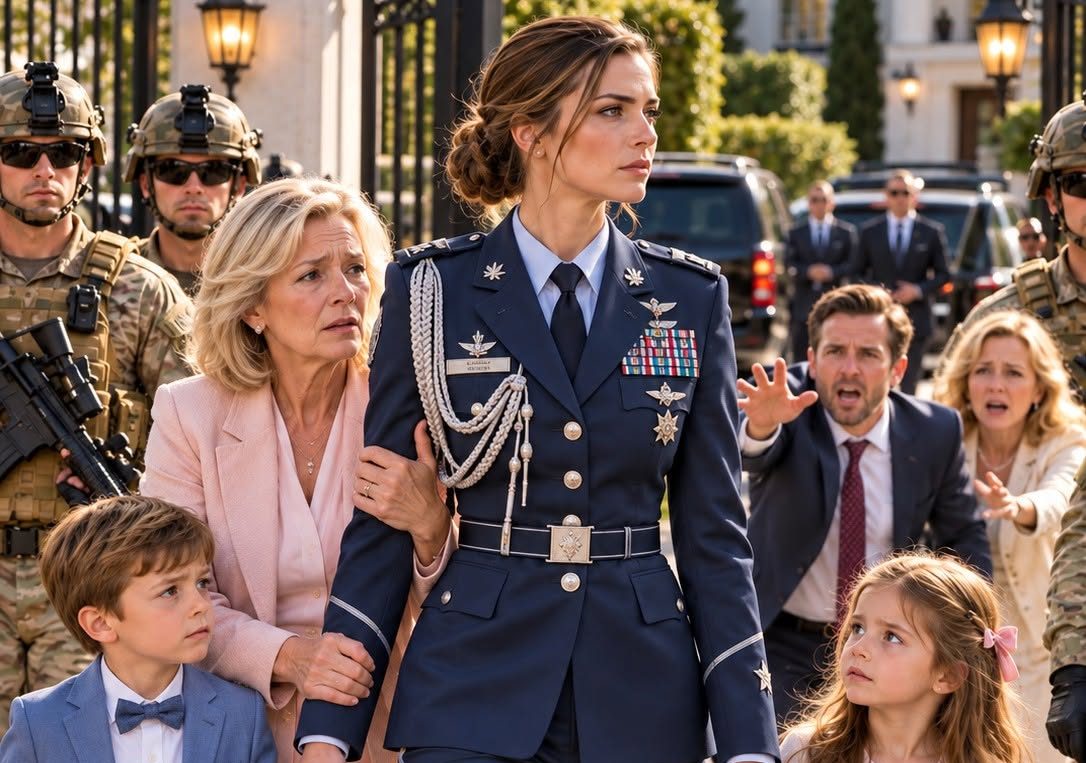
For the first time, I brought my mother and both children to an event where I was present not as the quiet woman who sometimes traveled for government work, but as Colonel Claire Bennett.
I wore my Army service uniform.
Mom wore a pale pink dress.
Oliver had insisted on wearing a blue bow tie.
Emma wore a floral dress and carried a stuffed rabbit.
As we walked toward the event area, a young officer approached.
He stopped, came to attention, and saluted.
“Good afternoon, Colonel Bennett.”
I returned the salute.
“Good afternoon, Lieutenant.”
Oliver stared.
Then another soldier greeted me.
And another.
Mom looked at me with an expression I hadn’t seen since my college graduation.
Pride.
Not because of the decorations on my uniform.
Not because of the people who recognized me.
But because she finally understood how much of my life I’d kept tucked away.
We were approaching the entrance when Oliver tugged at my hand.
“Mommy, are you in charge of everybody?”
I smiled.
“No. Just some very important responsibilities.”
He considered that.
“Are you in charge of Grandma?”
Mom laughed.
“Absolutely not.”
Emma giggled.
I looked down at them.
“Grandma’s right.”
Then I took Oliver’s hand, and Emma reached for my other one.
Mom slipped her arm through mine.
For a moment, the four of us stood together in the warm sunlight.
I remembered that terrible afternoon when I’d found Mom trembling over a stove.
I remembered the bruises.
The beer bottle in Ryan’s hand.
Vivian’s shouting.
The look on Oliver’s face when he asked whether Daddy was coming.
And I remembered the security gates closing between the life I’d believed I had and the truth I could no longer ignore.
There had been no simple victory.
The divorce had been painful.
The legal proceedings had been exhausting.
My children still had difficult questions.
My mother still had days when old fears surfaced unexpectedly.
And I had to live with the knowledge that my silence, however well-intentioned, had kept me from seeing what was happening inside my own home.
But the fear no longer controlled our lives.
Mom could rest without apologizing.
Oliver could spill a glass of juice without flinching.
Emma could cry without someone shouting at her.
And I could walk through my front door knowing the people I loved were safe.
As we entered the event, my mother squeezed my arm.
“Claire?”
“Yes, Mom?”
“I’m proud of you.”
I smiled.
“For becoming a colonel?”
She shook her head.
“For knowing when to come home.”
I looked at my children, their small hands wrapped around mine.
For eighteen years, I’d understood the meaning of duty through orders, deployments, missions, and the responsibility of leading soldiers.
But that afternoon, surrounded by the family I’d fought so hard to protect, I understood something else.
The most important thing I’d ever defended wasn’t a title, a house, or a fortune.
It was the right of the people I loved to feel safe in their own home.
And for the first time in a very long while, we finally did.
THE END.