The attorney stopped sorting and put a cream envelope in front of me. “Henry left instructions specifically for you.” Michael had already put Henry’s watch on his wrist. He turned the face inward and adjusted the band as if he had worn it for years.
David kept writing figures in the margin of the inventory. Beside the aircraft listed on page three, he wrote 640,000 dollars, then underlined it twice.
“What does the envelope say?” Daniel asked.
The attorney looked at me. “It says I am to give it to you unopened by anyone else.”
Michael glanced over. “Then open it.”
I picked up the envelope. It was heavier than a letter should have been.
The compressor clicked behind the curtain, stopped, then clicked again.
“Is there a separate will?” I asked.
“No,” the attorney said. “This is a personal instruction.”
David capped his pen. “Personal instructions can still affect the estate.”
The attorney gave him a level look. “This one does not appear to.”
Michael smiled without looking at either of us. “Then there is nothing to worry about.”
I ran my thumb along the sealed edge.
The attorney gathered the remaining folders into a neat stack. “Henry was very specific about the order.”
“What order?”
He tapped the envelope once. “This first.”
I put it in my lap.
For a few seconds nobody spoke. Then Daniel shifted his chair and asked the attorney whether the funeral home needed the conference room cleared by eleven.
“They have another appointment,” the attorney said. “We should be finished.”
Michael looked at his father’s watch.
“Ten minutes,” he said.
I looked at him. “For what?”
He straightened one cuff. “For all of us to get through this without making it harder than it needs to be.”
The attorney stood and carried the folders toward the door.
I followed him into the hallway with the envelope still in my hand.
At 10:42, people were moving toward the parking lot. An old mechanic from the airline was waiting near the coat rack, holding his cap against his chest.
“Mrs. Henry?” he asked.
“Ellen is fine.”
He nodded. “Henry told me to give you his regards.”
“Before he passed away?”
The mechanic looked toward Michael, then back at me.
“Yes.”
Before I could ask what that meant, Michael reached for the envelope.
“I’ll take that.”
I held on.
“Henry left it to me.”
“I was only going to see whether there was anything important in it.”
The old mechanic cleared his throat. Daniel looked at the floor.
I broke the seal.
Inside was one folded sheet and a faded Alaska baggage tag.
Michael picked up the tag before I could.
It was yellowed at the edges, with a handwritten town name and an old routing number.
He held it between two fingers.
“Well,” he said, “someone needs Ellen to sort lost luggage.”
David laughed first.
Michael laughed with him.
Daniel gave a short laugh that ended almost immediately.
The old mechanic did not laugh.
He looked at the tag as if he had seen it before.
I took it from Michael.
“What is this town?”
“Probably one of Henry’s old side trips,” Michael said.
“Probably?”
He shrugged.
David folded his valuation sheet and slipped it into his folder.
“The man kept paper for everything.”
“Apparently.”
I turned the tag over.
There was a faded stamp on the back and a number written in blue ink.
“Who wrote this?”
Michael reached for it again.
“I don’t know.”
The old mechanic spoke quietly.
“Henry did.”
Michael looked at him.
The mechanic put his cap on.
“I should get outside.”
He walked away before I could ask him anything else.
I looked at Michael.
“Why would Henry leave me a baggage tag?”
Michael smiled. “Maybe he knew you liked keeping track of details.”
“That isn’t an answer.”
“No. It isn’t.”
Daniel came closer.
“Mom, let’s get you some air.”
“I am fine.”
He stopped beside me anyway.
Michael had already started toward the parking lot.
David followed him, still carrying the estate folder.
Daniel picked up the flowers from the table by the door.
“Can you help me with these?” he asked.
We went outside at 11:05.
Henry’s Buick sat under the funeral home’s awning, its dark paint dull beneath the white lights. The odometer had passed 190,000 miles last year, and Henry had refused to replace it.
Daniel opened the trunk.
He placed the condolence flowers inside one arrangement at a time.
“I should have said something in there.”
I looked at him.
“About the tag?”
“About Michael.”
He pushed a box toward the back of the trunk.
“He was making fun of you.”
“I noticed.”
David had laughed too.
Daniel rubbed his palms together.
“I laughed too.”
“Yes.”
“I was nervous.”
I waited.
He picked up another bouquet.
“Michael laughed, David laughed, and I laughed because they did.”
“You are forty-two.”
“I know.”
He put the bouquet down.
“I am sorry.”
I looked at the flowers.
“That does not tell me why you did it.”
Daniel swallowed and picked up the last arrangement.
“I didn’t know what else to do.”
He closed the trunk halfway, then stopped.
“Do you want me to come home with you?”
“No.”
He nodded.
Then he closed the trunk.
Before he walked away, he said, “I don’t think that tag is a joke.”
I looked at him.
“Why?”
He rubbed his palms together again.
“I don’t know.”
That answer stayed with me all the way home.
At 7:20 that evening, I put the baggage tag on the kitchen table beside Henry’s old coffee mug.
Michael was already there.
He had let himself in with his key.
“You could call before coming over,” I said.
“I wanted to make sure you were all right.”
I filled the kettle.
He watched me.
“Are you planning to contest the will?”
I stopped with my hand on the cabinet handle.
“Why would I?”
“Because of the way the estate was divided.”
“I haven’t seen the full division yet.”
“You have the attorney’s summary.”
“I have a summary.”
Michael straightened his cuffs.
“The airline needs decisions made quickly.”
“There has been one day since the funeral.”
“That is why I am asking.”
The kettle clicked on.
I took two cups from the shelf.
“You did not ask how I was.”
He looked down at the table.
“I assumed you were having a difficult day.”
“Then why did you come?”
He did not answer.
I put tea into the cups.
He picked up the baggage tag.
“Are you really going to chase this?”
“I have not decided.”
“It is probably nothing.”
“Then you should have no objection.”
He set the tag down.
“You are tired.”
“I am.”
“Let the attorney handle the estate.”
“The attorney can handle the estate.”
“Good.”
He reached for his cup.
I noticed the watch on his wrist.
Henry had worn it every day for eleven years.
Michael turned the watch face away when he saw me looking at it.
“Did Henry tell you anything about Alaska?”
“No.”
“Nothing?”
“Not that I remember.”
I picked up the tag.
The town name was still clear enough to read.
“Why does this bother you?”
Michael stood.
“It doesn’t.”
He took his coat from the chair.
At the door, he stopped.
“If you find anything, call me before you call anyone else.”
“Why?”
He looked back at me.
“Because we are trying to settle this properly.”
Then he left.
I stood at the table with the baggage tag in my hand.
The paper was soft from years of handling.
There was a number on it that I had not noticed before.
I reached for my coat.
If Henry wanted me to sort luggage, he could have left me a suitcase.
I slid the baggage tag into my coat pocket and decided to fly north.
The coffee maker clicked off while I was still checking the last page of Henry’s estate list. Daniel had one finger on the baggage tag, and the town printed beneath the faded ink was not listed anywhere in the papers.
“That is not in the inventory,” he said.
“I noticed.”
Daniel moved the tag closer to the estate folders. “Are you sure that is the town?”
“That is what it says.”
He picked up the inventory and ran his finger down the pages. House, aircraft, maintenance equipment, accounts, investments. He stopped at the last sheet.
“Nothing in Alaska.”
“Then why did Henry leave me a tag for an Alaska town?”
Daniel looked at me instead of the papers. “Maybe it is not part of the estate.”
That answer sat between us longer than it should have.
I took the tag back and turned it over. The paper was soft at the corners, as though it had spent years in a pocket. There was a faded number on the back, but no company name.
Daniel reached for the estate list again. “There is another odd part.”
“What?”
“Most of these assets have an owner listed. The northern operation does not.”
I put the tag beside Henry’s papers. “So what is the northern operation?”
Daniel gave a small shrug. “I thought you knew.”
“I thought I did.”
He looked at the clock above the sink. “Then we should ask somebody who does.”
By 9:30, David and I were walking through the main airline office beneath the framed aircraft photographs Henry had collected over the years. The receptionist was sorting invoices into three neat stacks, and David stopped long enough to greet her before leading me toward the records area.
“The northern operation was always an airline project,” he said.
“Whose airline project?”
He kept walking.
“David.”
He turned. “What?”
“Who owns it?”
He adjusted the papers under his arm. “The airline has always handled it.”
“That was not my question.”
He gave me a careful look. “Why are you asking?”
“Because it is not in Henry’s estate inventory.”
David glanced toward the receptionist, then back at me. “Northern operations were complicated.”
“So were payroll taxes. Henry still put the owner on the form.”
David opened a cabinet and pulled out a thin folder. He flipped through it without taking out a single page.
“Where is the ownership document?” I asked.
“I would have to check.”
“You just said it belonged to the airline.”
“I said it was an airline project.”
Those two sentences did not belong together.
I watched his thumb hold the folder shut. “Has anyone valued it?”
David’s hand stopped.
“For what purpose?” he asked.
“That is my question.”
He closed the cabinet. “Michael has been looking at several assets.”
“Several?”
“Aircraft, maintenance equipment, reserves.”
“And northern aircraft?”
David looked at me for a second too long. “I would ask Michael.”
I walked back toward the receptionist, and David followed. On her desk sat an invoice for winter fuel, dated three days earlier.
The northern operation was still buying fuel.
At 4:15, Daniel was holding a cardboard box on the workbench in Henry’s garage while I pulled open the bottom drawer of the filing cabinet. Dust had gathered along the metal rails, but the folders inside were arranged by year.
“You were better at this than Dad,” Daniel said.
“At filing?”
“At finding what Dad thought nobody would find.”
I looked over my shoulder. “That sounds like something you should not say to me.”
He smiled. “Probably.”
The small joke helped. I went back to the drawer and pulled out a stack of fuel receipts. Daniel set the box down and began sorting invoices by date.
“Here,” he said.
He held up a receipt.
March 9. Eighteen years earlier.
The vendor name was printed across the top, followed by a fuel quantity and a northern destination. At the bottom, in dark blue ink, were two initials.
Mine.
I sat down on the edge of the workbench.
Daniel brought the receipt closer. “Those are yours.”
“I know.”
“You signed for the fuel?”
“I must have.”
“For what aircraft?”
“I don’t remember.”
Daniel turned the receipt over. Nothing was written on the back.
I searched the drawer again, faster now. “There should be a purchase order.”
Daniel began opening folders.
“This one?”
“No.”
“This?”
“No.”
Then he pulled a thin envelope from beneath a stack of tax forms.
“March ninth,” he said.
I reached for it, but he did not let go immediately.
“Mom, why would you have signed fuel paperwork for Alaska?”
“I do not know.”
He released the envelope.
Inside was a copy of a fuel order with a handwritten note in Henry’s block letters: Ellen to confirm delivery.
Daniel read it twice.
“That sounds like more than a favor.”
“I know.”
He looked at the receipt again. “What did you sign eighteen years ago?”
I had no answer for him.
That evening, at 9:05, Michael came into my bedroom carrying Henry’s wool scarf over one arm. He had found it in the hall closet, folded inside an old canvas bag.
“You should have this,” he said.
I took the scarf.
“Thank you.”
He stayed near the door.
I folded the scarf once, then laid it across the bed. “What can you tell me about the Alaska town?”
Michael’s face changed only slightly.
“Why?”
“Because it is on the baggage tag Henry left me.”
He straightened his cuffs.
“Henry had old side projects.”
“David called it an airline project.”
Michael looked toward the hallway.
“David talks too much.”
“Who owns it?”
“Mom, this is not a good week to start digging through every old arrangement Henry ever made.”
“I am asking a simple question.”
He rubbed one cuff between his fingers. “Henry handled the northern work.”
“That still does not tell me who owned it.”
“You do not need to make a difficult week harder than it already is.”
I folded Henry’s scarf along its original crease.
“Did you know about the fuel receipt?”
Michael looked at me.
“What fuel receipt?”
“The one I signed eighteen years ago.”
He did not answer.
I waited.
Then he said, “There were a lot of old documents.”
“That is not what I asked.”
He stepped toward the door.
“Michael.”
He stopped.
“When was the last time you looked at the northern ownership records?”
His hand went to his cuff again.
“I would have to check.”
“You have checked them.”
He looked at me for a long second.
Then he left the room without answering.
I put the scarf beside the baggage tag and opened my laptop. The earliest flight north left before eight.
I booked it.
The records clerk had already pulled three folders when I reached the northern maintenance line, but none had an ownership page.
“I need the northern maintenance filings,” I told her. “Not the general company records.”
She looked at the screen, then at the request slip in my hand.
“Which northern operation?”
I gave her the town printed on the baggage tag.
Her fingers stopped over the keyboard.
“I can search that,” she said, “but some of those files are not in this room.”
“Where are they?”
She turned toward the records supervisor, then lowered her voice.
“Sarah would know.”
I called Sarah from the desk. She answered on the second ring, with the sound of a door latch clicking behind her.
“Ellen?”
“I’m looking for the northern filings. The clerk says they are not here.”
“They are not supposed to be there.”
“Why?”
Sarah did not answer right away.
“Did you bring the tag?”
I put my fingers over the pocket where I had placed it.
“Yes.”
“Keep it with you.”
“Sarah, I am standing in the airline records room asking for records that belong in the airline records room.”
“Not these.”
The clerk slid one folder toward me. It contained maintenance invoices from eighteen years ago, but the ownership section had been removed.
“Who removed this page?” I asked.
Sarah’s voice came through the receiver.
“Ellen, bring Henry’s envelope when you come north.”
“I am coming because I want answers.”
“You will get them.”
“Then tell me why the company line is not safe.”
Sarah breathed out slowly.
“Because too many people can hear what is said on it.”
She ended the call before I could ask who those people were.
The clerk kept her eyes on the monitor.
“Should I keep looking?”
“Yes.”
She opened another file, then another. The dates were there. The aircraft numbers were there. The ownership pages were not.
I copied the file numbers onto the back of my request slip and folded it twice.
At home that evening, Daniel was waiting at the kitchen table with a printer sheet in his hand.
He pushed it toward me.
“David sent this.”
The message was short. David wanted to know whether I intended to contest the will.
“I have not said I was contesting anything,” I told him.
Daniel rubbed his palms together.
“I know.”
“Then why is he asking?”
Daniel looked at the printed message again.
“Michael asked me the same question this afternoon.”
“Did you tell him?”
“I told him I did not know.”
I opened the suitcase and put two blouses beside one pair of slacks.
Daniel picked up the estate inventory.
“You are really going north.”
“I booked the flight.”
“Does Sarah know?”
“She does.”
He looked toward the counter where Henry’s envelope sat beneath the baggage tag.
“Why does she want that envelope?”
“I asked her.”
“And?”
“She did not tell me.”
Daniel folded the inventory along its original crease.
“I do not like that answer.”
“Neither do I.”
The printer made a small clicking sound as it went into its sleep mode.
Daniel glanced at his phone.
“David just sent another message.”
I held out my hand.
He did not give me the phone.
“He says Michael wants to know what you are taking with you.”
I stopped packing.
“Does he say why?”
Daniel shook his head.
I put the estate inventory into the suitcase, then took it back out.
“Leave that here,” I said.
Daniel looked at me.
“Why?”
“Because Sarah told me to.”
He set the papers on the counter.
“She must have a reason.”
“I think she does.”
He nodded toward the baggage tag.
“Then take that.”
“I am.”
He gave me a small smile.
“At least one of us is following instructions.”
It was the first thing that had made me smile all day, and Daniel looked relieved that he had managed it.
I placed Henry’s envelope beside the tag and closed the suitcase.
Before dawn, Sarah called again while I waited beside the gate.
Her voice came through in pieces.
“Can you hear me?”
“Mostly.”
“Bring the envelope.”
“I have it.”
“Nothing else from the estate.”
“I know.”
“No original papers.”
“Sarah, you keep saying that.”
“Because it matters.”
I looked down at the envelope in my lap.
“What am I carrying?”
“Something Henry wanted you to see.”
“That is not an answer.”
“No.”
The call crackled.
“Sarah, what am I walking into?”
She was quiet long enough that I checked the phone to make sure we were still connected.
Then she said, “A place where your name matters.”
The line went dead.
I tried her again, but the call went straight to voicemail.
At the gate, a man in a dark work jacket walked past carrying a canvas tool bag. He glanced at my suitcase, then kept going.
The baggage tag was still in my coat pocket.
When boarding began, I tucked Henry’s envelope beneath my coat and left the estate papers behind in the suitcase at home.
The plane was small enough that the flight attendant could speak to each passenger without raising her voice.
“Morning,” she said, checking my boarding pass. “You headed north?”
“Yes.”
She looked at the envelope tucked under my arm.
“Business?”
“Something like that.”
She smiled and moved down the aisle.
I took my seat and put Henry’s scarf across my knees.
The pilot announced a weather diversion before we left the gate.
The flight attendant came back a few minutes later.
“We may have to take a different approach.”
“How different?”
“Depends on the cloud cover.”
I looked toward the window.
The first stretch of the trip passed without trouble. Then the aircraft entered a solid gray bank, and the window gave me nothing but blurred light.
The flight attendant returned and crouched beside my seat.
“If the diversion holds, we may have to land somewhere else.”
“How long would that delay me?”
“Hard to say.”
I unfolded the note Sarah had sent me.
Bring the envelope, Ellen. Leave the rest where it is.
I read it twice.
The flight attendant watched me.
“Do you have somewhere you have to be?”
“Yes.”
“Important?”
“Very.”
She stood.
“Then I hope the weather cooperates.”
The aircraft tilted gently, and the papers in the seat pocket slid toward my shoe.
I caught them before they fell.
For the first time that morning, I considered going back.
Not because I wanted to. Because I could return home, call an attorney, and make everyone wait.
Then I pictured the missing ownership page in the records room.
I pressed the call button.
The flight attendant came over.
“Yes?”
“How soon will we know whether we can continue?”
She glanced toward the cockpit door.
“Not yet.”
I lowered my hand.
“Then I will stay.”
She nodded and moved away.
The clouds closed over the aircraft windows as I gripped Henry’s scarf.
The estate worksheet was already spread across the place where I used to sign payroll checks when I came into the kitchen at 8:10 that morning. Michael had placed a yellow tab beside a line marked Northern Assets.
David sat beside him with a calculator, and Daniel was at the end of the table, rubbing his palms together.
Michael straightened his cuffs before he spoke. “These are preliminary numbers. Nobody is asking you to approve anything today.”
I pulled out the chair across from him. “Then why is there a number beside the northern operation?”
David looked down at the worksheet.
Michael answered instead. “Because the assets are being evaluated.”
“By whom?”
He tapped the paper once. “The people handling the estate.”
That answer was neat enough to be useless.
I moved the worksheet closer. There were figures for aircraft, maintenance equipment, fuel reserves, and winter service contracts. The northern line had been marked in blue pencil.
“Henry’s affairs have not even been settled,” I said. “Who authorized this?”
David turned the calculator over in his hand. “The preliminary review started before the final inventory.”
“How far before?”
Neither son answered.
Daniel reached for the coffee pot and found it empty. He lifted the lid anyway.
Michael said, “Ellen, you are treating an evaluation as a sale.”
“Are you evaluating it because someone wants to buy it?”
He straightened his cuffs again.
“Potentially.”
The word stayed between us.
I looked at Daniel. He had stopped rubbing his palms.
“Did you know about this?”
Daniel glanced at Michael before answering. “I knew they were putting numbers together.”
“When?”
“Before the funeral.”
That was the first answer anyone had given me that morning without arranging it first.
Michael pushed the worksheet toward David. “We are trying to keep this orderly.”
I put my finger on the northern line. “Orderly for whom?”
David gathered the pages into a stack and clipped them with a black binder clip. “For the estate.”
“Then show me the northern service agreements.”
David’s hand stopped halfway to the leather folder.
“They are operational details,” he said.
“I asked for the agreements.”
“They are not relevant to the inheritance worksheet.”
I looked at the blue pencil mark again. “They become relevant when you put a value on the aircraft.”
David opened the leather folder and slid three valuation sheets inside. “You have not been involved in these operations for years.”
The sentence was quiet. That made it worse.
I took the worksheet from under his hand.
“I signed payroll checks for this company.”
Michael reached for the paper.
“And Henry handled the complicated side of it.”
I held on.
“You keep telling me this is orderly, but I am the only person who has not seen the order.”
No one answered.
At 10:45, David had moved the same leather folder into the main airline office, where the receptionist was sorting invoices beside a stack of maintenance notices. Michael stood near the conference table while I waited for the northern agreements.
David clipped another set of valuation sheets into the folder.
“These numbers are not final,” he said.
“Then why are they dated?”
He looked at the page. “Because the buyer needs current information.”
Michael glanced at him.
I heard the word buyer and waited.
David closed the folder.
“Potential buyers have asked general questions.”
“About northern aircraft?”
“About the company’s assets.”
“Which company?”
He did not answer.
I pulled a chair away from the table. “Give me the service agreements.”
David rested both hands on the leather folder. “Ellen, you are asking for operating documents as though you are running dispatch.”
“I am asking because someone is assigning values to aircraft.”
“They are operational details.”
“You used that phrase already.”
Michael stepped closer. “There is no reason to make this harder.”
I looked at him. “Then make it easier.”
He said nothing.
David opened a desk drawer and removed a single sheet, folded once. He placed it on the table but kept one finger over the bottom half.
“This is an agreement summary.”
“Not the agreement.”
“The contracts are being reviewed.”
“By the buyer?”
His finger moved.
“By counsel.”
I read the heading. Northern winter service obligations.
The sheet disappeared back into the drawer.
I stood.
“Who has the originals?”
David closed the drawer.
At 1:20, I was in the funeral home side room with Michael and the old mechanic while two employees carried folding tables and memorial equipment toward the service entrance.
The mechanic had one of Henry’s old tool cases in his hand.
Michael stopped him.
“Take that to the main shop.”
The mechanic looked toward me.
Michael added, “Focus on the company you are paid by.”
The mechanic lowered the tool case.
I asked, “Are northern aircraft being marked for sale?”
He looked at Michael again.
Michael’s jaw tightened.
The mechanic said, “I do not know what I am allowed to tell you.”
“You can tell me what you have been told.”
He rubbed one thumb across the tool case handle.
Michael said, “There is no need to involve employees in estate questions.”
I turned to the mechanic. “Have you been asked to prepare northern aircraft for inspection?”
His mouth opened.
Michael answered first.
“That is not what is happening.”
The mechanic put the tool case on the floor.
“I have work to finish.”
He left without taking either side.
I watched the doorway for a second, then turned back.
“You knew.”
Michael picked up a box of memorial programs.
“I knew there were discussions.”
“About selling the northern aircraft.”
“About the value of the company.”
“Those are not the same.”
He carried the box toward the door.
“They can become the same.”
He left me with that.
At 3:05, Michael sat beside me in Henry’s Buick while the unsigned estate acknowledgment rested on the steering wheel. The old car still had 190,000 miles on it, and the passenger door needed a hard pull to close.
Michael had brought the form for me to sign.
“It is routine,” he said.
I read the first page.
“It says I acknowledge the listed assets.”
“Yes.”
“The northern aircraft are listed.”
“Yes.”
“The ownership documents are not attached.”
Michael looked at the dashboard.
“That is because the ownership review is still underway.”
I turned the second page.
There was a reference to aircraft, maintenance reserves, and northern service obligations.
“Then this is not routine.”
“It is an acknowledgment.”
“Of records I have not seen.”
Michael adjusted his cuff.
“Dad never wanted you involved in complicated transactions.”
I looked at him.
“Henry never wanted me involved?”
“He wanted you protected.”
“From what?”
He did not answer.
I placed the form on my lap.
“Who is the buyer?”
Michael looked through the windshield.
“There is no buyer yet.”
“David said potential buyers.”
“Potential buyers are not buyers.”
“Then why are you asking me to acknowledge assets before I can inspect them?”
He reached for the form.
I pulled it back.
Nine days later would have been too late for someone already preparing numbers.
I tore the acknowledgment in half.
Michael stared at the two pieces.
I put both into my purse.
The first page was waiting for me before I had even taken off my coat.
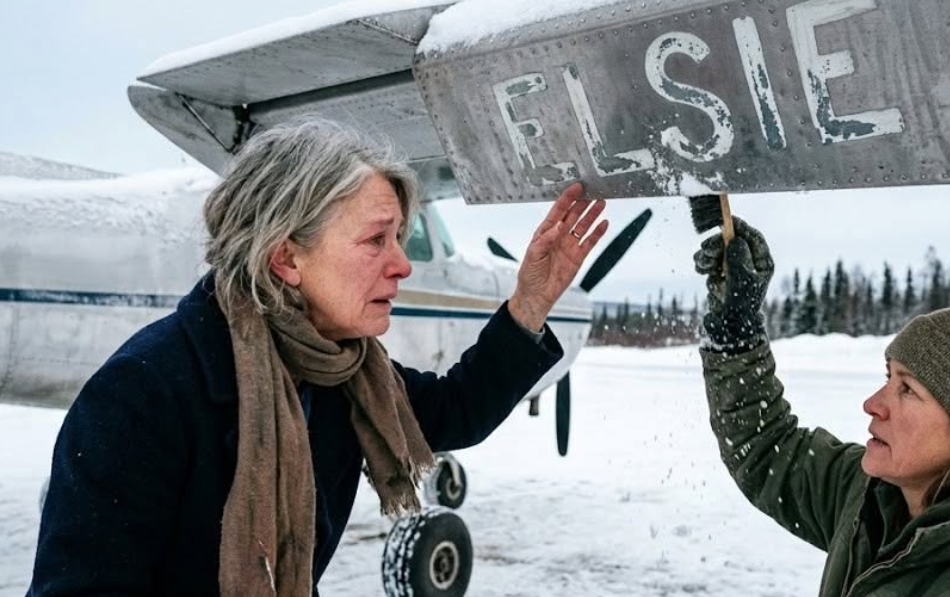
By two thirty that afternoon, Sarah had me standing beside an unmarked twin engine plane with a rag in one hand and a small flashlight in the other.
She brushed packed snow from a metal plate near the cockpit door.
“Read that.”
I bent closer. The plate was scratched, but the company name underneath the registration number was clear enough.
I had never seen that name in Henry’s estate inventory.
“That company owns the plane?”
Sarah checked the fuel gauge before answering. “This plane, yes.”
I looked down the row of aircraft. None carried the familiar markings from the public airline.
“Why isn’t it listed?”
Sarah put the flashlight into her coat pocket. “That is what the binder is for.”
She walked toward the hangar, and I followed her across the packed surface.
The largest bay was warmer than the others. Two mechanics were working near a tool cart, and a dispatcher sat at a desk with a headset around her neck.
Sarah checked the same latch twice before pulling the door shut behind us.
One mechanic looked at me, then at Sarah.
“Is this Ellen?”
Sarah nodded.
He wiped his hands on a cloth. “Henry said you would know what to do.”
“I am not sure I do.”
He gave a small smile. “Neither did he, sometimes.”
The dispatcher turned a page on her clipboard.
Sarah opened a cabinet and removed a black binder that had been handled so often the corners had gone gray.
She carried it to a worktable and set it down.
“This is the oldest operating file.”
I pulled out a chair.
Sarah opened the cover and turned one page.
My name was printed at the top of the first controlling page.
I read it twice before touching the paper.
“Ellen.”
“Yes.”
“That is my name.”
“I know.”
The two mechanics had stopped working. The dispatcher lowered her clipboard.
I looked at Sarah. “Why is my name here?”
She rested both hands on the binder.
“Because you were there when this began.”
The sentence sat between us while one of the mechanics quietly rolled a cart toward the far wall.
I turned the page.
There were dates, aircraft numbers, insurance references, and a list of routes I remembered only as lines Henry once drew on a kitchen calendar.
“You told me this was Henry’s project.”
“It was.”
“Then why am I on the ownership page?”
Sarah did not answer immediately.
Instead, she reached for another folder beneath the binder.
That folder had a date written across the tab.
March 9, eighteen years earlier.
I put my finger on the date.
“I have seen this before.”
Sarah looked at me. “Where?”
“In my garage.”
She opened the folder.
Inside were copies of insurance certificates, annual filings, route agreements, maintenance records, and correspondence with fuel vendors.
The papers were arranged in the same order someone had used year after year.
“Who kept these?”
“I did.”
“Every year?”
“Every year.”
I looked at the filing dates.
There were eighteen years of them.
“You renewed all this?”
Sarah nodded.
“Why?”
“Because Henry asked me to.”
She slid one insurance certificate toward me.
My signature was near the bottom.
I knew the handwriting. The wide E, the short final stroke on my last name.
I touched the page.
“I signed this.”
“You did.”
“When?”
“March 9, eighteen years ago.”
The hangar radio crackled from the dispatch desk.
The dispatcher answered, listened, and wrote a time beside a flight number.
I kept my finger on my signature.
“What was I authorizing?”
Sarah pulled out another sheet.
“Aircraft insurance.”
She added a second sheet.
“Route coverage.”
Then another.
“Winter service.”
I looked at the route agreement. Several northern communities were listed beside schedules and fuel commitments.
“Henry never told me this continued.”
“He knew it continued.”
“That is not what I asked.”
Sarah folded her arms.
“He thought you had forgotten.”
I looked up.
“Forgotten eighteen years of filings?”
“He thought you were busy keeping the public airline alive.”
That answer bothered me more than a denial would have.
I remembered invoices, payroll checks, fuel bills, vendor calls. I remembered Henry asking me to sign papers at the kitchen table while dinner cooled nearby.
I did not remember this company.
Sarah closed the folder.
“You built the paperwork with him.”
“I built paperwork for him.”
“No. You helped design the operation.”
The words were plain, but she did not take them back.
I looked again at the aircraft identification plate visible through the hangar door.
The plane had no public airline markings at all.
“How many aircraft?”
“Six.”
I turned toward her.
“Six?”
“Six operating aircraft. Two more are in reserve.”
“Where are the reserve planes?”
Sarah glanced toward the dispatcher.
“That is a question for the red ledger.”
She did not explain what the red ledger was.
At five o’clock, we moved into the small hangar kitchen because the maintenance office had become too cold.
The coffee in the metal pot had scorched at the bottom.
Sarah poured two cups anyway.
I took mine and set it beside the baggage tag on the counter.
She noticed it.
“Henry really sent you with that.”
“He left it for me.”
“Of course he did.”
I looked at her.
“You knew?”
“I knew he left instructions.”
“Did he tell you what the tag meant?”
Sarah picked up the pot and checked the burner.
“No.”
“Then why did you say that?”
“Because Henry was careful about ordinary objects.”
I turned the tag over.
The faded printing was almost rubbed away.
“You could have told me all this before I flew here.”
“I could not.”
“Why?”
Sarah set the pot in the sink.
“Because the records had to stay separate.”
“Separate from what?”
She looked toward the hangar door.
“From the public airline.”
I waited.
She did not add anything.
The coffee pot clicked as the metal cooled.
I pushed the baggage tag farther from the edge of the counter.
“Why did Henry keep this operation separate?”
Sarah reached for the black binder again.
“He had a reason.”
“What reason?”
She opened the binder to the first page.
“The reason is in the records.”
She turned the page toward me.
There was my signature again.
This time, beneath it, was a line I had not seen before.
Sarah put her finger beside the date.
“Read the name of the company.”
I did.
It was the same name stamped on the aircraft outside.
I looked back at her.
“I have never heard of it.”
Sarah closed the binder halfway.
“You had, Ellen.”
“From Henry?”
“No.”
She pushed the binder toward me.
“From yourself.”
The first page was a copy of an insurance certificate, not an ownership paper. Sarah tapped the lower corner with one finger.
“That is why I wanted you here.”
I looked at the date, then at the aircraft number typed beneath it.
“Why show me this first?”
“Because Michael has been asking the wrong question.”
A phone rang from the desk.
Sarah reached for the satellite unit before it rang a second time. The mechanic at the workbench stopped tightening a panel screw and looked over.
“Do not put him on speaker,” I said.
Sarah pressed the button anyway.
Michael’s voice came through with a faint crackle. “Ellen, you need to sign nothing.”
I kept my hand on the binder.
“What am I supposed to sign?”
“Nothing. Sarah knows the northern property belongs to the airline.”
Sarah glanced at me, then at the mechanic.
Michael continued. “Dad always treated it as part of the company. We need to keep the records consistent.”
“Which records?”
He did not answer that.
“Michael, who told you I was looking at records?”
The line went quiet for two seconds.
“David said you were asking questions.”
Sarah closed the binder.
“Michael has asked about these documents before,” she said.
His voice sharpened. “Sarah, do not make this harder.”
She looked at the mechanic. “You can go finish the fuel log.”
The mechanic set down his screwdriver.
“Do you want me to stay?”
Sarah nodded toward the door.
“No. Go.”
When he left, Michael said, “Ellen, please. Whatever Sarah is telling you, do not sign anything tonight.”
“I have not been offered anything to sign.”
“Good.”
The call ended.
Sarah removed the headset and set it beside the binder.
“He has been asking for years whether these documents could be absorbed into the airline.”
I looked at the closed binder.
“Years?”
“Since Henry started refusing.”
“Refusing what?”
Sarah did not answer immediately.
She stood and checked the outer office door, then came back to the desk.
“That is why the filings stayed separate.”
She picked up a ring of keys.
I watched the smallest brass key among them.
“Where are you going?”
“The records cabinet.”
The cabinet stood against the far wall, behind a stack of old maintenance forms. Sarah unlocked the first latch and then the second.
A new question had taken the place of the one I had carried north.
What had Michael been trying to remove?
Sarah pulled out a flat package wrapped in oilcloth.
“Henry told me not to open this unless you came yourself.”
I looked at the package.
“Then why did you bring me here?”
“Because he expected you to ask that.”
She carried it to the kitchen.
At 8:05, the coffee in the metal pot had a dark ring around its surface. Sarah poured two cups anyway and pushed one toward me.
I took it without drinking.
She locked the kitchen door and checked the latch twice.
“You said Michael has asked for years,” I said.
“Yes.”
“How many years?”
“Five that I know of.”
“Did Henry know?”
“Every year.”
Sarah lifted her cup.
“He asked me once whether Michael had found the filing number.”
“What did you tell him?”
“That I had renewed it.”
She set the cup down.
“Every year?”
“Every year.”
I ran my thumb along the edge of the oilcloth.
“Why would Henry make you keep renewing something Michael wanted gone?”
Sarah looked toward the locked door.
“Because Henry did not want a pressure campaign to become an ownership change.”
That answer sat between us.
I opened the oilcloth halfway.
Sarah put her hand over it.
“Not yet.”
I stopped.
“What am I supposed to decide?”
“Whether you want the truth badly enough to be angry with Henry.”
I gave a short laugh.
“I am already angry with him.”
“Then you are ready.”
She removed her hand.
The ledger underneath was red, darker at the edges from years of handling. A brass key lay beside it on the table.
I did not touch either one.
“Why keep this locked?”
“Because Michael asked to see it.”
“Did you let him?”
“No.”
Sarah took another sip of coffee.
“He asked me three different ways.”
“What were the other two?”
She gave me a tired smile.
“First he asked as an executive. Then he asked as Henry’s son.”
“And the third?”
“He asked as a buyer.”
I looked at the ledger again.
That last word changed the room more than Michael’s voice had.
“Buyer for what?”
Sarah folded the oilcloth over the ledger.
“That is the part you need to read for yourself.”
The coffee pot clicked as its heating plate shut off.
Sarah stood and carried the ledger back to the records cabinet.
I followed her.
“Do not lock it yet.”
She stopped with the cabinet door open.
“You are sure?”
“No.”
She waited.
I smoothed the edge of my coat pocket.
“Lock it.”
The brass key turned.
At 10:15, Henry’s wool scarf was folded across the bunk where I had put it after taking off my coat. My phone lit up beside it.
David.
The message was short.
We can settle this privately. There is no reason for the family to make this harder than it needs to be.
I read it twice.
Sarah was sitting on the other bunk, sorting copies of maintenance records into a stack.
“He knows Michael called.”
She did not look up.
“How?”
“The message came less than an hour after Michael’s call.”
I set the phone down.
“Maybe he is trying to help.”
“Maybe.”
She slid one certificate beneath another.
“Do you believe that?”
I looked at Henry’s scarf.
“I believe David wants the sale finished.”
Sarah nodded.
“That is different.”
My phone lit again.
This time it was Daniel.
Did Michael talk to you?
I showed Sarah the screen.
She read it and handed the phone back.
“He follows Michael when Michael is uncertain.”
“How do you know?”
“Because he has done it before.”
I put the phone face down.
Daniel’s message remained unanswered.
Sarah reached for the lamp.
“What do you want to do?”
“About Daniel?”
“About all of it.”
I looked toward the cabinet.
“Tomorrow morning, I want that ledger open.”
Sarah did not move.
“At six fifty-five.”
I checked the time.
“That is early.”
“You will want the records room before the maintenance crews come in.”
She turned off the lamp.
Then she stopped with her hand still on the switch.
“There is one page Henry told me never to copy.”
I looked at her.
“What page?”
She left the light on.
“The first ownership page.”
I waited for her to say more.
She did not.
Sarah picked up the key ring and walked back toward the records cabinet.
I followed her as far as the hallway.
The red ledger stayed locked behind the door.
Tomorrow was 6:55.
The brass key was still warm from Sarah’s hand when she set it beside the ledger.
I pulled the chair closer and turned the first page. The paper had gone soft at the corners, but the ink was clear enough to read.
“March 9,” I said. “Winter fuel shortage. Special northern reserve established.”
Sarah checked the wall clock. “Keep going.”
I ran my finger beneath the next line. Three aircraft. Two pilots. Fuel held back for communities the regular schedule could not reach.
“Why would Henry keep a reserve that large?”
“Because three days of canceled flights cost more up there than they did here.”
I looked at her. “You knew about this.”
“I knew the records.”
She reached across me and turned to the next page. A column of names followed the fuel figures, then payroll amounts, then the name of a company I did not recognize.
“Northline,” I said.
Sarah nodded.
I had never seen that name in Henry’s estate inventory. I turned another page, then another, until a paper tab stopped my hand.
“Why is my name written here?”
Sarah did not answer.
The ledger listed a deposit of eleven thousand eight hundred dollars beside my initials. Below it was a note about payroll setup and vendor accounts.
“I would not have handled eleven thousand eight hundred dollars without remembering it.”
“You handled much more than that.”
She closed the ledger halfway.
“Sarah.”
She opened it again.
The next entry was dated four days after the fuel shortage began. It listed the first aircraft lease, the insurance deposit, and a payment for winter tires.
At the bottom was a line in Henry’s handwriting.
Ellen approved the structure. Ellen handles payroll until further notice.
I read it twice.
“That sounds like me.”
“It was you.”
The black binder waited on the other side of the room. Sarah carried it over and laid it beside the ledger, then opened the binder to a tab marked Ownership.
The first document had yellowed along the edges.
I saw my signature before I saw the date.
March 18, eighteen years earlier.
My hand had written Ellen beside the printed ownership line.
I put my finger over the signature.
“I signed this.”
“Yes.”
“For Henry?”
“For the northern fleet.”
I turned to the second page. There was another signature lower down.
Michael.
His name was followed by the words witness and corporate secretary.
I sat back.
“Michael witnessed this?”
Sarah nodded.
“He was twenty-seven.”
“Why don’t I remember?”
“You were signing papers every week.”
That answer irritated me because it sounded like an excuse, and because it was probably true.
I remembered the kitchen table. I remembered invoices stacked beside the coffee maker. I remembered Henry asking me to initial pages while he called a vendor in Fairbanks.
But I had remembered those papers as ordinary company work.
“Did Henry ever tell me I owned this?”
Sarah’s hand stopped on the binder.
“No.”
I looked at the signature again.
“Then why did I sign it?”
Sarah closed the binder.
“That is what Henry wanted you to hear.”
She took the satellite phone from a shelf and set it on the table.
The screen showed one saved recording.
Henry’s name was beside it.
I touched the screen.
His voice came through thin and familiar.
“Ellen, if Sarah has played this, you have found the records.”
I put my palm flat on the table.
Henry continued.
“You asked the question that started the whole northern operation. You said waiting for weather was a fine excuse when a city could wait, but not when a family needed heat.”
I looked at Sarah.
She kept her eyes on the phone.
“You designed the separate fleet,” Henry said. “Not the accounting. Not the public airline reports. The actual service plan. You decided which routes had to stay open and which aircraft could be held ready.”
The recording clicked.
Then his voice returned.
“I put the ownership in your hands because you were the one who understood what it was for.”
The recording stopped.
I waited for another sentence.
Nothing came.
Sarah picked up the phone.
“That’s the first file.”
“First?”
“There are two.”
She slipped the phone into her coat pocket.
“Why would he stop there?”
“Because he wanted you to read the records before you heard the rest.”
I stood and walked back to the binder.
“Then give me the rest.”
“Not yet.”
I turned toward her.
“Sarah, you have spent years protecting documents I did not know existed. You do not get to decide when I read my husband’s words.”
She accepted that without arguing.
“Then we read the last ledger entry first.”
The office door stood open. Sarah crossed to it, checked the latch twice, and returned to the cabinet.
She took out the red ledger again.
The final page had a date eleven days before Henry passed away.
My eyes went first to the figures.
Fuel reserve.
Payroll reserve.
Insurance renewal.
Then I saw the sentence beneath them.
If they come for the northern operation, Ellen must see the chain. The others will follow until someone makes them choose.
I read it aloud.
Sarah sat down.
“Who are they?”
“You know who.”
“Michael and David?”
“And Daniel.”
I looked at the date.
“Henry wrote this eleven days before he passed away?”
“Yes.”
“He knew they were coming.”
“Michael had already asked for the ownership papers.”
My fingers moved to the edge of my coat pocket.
“How long had he been asking?”
“Years.”
That number sat between us.
Sarah opened the binder again.
“He wanted the filings absorbed into the public airline. I renewed them every year.”
“Why?”
“Henry asked me to protect your ownership.”
I looked at her.
“Every year?”
“Every year.”
She pointed to a row of renewal dates. There were eighteen of them.
The oldest was followed by my name.
The newest was dated six weeks before Henry passed away.
“You never told me.”
“I was following Henry’s instructions.”
“You were protecting something I did not know I had.”
“Yes.”
I closed the binder.
Sarah reached for the ledger, but I kept my hand on the cover.
“He did not leave me something,” I said. “He left me something I had already built.”
Sarah waited.
I opened the ledger again and read the final line.
Then I turned the page.
There was no page after it.
For the first time that morning, I noticed a narrow white envelope tucked into the back cover.
My name was written across it in Henry’s handwriting.
Sarah looked at the envelope.
“I was told not to open that.”
I picked it up.
“Neither was I.”
She stood.
“Then you should open it.”
I slid my thumb beneath the flap, but before it came free, the satellite phone lit up on the table.
Michael’s name appeared.
I stopped with the envelope half open.
Sarah looked at the screen.
“Don’t answer that.”
I lowered the envelope.
“Why?”
“Because he does not know what you have.”
The phone rang again.
I turned it face down.
Then I opened Henry’s envelope.
Sarah’s voice was still in the speaker when I shut the red ledger. “Keep the agreements together, Ellen. Do not let anyone separate the pages.”
Daniel was waiting beside the Buick with my suitcase already halfway into the trunk. He had one hand on the handle and the other on the lid.
“You came back sooner than I expected,” he said.
“I came back when I had enough.”
He pushed the suitcase down until it cleared the latch. “Michael wants the northern matter settled before the buyer’s inspection.”
I smoothed the edge of my coat pocket. “Tell Michael I will not sign anything.”
Daniel stopped with the trunk lid raised.
“Anything?”
“Anything that gives away control of the northern operation.”
He lowered the lid carefully. “He will say you are holding up the sale.”
“He can say it.”
Daniel looked toward the garage exit, then back at me. “He says the buyer is serious.”
“Then the buyer can read.”
Daniel rubbed his palms together. “There is something else.”
I waited.
“Michael thinks you are going to use the northern company to take more of the estate.”
“I am not.”
He nodded once, but did not move. “I will tell him.”
“Tell him exactly what I said.”
He opened the driver’s door for me, then hesitated. “Nine days, Ellen.”
I looked at him.
“That is how long Michael says the offer lasts.”
Nine days had become a number I could not leave sitting in someone else’s mouth.
The next morning, David had a folder waiting on the conference table when I walked into the main office. Michael stood near the locked records cabinet, straightening his cuffs.
David pulled a key from his pocket and opened the drawer. “We should deal with this before the board meeting.”
“You have a board meeting?”
“Not today,” Michael said.
David carried the folder to the table and opened it. The first page showed a preliminary offer for $2.7 million.
I put my purse on the chair.
“From whom?”
“An investment group,” David said. “Preliminary, but credible.”
Michael tapped the corner of the offer with one finger. “They want the aircraft and maintenance assets.”
“Which aircraft?”
David glanced at Michael.
Michael answered. “The package under review.”
“That is not an answer.”
David wrote $2.7 million in the margin beside the offer.
Michael straightened his cuffs again. “The offer disappears in nine days.”
“Nine days from today?”
“Yes.”
I pu