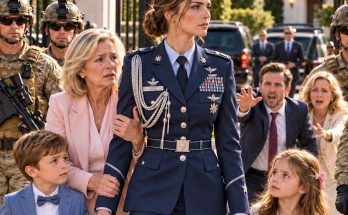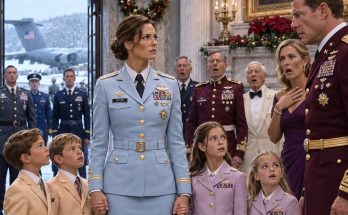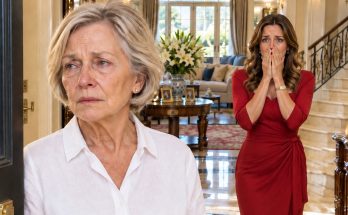
For twelve years, my mother had persuaded everyone in our hometown that I’d turned my back on my family to build a career in the Navy. At my father’s memorial service, she publicly shamed me
in a packed church and ordered me to take off my military uniform. I was ready to walk away when a retired general rose from his seat with Dad’s final letter in his hand and said, “Before you humiliate your daughter one more time, Helen, these people deserve to know the truth.”
My name is Rachel Lawson. For twelve years, the residents of Cedar Creek, Tennessee, had seen me as the daughter who selfishly chose the Navy instead of her family.
My mother, Helen Lawson, had spent years making certain that was the story everyone heard.
That morning, I was alone in my hotel room, looking at my dress uniform.
The ribbons were lined up precisely, and each decoration stood for sacrifices that no one in my family understood.
Six weeks before my father passed away, he’d asked me for one last thing.
“Rachel, when they hold my memorial, I want you to wear the uniform you’ve earned. Don’t do it for anyone else, sweetheart. Do it for me.”
I’d given him my word.
And even though I knew my mother would be furious, I dressed in my uniform and headed to the church.
The parking lot was filled with cars belonging to neighbors, veterans, town officials, and men who had once served in the military.
They had come to pay tribute to retired Army Colonel Robert Lawson.
Most of them remembered him as a decorated military officer.
I remembered the father who showed me how to replace a flat tire, added cinnamon to our pancake batter, and always made certain I knew how much he loved me.
I hadn’t attended his funeral six weeks before.
Everyone in town assumed I’d chosen not to return.
What they didn’t know was that while Mom was telling people the Navy had turned me into a heartless, self-centered woman, I was unconscious in a military hospital in Germany.
An overseas assignment had left me seriously injured, and my recovery had lasted far longer than expected.
Nobody in Cedar Creek had been told what happened.
As I walked into the church, the conversations around me began to fade.
There were faces I’d known for most of my life, but instead of warmth, I saw disapproval in their eyes.
Then my younger sister, Chloe, spotted me.
“Rachel?”
Tears appeared in her eyes.
“You actually came.”
I gave her a faint smile.
“I made Dad a promise.”
She moved as though she wanted to come closer, but Mom stepped directly into her path.
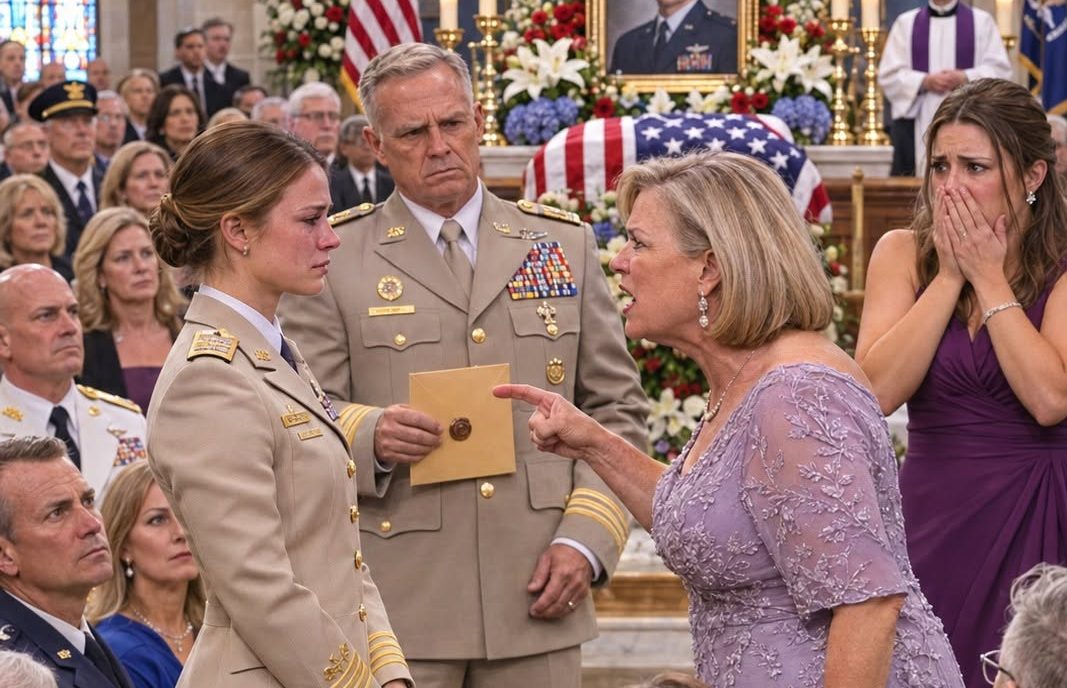
Helen Lawson looked me over, beginning with my polished shoes and ending with the ribbons displayed across my chest.
Her face tightened.
“No.”
Her voice carried through the church.
“You are not coming in here dressed like that.”
I struggled to speak past the tightness in my throat.
“Dad asked me to wear it.”
“This memorial is supposed to honor your father, not give you a chance to parade your achievements around!”
People nearby turned to watch.
Mom spoke even louder.
“You didn’t care enough to show up for his funeral, Rachel. And now you think we’re all supposed to stand here and admire you?”
That old, familiar feeling of shame came rushing back.
For twelve years, she’d made me feel as though serving my country was something to apologize for. She’d punished me with guilt for moving away and building a life she couldn’t control.
And now she was doing the same thing.
With the entire church watching.
My eyes went to Dad’s portrait near the altar.
For one awful moment, I thought about turning around and leaving.
Then I heard a chair scrape against the church floor.
Retired Brigadier General Arthur Bennett, my father’s dearest friend, stood slowly from his place in the front pew.
A sealed envelope rested in his hand.
The instant Mom saw it, the color drained from her face.
Arthur walked toward us, his steps calm and deliberate.
“Helen,” he said in a steady, commanding voice, “before you embarrass Rachel again, everyone in this church needs to know why Robert placed this letter in my care.”
Mom started to protest.
“Arthur, there’s no reason to do this.”
He paid no attention to her objection.
Instead, he turned the envelope so I could see it.
On the front, written in Dad’s familiar handwriting, were three simple words.
FOR RACHEL ONLY.
My hands started to shake.
My father had written one final message for me.
But when Arthur glanced at my mother and then at the congregation, which had fallen completely silent, I understood that the envelope held much more than my father’s farewell.
Inside was the truth Mom had worked for twelve years to keep hidden from everyone.
And Arthur was about to explain why.
Arthur looked at me, waiting for permission.
I could hear the faint hum of the church’s air conditioning and the rustle of someone shifting in a pew. Otherwise, the room was perfectly quiet.
“Rachel,” he said gently, “your father wanted you to decide whether this letter should be read aloud. I won’t open it unless you ask me to.”
My mother took an anxious step forward.
“Robert wrote that when he was sick. He wasn’t thinking clearly.”
Arthur turned toward her.
“Robert was of sound mind when he wrote it, Helen. I was sitting beside him.”
“That doesn’t mean you have the right to embarrass this family.”
“Then perhaps you should stop doing it yourself.”
A murmur moved through the congregation.
Mom’s lips pressed into a thin line.
I stared at the envelope.
For twelve years, I had wanted my father to stand up for me. To tell my mother that joining the Navy wasn’t a betrayal. To remind the people in Cedar Creek that I hadn’t stopped loving my family simply because I’d chosen a different life.
Now he was gone.
And the only thing left between us was a letter.
“May I read it first?” I asked.
Arthur’s expression softened.
“Of course.”
He handed me the envelope.
The paper felt surprisingly heavy in my trembling fingers.
I recognized Dad’s handwriting immediately. He always pressed too hard with his pen, leaving faint impressions on the back of each page.
I carefully broke the seal.
Inside were three folded sheets of cream-colored stationery.
The first line nearly brought me to my knees.
“My dearest Rachel, if you’re reading this, then I’ve run out of opportunities to tell you the things I should have said while I was alive.”
I stopped.
Arthur placed a steady hand beneath my elbow.
“Take your time.”
I swallowed and kept reading.
Dad began by telling me how proud he’d been the day I received my commission.
He described standing in the audience, watching me raise my right hand, remembering how I’d spent my childhood following him around the house asking questions about military life.
Then he wrote something that made my chest tighten.
“Your mother told you I was disappointed when you chose the Navy instead of the Army. That was never true. I was proud of you from the beginning, and I should have made certain you knew it.”
I glanced toward Mom.
She was staring at the letter as though she could somehow make it disappear.
I continued.
“Rachel, I know what your mother has been telling people. I know she has said that you abandoned us, that you stopped calling, and that you cared more about your career than your family.
“Those things are not true.
“But there is another truth I need to admit.
“For too many years, I allowed her to speak for both of us.
“I told myself that arguing would only make things worse. I convinced myself that keeping peace in our house was more important than correcting what people believed about you.
“I was wrong.
“My silence hurt you, and I am deeply sorry.”
I pressed the page against my chest.
Dad had known.
All those years I’d imagined he believed the same things Mom said about me, he’d known I wasn’t the person she described.
And he’d done nothing to stop it.
That realization hurt almost as much as losing him.
I looked up at Arthur.
“How long did he know?”
Arthur’s eyes filled with sadness.
“Longer than he wanted to admit.”
Mom immediately interrupted.
“Robert and I had private conversations about our daughter. You have absolutely no business discussing them.”
Arthur didn’t raise his voice.
“Helen, Robert spent the final months of his life trying to correct something he should have corrected years earlier. I’m honoring his wishes.”
“You’ve always encouraged Rachel to disrespect me.”
“No,” Arthur replied. “I encouraged her to serve honorably. Those are two different things.”
My sister Chloe had moved closer.
She looked from my mother to the pages in my hand.
“Rachel, what does the rest say?”
I hesitated.
Some part of me wanted to fold the letter, put it in my pocket, and keep Dad’s words for myself.
But I thought about the faces that had greeted me when I entered the church.
The disappointment.
The judgment.
The certainty that they knew my life.
For twelve years, I had carried the consequences of a story I hadn’t created.
Maybe it was time everyone heard a different one.
I turned to Arthur.
“Would you read it?”
He studied my face.
“Are you certain?”
I nodded.
“Yes.”
He accepted the letter carefully.
Then he walked toward the front of the church.
The minister stepped aside, giving him room at the lectern.
Arthur adjusted his glasses and looked out over the congregation.
“Before I read Colonel Lawson’s words, I want to explain something.”
My mother shook her head.
“Arthur, please.”
He continued.
“Robert was one of the finest officers I ever served beside. He was brave, disciplined, and devoted to his soldiers. But he told me himself that he failed to show that same courage when his own daughter needed him.”
I felt tears sliding down my cheeks.
Arthur unfolded the first page.
He read the opening paragraphs slowly.
When he reached Dad’s admission about allowing Mom to speak for him, the atmosphere in the church changed.
People stopped looking at me with disapproval.
Instead, their attention shifted toward my mother.
Arthur continued.
“Rachel never abandoned this family. She called. She wrote. She sent gifts on birthdays and holidays. She asked about my health, my appointments, and my treatments, even when her own assignments placed her thousands of miles away.”
Chloe made a small, broken sound.
I turned toward her.
Her hands were pressed together, and tears ran down her face.
Arthur read on.
“Many of those letters never reached me when they were sent. Some were returned to Rachel. Others were kept from me until much later. I discovered this after finding a box of unopened mail in our house.”
My stomach dropped.
I hadn’t known about the box.
I remembered the birthday cards that went unanswered.
The Christmas presents Chloe never acknowledged receiving.
The handwritten letters I’d sent from overseas, hoping that perhaps a letter would succeed where phone calls had failed.
Mom had told me Dad didn’t want them.
Dad had been told I’d stopped writing.
Arthur lowered the page for a moment.
A woman in the second row whispered, “Oh, Helen.”
Mom’s face flushed.
“This is completely inappropriate.”
Chloe turned sharply toward her.
“Did you take Rachel’s letters?”
“Chloe, not now.”
“Did you?”
Mom’s eyes darted around the church.
“I was protecting your father from unnecessary stress.”
“By hiding his daughter’s letters?”
“He was sick!”
Arthur spoke quietly.
“Some of those letters were dated years before Robert became ill.”
Mom opened her mouth, then closed it.
I watched her struggle to find an explanation that would survive the next question.
For most of my life, I’d believed my mother could control any conversation simply by becoming the loudest person in it.
But there was nothing she could say that would change the dates on those envelopes.
Arthur returned to the letter.
“Rachel, when I finally learned how much you’d tried to reach me, I was ashamed. I should have asked more questions. I should have called you directly. I should never have accepted anyone else’s version of our relationship without speaking to you myself.”
He paused.
I remembered one particular night, nine years earlier, sitting on the edge of my bunk after receiving a short email from Dad’s account.
It had said he was disappointed in how distant I’d become.
I’d spent an hour writing a reply, explaining how much I missed him.
Nobody ever answered.
For years, that silence had followed me through deployments, promotions, holidays, and birthdays.
Now I understood that I had been trying to repair a relationship through a door someone else was deliberately holding closed.
Arthur turned to the second page.
“There is something else the people of Cedar Creek deserve to know.”
Mom suddenly stepped into the aisle.
“That’s enough.”
Her voice echoed across the church.
Arthur looked at her.
“Please sit down, Helen.”
“No. You’re turning my husband’s memorial into some sort of public trial.”
I felt myself straighten.
“Mom.”
She turned toward me.
“What?”
“You asked me, in front of everyone, why I didn’t come to Dad’s funeral.”
Her expression hardened.
“And you still haven’t explained yourself.”
“I tried.”
“You sent a message through a military office. You couldn’t even bother calling your own mother.”
The words struck me with unexpected force.
Because until that moment, I hadn’t realized how much she knew.
I looked directly at her.
“What did the message say?”
Mom hesitated.
“What?”
“The message from the military office. What did they tell you?”
She glanced toward Arthur.
“They said you weren’t available.”
“Is that all?”
“Rachel, this is not the place.”
“You made it the place.”
My voice trembled, but I didn’t look away.
“What did they tell you?”
Mom’s eyes narrowed.
“They said you were injured.”
The entire church seemed to hold its breath.
I stared at her.
“You knew?”
She looked down.
“I didn’t know the details.”
“But you knew I was hurt.”
“Yes.”
“And you told everyone I refused to come home?”
Her silence answered before she spoke.
“I thought you were exaggerating the situation. You’ve always been secretive about your assignments.”
I felt the blood drain from my face.
For weeks, I’d believed my family simply hadn’t received the full information.
Now I realized that wasn’t the whole story.
My mother had known enough to understand that something was wrong.
And she’d used my absence as another opportunity to turn people against me.
Arthur stepped away from the lectern.
“Helen, the notification clearly stated that Rachel was hospitalized overseas and medically unable to travel.”
Mom looked startled.
“How would you know?”
“Because I received a separate update after Robert’s funeral. Rachel had listed me as an additional person who could receive certain medical updates if she couldn’t communicate herself.”
I remembered making that decision before my last deployment.
Dad had been growing weaker.
Arthur had always been dependable.
I hadn’t wanted my father worrying unnecessarily, but I wanted someone I trusted to know if anything serious happened.
Arthur looked toward the congregation.
“Rachel was critically injured while serving overseas. She underwent emergency treatment and was transferred to a military hospital in Germany. During the days surrounding her father’s funeral, she was unconscious.”
A woman gasped.
Chloe covered her mouth.
I closed my eyes.
I’d survived the injury.
I’d survived surgery, long nights of pain, and the frightening uncertainty of whether I would regain full use of my left leg.
But hearing Arthur describe those days while standing in my father’s church was harder than I’d expected.
Arthur continued.
“Her absence was not a choice. It was a medical necessity.”
Chloe hurried toward me.
“Rachel.”
I barely had time to turn before she wrapped her arms around me.
She was shaking.
“Oh, God. I didn’t know.”
I held her close.
“I know.”
“Mom told me you said the funeral would interfere with your assignment.”
“I never said that.”
“I called your number. It went straight to voicemail. I thought you didn’t want to talk to me.”
My throat tightened.
“I couldn’t answer, Chloe.”
She pulled back, searching my face.
“Why didn’t you tell me afterward?”
“I tried. When I woke up, I asked the hospital staff to help me contact family. I left messages once I could use my phone again.”
“I never got anything.”
I looked toward our mother.
She stood motionless in the aisle.
Chloe followed my gaze.
For a long moment, neither of us spoke.
Then my sister whispered, “What else haven’t you told me?”
Mom’s eyes filled with tears.
“Everything I did was for this family.”
Chloe shook her head.
“No. Everything you did was to keep us apart.”
That was the first time I’d ever heard my younger sister openly challenge her.
And somehow, it hurt almost as much as it relieved me.
Arthur returned to the lectern.
“There’s one final portion of Robert’s letter I would like to read, if Rachel agrees.”
I nodded.
He unfolded the last page.
“Rachel, I know you’re going to be angry with me when you learn how much I knew. You have every right to be.
“I spent my military career telling young officers that integrity means doing the right thing even when it costs you something.
“Yet inside my own home, I chose comfort over courage.
“I let your mother control the story because confronting her meant confronting the problems in our marriage.
“That was cowardice, and I won’t excuse it.
“But I need you to understand one thing.
“Not for one day did I stop loving you.”
I pressed my fingers against my lips.
Arthur’s voice became rough.
“You are not the daughter who abandoned her family.
“You are the daughter who kept reaching for us, even when we made it difficult.
“You are the officer who built a life of service and responsibility.
“And you are the little girl who once followed me into the garage wearing my boots, determined to be just like her father.”
A soft laugh escaped me through my tears.
I remembered those boots.
They’d been so large that I’d needed both hands to keep them from falling off.
Dad used to call me his little lieutenant.
Arthur continued.
“I cannot give you back the years we lost. I cannot undo the hurt my silence caused.
“But perhaps I can give you something I’ve denied you for far too long.
“The truth.
“And if there is one thing I want everyone to remember about my daughter, it is this:
“Rachel Lawson never dishonored this family.
“I dishonored her by failing to defend her when she deserved it.”
Arthur stopped reading.
Nobody moved.
Then he reached the final paragraph.
“Rachel, I asked you to wear your uniform to my memorial because I want you to stand before the people who misunderstood you and know that you have nothing to hide.
“Every ribbon you’ve earned represents work, hardship, and service that I respect.
“Don’t take it off for anyone.
“Not even your mother.
“With all the love I should have shown you more openly,
“Dad.”
Arthur lowered the letter.
The silence seemed to stretch forever.
Then an elderly man in the third row stood.
I recognized him immediately.
Sergeant Major Thomas Whitaker.
He’d served under Dad decades earlier and had known me since childhood.
He looked directly at me.
“Commander Lawson,” he said, “I owe you an apology.”
I wiped my cheeks.
“Sergeant Major, you don’t—”
“Yes, ma’am. I do.”
His weathered face tightened.
“Your father once trusted me with his life. I should have had enough respect for both of you to ask questions before believing rumors.”
He straightened.
Then he raised his right hand in a crisp salute.
My breath caught.
For a moment, I couldn’t move.
Then years of training took over.
I returned the salute.
One by one, several other veterans stood.
Some had served with Dad.
Others had watched me grow up.
A few simply lowered their heads, visibly ashamed.
I heard someone whisper, “We had no idea.”
Another voice answered, “We never asked.”
That distinction mattered.
They hadn’t known because they’d accepted what they were told.
And for the first time, I realized I was allowed to be angry about that, too.
My mother watched the exchange with an expression I couldn’t quite read.
It wasn’t remorse.
Not yet.
It was the look of someone who had spent years controlling a room and had suddenly discovered that people could think for themselves.
“Well,” she said sharply, “I hope everyone is satisfied.”
Chloe turned.
“Mom, stop.”
Helen looked at her in disbelief.
“Excuse me?”
“You’ve hurt Rachel enough.”
“I am your mother.”
“And Rachel is my sister.”
Mom’s face hardened.
“You have no idea what she put this family through.”
Chloe stood beside me.
“Then tell me. Tell me one thing she actually did, instead of something you said she did.”
Mom looked around the church.
Nobody offered her an answer.
“I was the one here,” she said finally. “I took care of your father when he was sick. I managed the house. I handled the appointments. I was the one who stayed.”
I understood then that some of what she said was true.
She had cared for Dad.
She had carried responsibilities I couldn’t share from thousands of miles away.
And perhaps, somewhere along the way, she’d convinced herself that my absence made my love less valuable than hers.
But the truth of her sacrifice didn’t erase the harm she’d caused.
“I know you cared for him,” I said quietly.
Mom blinked.
For a moment, she appeared surprised that I had acknowledged it.
“I know you were exhausted. I know Dad’s illness was difficult. I’ve never denied any of that.”
I stepped closer.
“But you turned every mile between us into evidence that I didn’t love him. You hid my letters. You made Chloe believe I didn’t care about her. And today, knowing I was seriously injured, you accused me of missing Dad’s funeral because I was selfish.”
Her eyes flickered.
“You don’t understand what it was like.”
“Then you should have told me.”
She looked away.
“You were never here.”
“I wasn’t always physically here. But I was your daughter. I called. I wrote. I tried to help. And when Dad asked me to come home, I came whenever my duties allowed it.”
My voice broke.
“I spent twelve years trying to prove I loved you enough. You kept changing what enough meant.”
Mom didn’t answer.
The minister approached us gently.
“Perhaps we should continue the memorial.”
Arthur nodded.
“That’s what Robert would have wanted.”
For the first time since entering the church, I felt something loosen inside my chest.
I hadn’t come to defend my career.
I’d come to honor my father.
And despite everything that had just happened, I still wanted to do that.
The minister invited everyone to return to their seats.
Chloe squeezed my hand.
“Sit with me?”
I nodded.
Together, we walked toward the front pew.
Mom remained standing in the aisle for several seconds before taking a seat farther down the row.
Arthur handed me Dad’s letter.
“There’s something else,” he whispered.
My stomach tightened.
“Another secret?”
He gave me a tired smile.
“No. Something your father wanted you to have.”
From inside his jacket, he removed a small velvet pouch.
He placed it in my palm.
I opened it.
Inside was a silver challenge coin.
One side bore Dad’s former unit insignia.
The other had been engraved with a message.
“TO MY DAUGHTER, MY PROUDEST LEGACY.”
I stared at the words.
“He had that made last year,” Arthur said.
“Last year?”
Arthur nodded.
“He kept saying he was going to give it to you when you came home. Then he got sick, and he kept putting it off.”
My fingers curled around the coin.
“Why didn’t he just mail it?”
Arthur looked toward Dad’s portrait.
“Because he thought he’d have more time.”
Those words struck harder than anything else that morning.
Dad had thought there would be another visit.
Another conversation.
Another chance to say what mattered.
And I’d thought the same thing.
The memorial resumed.
There were prayers, hymns, and stories about Dad’s years of service.
A former soldier described how Dad had stayed awake through the night beside a young private whose mother had died unexpectedly.
Another remembered Dad giving up his holiday leave so a junior officer could spend Christmas with his newborn daughter.
I listened carefully.
These were the stories I’d grown up hearing.
Stories about a man who believed responsibility mattered.
Who taught his soldiers to protect people who couldn’t protect themselves.
Who understood loyalty as something more demanding than simply standing beside someone.
But I was beginning to understand that the same man could be courageous in one part of his life and afraid in another.
Dad had been a good officer.
He had loved me.
And he’d failed me.
All three things could be true.
When the minister invited family members to share a memory, Chloe stood.
She walked toward the lectern, holding a folded tissue.
“My dad used to tell me that being brave didn’t mean you weren’t scared,” she began. “It meant doing what was right even when you were.”
She looked toward me.
“I haven’t been very brave.”
I shook my head slightly, but she continued.
“For years, I believed things about my sister that I never bothered to ask her about. I let other people decide what kind of person she was.”
Her voice trembled.
“And I want to say, in front of everyone, that I’m sorry.”
She looked directly at me.
“Rachel, I missed having a sister. But I know now that I helped keep you away.”
Tears filled my eyes again.
“I missed you, too,” I whispered.
Chloe smiled through her tears.
Then she shared a story about Dad teaching us to ride bicycles.
She described how he’d run behind her for nearly two blocks, refusing to let go of the seat until she finally shouted that she could ride by herself.
“He spent his whole life teaching us to stand on our own feet,” Chloe said. “I think he’d want us to start doing that today.”
When she returned to the pew, I reached for her hand.
This time, I didn’t let go.
After the final hymn, the minister announced that anyone wishing to speak privately with the family could remain.
People slowly began approaching me.
Some offered condolences.
Others apologized for the things they’d believed.
A former neighbor admitted she’d repeated stories about me at church gatherings.
A retired teacher told me she’d always wondered why the girl who once volunteered at every Veterans Day ceremony had supposedly grown into someone who despised her family.
I thanked them.
But I didn’t tell everyone their assumptions were understandable.
I didn’t pretend the apologies erased the years.
I had spent too long making other people comfortable at my own expense.
Near the front doors, I noticed Mom speaking with two women from her church committee.
They listened politely, but neither looked convinced.
When she saw me, she excused herself and approached.
“Rachel, we need to talk.”
Chloe shifted beside me.
“I’ll stay.”
Mom gave her a sharp look.
“This is between your sister and me.”
I touched Chloe’s arm.
“It’s okay.”
She hesitated.
“Are you sure?”
“Yes.”
Chloe stepped away, though she remained nearby.
Mom folded her arms.
“I hope you realize what you’ve done.”
I stared at her.
“What I’ve done?”
“Your father was a respected man. People came here to honor him, and now they’ll remember this day because of some family disagreement.”
“Arthur read Dad’s own words.”
“Words he never should have written.”
I felt a sudden, deep exhaustion.
“Mom, do you hear yourself?”
Her expression tightened.
“What is that supposed to mean?”
“Dad spent his final months trying to tell me he was sorry. And you’re angry because people heard him.”
She looked down at the floor.
For several seconds, she said nothing.
Then her voice changed.
“I was afraid of losing you.”
I hadn’t expected those words.
I waited.
“When you left for the Navy, you were so determined. You had your whole life planned. You didn’t need me anymore.”
“That’s not true.”
“It felt true.”
She looked at me with red eyes.
“Your father understood your world. He understood deployments and ranks and all those places you went. I didn’t. And every time you came home, you seemed farther away.”
I thought about the young woman I’d been at twenty-two, standing in the kitchen with my first set of orders, excited and terrified.
Mom had barely looked at them.
She’d simply asked whether I’d considered how embarrassed the family would be if I failed.
“I needed you, Mom,” I said softly. “More than you know.”
Her face changed.
I continued.
“I needed you when I was frightened during training. I needed you after my first deployment. I needed you when I got injured.”
My throat tightened.
“And after Dad died, I needed my mother. Instead, you were telling everyone I didn’t care enough to come home.”
She lowered her eyes.
“I was angry.”
“I know.”
“I felt abandoned.”
“But I didn’t abandon you.”
Tears began slipping down her face.
For the first time that morning, she didn’t try to interrupt me.
“I understand that you were hurt when I left,” I said. “But being hurt doesn’t give you the right to hurt me.”
She nodded faintly.
Then she reached toward my hand.
I stepped back.
The movement was small, but she noticed.
“Rachel?”
“I can’t pretend we’re okay.”
Her expression crumpled.
“I’m your mother.”
“Yes. And I love you.”
She looked hopeful.
“But love doesn’t mean I have to keep accepting this.”
Her hand fell to her side.
“I don’t know how to fix it.”
“Neither do I.”
For once, that was the truth I needed to tell her.
I wasn’t going to offer a quick solution simply to end an uncomfortable conversation.
“You can start by telling Chloe the truth,” I said. “All of it. And by correcting what you’ve told other people.”
Mom swallowed.
“Everyone already heard Arthur.”
“Arthur can’t take responsibility for what you did.”
She looked away.
“I need time.”
“So do I.”
A few moments later, she walked toward the side entrance.
I watched her go without following.
There was no dramatic embrace.
No sudden transformation.
No promise that everything would be different tomorrow.
But for the first time in twelve years, I wasn’t chasing her approval.
And that felt like a beginning.
Arthur found me beside Dad’s portrait after most of the guests had left.
He stood quietly for a while.
Then he said, “Your father would have been proud of you today.”
I looked at him.
“Would he?”
Arthur nodded.
“Very.”
I studied Dad’s familiar face in the photograph.
“Then why did he wait so long?”
Arthur sighed.
“Because he was human, Rachel. And sometimes the people we admire most disappoint us in ways we never expected.”
I turned the challenge coin over in my hand.
“I spent years believing he agreed with everything Mom said.”
“I know.”
“And now I find out he loved me, believed in me, and knew I was being treated unfairly.”
Arthur lowered his head.
“He should have done more.”
The simplicity of that answer surprised me.
No excuses.
No explanation that love somehow justified silence.
Just an acknowledgment.
“He was trying to change that near the end,” Arthur said. “He began calling people he’d spoken to over the years. Correcting things. He even wrote several letters.”
“Did he send them?”
“Some. Not all.”
I looked toward the portrait again.
“Why didn’t he tell me?”
“He wanted to do it in person. He told me he didn’t want his apology to be another thing you had to read alone.”
I gave a sad smile.
“Well, Dad didn’t get his way on that one.”
Arthur’s eyes glistened.
“No, sweetheart. He didn’t.”
We stood together until the church grew quiet.
Then Arthur reached into his briefcase.
“There’s something I want to show you.”
He handed me a small folder.
Inside were photocopies of several letters Dad had written to old friends and neighbors during his final months.
Each corrected something he’d heard repeated about me.
One explained that I had continued communicating with him.
Another described the pride he’d felt when I received a Navy commendation.
A third asked an old family friend to stop saying I’d been too embarrassed to return home.
The letters weren’t elaborate.
They were direct and imperfect.
But they existed.
“He started trying before he knew how little time he had left,” Arthur said.
I traced Dad’s signature with my finger.
For the first time, I could see his final letter not as a sudden attempt to redeem himself after death, but as part of something he had begun while he was still alive.
It didn’t erase the past.
But it mattered.
“Can I keep these?”
“They’re yours.”
I placed the folder beneath my arm.
Arthur hesitated.
“There’s one more thing I think you should know.”
I looked up.
“Your father asked me to look after you.”
I smiled faintly.
“I think you’ve already done that.”
He shook his head.
“He wasn’t asking me to protect your career or speak on your behalf. He said you’d never needed anyone to fight your battles for you.”
Arthur glanced toward the empty pews.
“He said, ‘Just make sure Rachel knows she still has family.'”
My eyes filled again.
Arthur opened his arms.
This time, I stepped into the embrace without hesitation.
He held me the way Dad used to when I was little.
Firmly.
Quietly.
Without needing to fill the silence.
A week later, I was still in Cedar Creek.
Originally, I’d planned to return to my duty station immediately after the memorial.
But my doctors had recommended that I take the remaining portion of my approved recovery leave before resuming full duties.
For once, I listened.
I spent the first few days resting at Arthur’s guesthouse.
He and his wife had offered me a place to stay, and I accepted because I wasn’t ready to return to my childhood home.
Chloe visited every afternoon.
At first, our conversations were awkward.
There were twelve years of birthdays, holidays, arguments, weddings, promotions, and ordinary days we’d missed.
She told me about her work at the local elementary school.
I told her about my life in the Navy, the places I’d lived, and the friends who’d become my family when my own seemed so far away.
We discovered that we still laughed at the same ridiculous things.
That we both hated the sound of someone chewing ice.
That we still remembered Dad’s terrible jokes.
One afternoon, Chloe arrived carrying a cardboard box.
She set it on Arthur’s dining room table.
“I found these in the storage closet at Mom’s house.”
I stared at the box.
My handwriting covered several envelopes near the top.
“Are those…?”
She nodded.
“Your letters.”
I sat down slowly.
Inside were birthday cards, photographs, postcards, and letters I’d sent over the years.
Some had never been opened.
Others had been opened and returned to their envelopes.
There was a photograph of me standing beside my unit after a deployment.
A Christmas card I’d sent Chloe when she turned twenty-one.
A letter I’d written to Dad after my first promotion.
I picked it up.
The envelope had been opened.
I pulled out the pages and began reading.
I had told Dad how much I wished he could have attended the ceremony.
I’d described the commanding officer who’d pinned my new insignia in place.
And at the bottom, I’d written:
“I hope you’re proud of me, Dad. I still think about everything you taught me.”
My eyes blurred.
Chloe sat beside me.
“I don’t know how Mom convinced herself this was okay.”
I folded the letter.
“Maybe she didn’t want to think about it.”
Chloe nodded.
“She told me you stopped sending birthday presents because you thought we were beneath you.”
I looked at her.
“Chloe, I sent you something every year.”
“I know that now.”
She reached into the box and pulled out a small blue package.
The wrapping paper had faded.
A tag on top read, “Happy 25th Birthday, Chloe. Love, Rachel.”
She carefully opened it.
Inside was a silver bracelet with a tiny compass charm.
I remembered buying it in a shop near the naval base.
I’d chosen the compass because Chloe had always dreamed of traveling.
She held it up.
“It’s beautiful.”
I smiled through my tears.
“I thought you’d like it.”
She fastened it around her wrist.
Then she leaned against my shoulder.
“I wish I’d gotten it when you sent it.”
“Me too.”
We sat there for a long time, going through the box.
Some letters made us laugh.
Others made us cry.
But every envelope was proof of something important.
I hadn’t imagined those years of trying.
They had happened.
And now Chloe knew.
Two days later, my mother called.
I almost didn’t answer.
When I finally picked up, she sounded different.
Not warm exactly.
Just uncertain.
“Rachel?”
“Hi, Mom.”
There was a pause.
“Chloe told me she brought you the box.”
“She did.”
“I didn’t realize how many things were in there.”
I closed my eyes.
“Mom, you put them there.”
Another silence.
“Yes.”
I waited.
For years, I’d rushed to rescue her from uncomfortable moments.
I wasn’t going to do that anymore.
Finally, she spoke.
“I’ve been thinking about what happened at the church.”
“Okay.”
“I was angry when Arthur read the letter.”
“I know.”
“I felt like everyone was turning against me.”
I leaned back in my chair.
“Did you think about why?”
She took a shaky breath.
“Yes.”
For the first time, I heard something other than defensiveness in her voice.
“I’ve told people things about you that weren’t fair.”
I said nothing.
“I made your choices sound like personal attacks against me. And when people sympathized with me, it made me feel justified.”
Her voice cracked.
“After a while, I think I started believing my own version.”
I stared out the window.
Arthur was trimming roses in the garden.
A small bird landed on the fence, then disappeared into the trees.
“I need you to understand something,” I said.
“I’m listening.”
“I don’t know whether I can trust you again.”
She began crying quietly.
“I know.”
“And an apology won’t change that.”
“I know.”
I felt my own tears gathering.
“But if you want a relationship with me, it has to be based on who I actually am. Not the person you tell people I am.”
“All right.”
“And I need you to respect my choices. My career. My life.”
She took a breath.
“I’ll try.”
It wasn’t a perfect answer.
But at least she hadn’t promised something she could prove only with time.
Before hanging up, she said, “Rachel, I am sorry you were hurt overseas. I should have asked whether you were safe instead of assuming the worst.”
My throat tightened.
“Thank you.”
“And I’m sorry about the funeral.”
I closed my eyes.
“That mattered, Mom.”
“I know.”
For the first time, I believed she might be beginning to understand.
Not because she’d said the right words.
Because she hadn’t tried to make me responsible for comforting her afterward.
The following Sunday, Mom stood before her church congregation.
I wasn’t there.
Chloe told me about it afterward.
Mom had asked the minister for a few minutes to correct what she’d said about me over the years.
She acknowledged that I had written home, that she had withheld correspondence, and that my absence from Dad’s funeral had been caused by a serious injury.
She didn’t give an elaborate explanation.
She didn’t ask the church to forgive her.
She simply admitted that she’d misrepresented her daughter.
Chloe called me that evening.
“She actually did it.”
I sat on Arthur’s porch, watching the sunset turn the Tennessee hills gold.
“How did people react?”
“Mostly, they listened.”
“Did she blame anyone?”
“No.”
I looked down at the challenge coin in my hand.
“That’s something.”
“It is.”
Chloe hesitated.
“Are you going to see her before you leave?”
I thought about the question.
“I think so.”
And three days later, I did.
Mom met me on the front porch of the house where I’d grown up.
She looked older than I remembered.
Not physically, exactly.
Just tired in a way I’d never seen before.
For once, she didn’t comment on my clothes or ask why I hadn’t called sooner.
She simply opened the door.
“Would you like some coffee?”
“Sure.”
We sat at the kitchen table.
The same table where Dad had helped me with homework.
Where Chloe and I had argued over the last biscuit.
Where Mom had once informed me that choosing the Navy would destroy my future.
There was a small plate of cinnamon cookies between us.
Dad’s favorite.
Mom followed my gaze.
“I found his recipe.”
I picked one up.
The taste was familiar.
For a moment, I could almost hear Dad humming while he searched the kitchen drawers for his measuring spoons.
Mom watched me.
“He talked about you more than you knew.”
I looked at her.
“Did he?”
She nodded.
“When you were promoted, Arthur sent him a picture. Your father kept it in his desk.”
I swallowed.
“I wish he’d told me.”
“So do I.”
She looked down at her coffee.
“I wish I’d let him.”
The admission hung between us.
There was no easy response.
After a while, Mom stood and walked into the next room.
When she returned, she was carrying a small wooden box.
“This belonged to your father.”
She placed it on the table.
Inside were several old photographs.
A picture of Dad holding me as a baby.
One of Chloe and me in matching Christmas sweaters.
A photograph of my Navy commissioning ceremony.
And beneath them, a worn leather notebook.
I opened it.
Dad had kept notes about the family for years.
Birthdays.
Anniversaries.
Small moments he didn’t want to forget.
On one page, he’d written:
“Rachel called from overseas today. Sounded tired but determined. Told her to get some rest. Proud of that girl.”
I held the notebook against my chest.
Mom looked at me.
“He never stopped being proud of you.”
I nodded.
“I know that now.”
She reached across the table, then stopped herself.
“Can I ask you something?”
“Of course.”
“Do you think we’ll ever be close again?”
I considered my answer carefully.
“I don’t know.”
Her eyes filled.
“But I’m willing to see whether we can build something different.”
She nodded.
“I’d like that.”
I looked toward the family photographs on the wall.
“I need it to be different, Mom. I can’t go back to pretending things didn’t happen.”
“I understand.”
“Maybe we could start with a phone call every couple of weeks.”
A small, uncertain smile appeared.
“I’d like that.”
“And if something bothers you, tell me directly. Don’t tell the whole town before you tell me.”
She gave a sad laugh.
“Fair enough.”
I didn’t hug her that afternoon.
But when I left, she walked me to my car and told me to drive carefully.
It was a small moment.
Maybe it would lead to more.
Maybe it wouldn’t.
For now, it was enough.
On my final morning in Cedar Creek, I visited Dad’s grave alone.
The cemetery was quiet.
A thin layer of dew covered the grass, and sunlight filtered through the oak trees.
I wore my Navy dress uniform.
Not because I needed anyone to see it.
But because Dad had asked me to wear it for him.
I knelt beside the headstone.
“Hi, Dad.”
My voice sounded strangely small.
I placed a hand on the cool stone.
“I got your letter.”
The breeze moved through the branches above me.
“I wish we’d had that conversation while you were alive.”
I paused.
“There are things I’m still angry about. I don’t know if that’s ever going to go away completely.”
I pulled the challenge coin from my pocket.
“But I’m glad you told me the truth.”
I traced the engraved words with my thumb.
“Your proudest legacy.”
For so long, I’d believed I needed my father’s approval to prove I’d chosen the right life.
Now I realized something I hadn’t understood before.
The life I’d built had value whether or not my family recognized it.
My service mattered.
My sacrifices mattered.
My love for them mattered.
And none of those things became less real because someone refused to acknowledge them.
I placed a small bouquet of white lilies beside the headstone.
Then I stood and saluted.
“Thank you for everything you taught me, Dad.”
My hand trembled slightly.
“And I forgive you for the things you couldn’t get right.”
I lowered my salute.
The words didn’t erase the grief or disappointment.
But they allowed me to leave something behind.
Before walking away, I touched the headstone one final time.
“I love you.”
Six months later, I returned to active duty.
My leg had healed well enough for me to meet the medical requirements of my position, although I still carried a faint scar from the injury that had nearly cost me my life.
Chloe and I spoke every Sunday.
Sometimes our calls lasted ten minutes.
Sometimes they lasted two hours.
She sent photographs from her classroom, complained about the Tennessee humidity, and asked me questions about places I’d visited.
I sent her pictures of the ocean, postcards from new assignments, and occasional reminders to take the vacation she’d been planning for years.
Mom and I spoke less often.
Some conversations were comfortable.
Others were difficult.
She sometimes slipped into old habits, making comments about how long I’d been away or how much she wished I’d chosen a different career.
But now, when I pointed out what she was doing, she usually stopped.
She apologized.
And sometimes, she even asked questions instead of making accusations.
It wasn’t a perfect relationship.
It was a real one.
And that was more than we’d had before.
Arthur remained part of my life.
Every few weeks, he’d send me a short email, usually containing a terrible joke or a photograph of something blooming in his garden.
Sometimes he’d include a memory of Dad.
One afternoon, a package arrived at my office.
Inside was a framed photograph.
It showed Dad and me on the day I received my commission.
I stood beside him in my new uniform, smiling so broadly that my cheeks looked ready to burst.
Dad had one arm around my shoulders.
His face was turned slightly toward me.
He wasn’t looking at the camera.
He was looking at his daughter.
On the back of the frame, Arthur had attached a small note.
“Robert kept this on his desk until the day he died. I thought it belonged with you.”
I stared at the photograph for a long time.
Then I placed it on my own desk.
Beside it, I set the silver challenge coin.
I thought about that morning in Cedar Creek, standing in a church full of people who believed I had abandoned my family.
I’d arrived carrying twelve years of guilt.
I’d expected another confrontation.
Another demand that I apologize for a life I had every right to live.
Instead, I’d received the truth.
Not a perfect truth.
Not one that erased the mistakes or restored the time we’d lost.
But one that finally allowed me to stop defending myself against a story that had never been mine.
That evening, as I prepared to leave the office, my phone rang.
Chloe’s name appeared on the screen.
I answered with a smile.
“Hey, little sister.”
“Hey, Commander.”
I laughed.
“Don’t start.”
She laughed too.
“Mom wants to know if you’re coming home for Christmas.”
I looked at Dad’s photograph.
For years, that question would have filled me with dread.
I’d have worried about the accusations, the arguments, and the impossible expectations waiting for me.
But this time, the question felt different.
Not because everything had been repaired.
Because I finally knew I could choose my answer without being ashamed of it.
“I think I might,” I said. “If my leave gets approved.”
Chloe sounded delighted.
“Really?”
“Really.”
“Mom’s going to be so happy.”
I smiled.
“Tell her I’ll call when I know for sure.”
After we hung up, I stood for a moment beside my desk.
Outside the window, the late afternoon sky stretched over the naval base.
I looked at the ribbons on my uniform jacket hanging nearby, then at the photograph of Dad.
I thought about the final words he’d written to me.
“Don’t take it off for anyone. Not even your mother.”
For twelve years, I’d believed I had to choose between being a good daughter and being a good officer.
My mother had convinced me those identities could never exist together.
My father had spent his final days trying to tell me otherwise.
And now, at last, I believed it.
I picked up the challenge coin and slipped it into my pocket.
Dad had once taught me that courage wasn’t about how loudly you spoke or how many medals you wore.
It was about standing for what was right, especially when doing so was difficult.
He hadn’t always lived up to that lesson.
Neither had I.
But I intended to keep trying.
Because the greatest honor I could give my father wasn’t to pretend he’d been perfect.
It was to take the best of what he’d taught me and carry it forward.
And the greatest gift I could give myself was to finally understand that I had never needed to abandon my family to serve my country.
I had only needed to stop abandoning myself to earn their love.
THE END.