Mark zipped his leather briefcase with a single sharp motion that rattled the glass coffee pot on the counter. He did not look at me while he tightened his tie. He pulled the silk knot twice, centering it against his collar before touching his cuff links.
“Chicago came up twenty minutes ago,” Mark said. “The regional director needs a complete audit review on the Midwest accounts before Thursday.”
I set two ceramic mugs on the tray next to the sugar bowl. “You said yesterday the quarterly review was scheduled for next month.”
“Priorities pivot,” he said, snatching his briefcase off the island. “I will be tied up in client meetings through Saturday night.”
I twisted my grandmother silver ring around my thumb, turning the cool metal against my skin until the band caught on my knuckle. “My mother invited us for Sunday dinner.”
“Tell Evelyn I have to pass,” Mark said, checking his watch. “And do not start dragging out those commercial floor plan binders again while I am away.”
“The lease rate on the Elm Street storefront dropped yesterday,” I said.
“We talked about this, Claire,” Mark said, stepping past me toward the hallway. “Your design studio stays on hold until my corporate performance incentives clear in the spring.”
He pulled the heavy oak front door shut behind him before I could reply, the latch clicking into place.
I stood in the quiet kitchen for two minutes, watching the remaining coffee drip into the pot. I gathered my purse, locked the side door, and drove down Oakridge Avenue toward the retail shift I had at nine.
The winter air at the Shell gas station was sharp enough to burn my throat as I walked through the sliding glass doors.
“Two dollars for the black coffee, Claire,” the cashier said, setting a paper cup on the counter before I even pulled out my wallet.
She pushed her reading glasses up her nose and leaned against the lottery display case. “You look like you could use a miracle today, Claire.”
“Just long hours,” I said, handing her a five dollar bill.
“Try one of these two dollar scratch tickets,” she said, tapping the clear glass divider over the gold and green cards. “Someone won fifty bucks on a crossword card yesterday afternoon.”
I took three dollar bills back in change and picked up a single scratch ticket from the dispenser. “Just the coffee is fine, Brenda.”
“Take the ticket,” Brenda said, pushing the slip of thick paper across the laminate counter. “Good fortune comes around when you least expect it.”
I slipped the card into the inside pocket of my wool coat next to my grandmother old bank deposit receipts.
The morning retail shift stretched through four hours of rearranging bolt fabrics and logging inventory codes on a hand scanner.
By two in the afternoon, I was pulling my car into my mother driveway on Maple Street.
Evelyn was standing on her front porch, trying to slide a forty pound clay planter containing three blooming white orchids toward the corner railing.
“Set that down, Mom,” I said, jogging up the wooden steps to grab the lip of the heavy pot. “You know what the doctor said about your lower back.”
We heaved the planter together, setting it down where the afternoon sunlight hit the porch floor.
Evelyn wiped her hands on her canvas apron and rubbed my shoulder gently. “Mark missed another family gathering last Sunday, Claire.”
“His account workload doubled after the quarterly restructuring,” I said, keeping my voice steady.
“He missed your cousin baby shower, too,” she said, looking right into my eyes. “A man who works eighty hours a week usually leaves a paper trail of his time.”
“He is in Chicago until Saturday,” I said.
“Did he leave you the flight itinerary?” Evelyn asked.
I turned back toward the orchids, picking a dead yellow leaf from the base of a stem. “He was in a hurry this morning.”
“Your grandmother used to say that a marriage without shared papers is just two people renting the same room,” Evelyn said softly.
She reached out and rubbed my shoulder again, her thumb pressing into the tired muscle near my neck. “Come inside and let me pack you some soup.”
“I have to check the mail at home,” I said, stepping back toward the steps.
I drove back to our two story house on Sycamore Lane while the sky turned gray above the oak trees.
The house was cold when I unlocked the front entry. Mark had turned the thermostat down to sixty two degrees before leaving for his trip.
I sat down at the kitchen counter with a bowl of cold instant noodles that I had heated in the microwave three hours earlier.
The silent room felt larger than usual, filled only with the faint hum of the refrigerator coils in the corner.
I cleared a small square space on the marble counter, pushing aside a stack of unread utility notices and my old blue vinyl file binder.
I pulled my wool coat off the back of the kitchen chair and reached into the deep inside pocket for my car keys.
My fingers brushed against the smooth edge of the two dollar scratch ticket Brenda had handed me at seven forty five that morning.
I laid the card flat beside my noodle bowl and reached for a copper penny lying inside the silver salt cellar.
The latex coating flaked off in long gray curls under the edge of the coin, dropping onto the white marble tile.
The first winning number printed under the top row was fourteen.
I scratched the second winning number, revealing thirty two, followed by fifty seven and six.
Below the winning numbers sat six small gold pots of gold stamped in black ink across two rows.
I scraped the penny across the first small box on the bottom left corner, uncovering a bold number fourteen.
Directly beneath the matching fourteen were eight printed zeroes preceded by the number seventy three.
My hand slowed as I cleared the latex off the remaining five boxes on the bottom row.
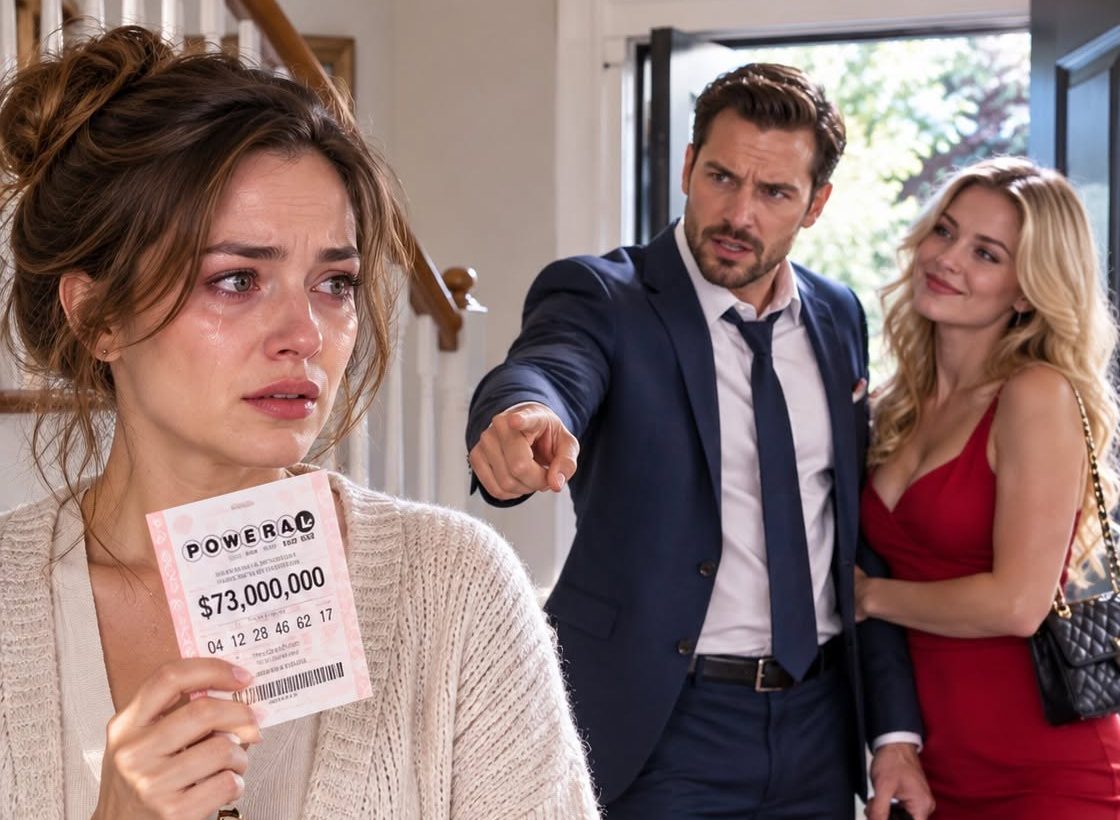
Every single box held the number fourteen, each line followed by the same exact payout figure of seventy three million dollars.
My thumbs began to twist my grandmother silver ring around my hand until the skin turned red beneath the band.
I pulled my cell phone out of my pocket to pull up the official state lottery website on the small screen.
The landing page listed the winning numbers drawn at six o clock the previous evening in bold red text.
Fourteen, thirty two, fifty seven, and six sat across the top banner of the screen in exact chronological sequence.
A small notification banner blinked across the bottom of the screen, stating that a single winning ticket had been sold in Oakridge, Ohio.
My hand began to shake so hard that the rubber phone case slicked against my palm.
The phone slipped from my numb fingers, dropping two feet onto the kitchen tile and landing face down beside my shoes.
The glass face of my phone cracked across the top corner when it hit the tile, but the screen stayed lit against the floor.
I picked up the device, pressed the side button to turn off the display, and set it on the counter beside the sink.
The paper lottery slip remained on the wooden kitchen table inside its clear plastic sleeve while the house grew quiet around me.
I left the kitchen lights off and sat by the window until dawn broke over the roofline of the neighbor’s garage.
At nine o’clock, sunlight hit the corner of the heavy oak desk in the small spare room upstairs that Mark called his home office.
The house insurance policy was due for renewal at the end of the month, and the local agent had called twice asking for the parcel number listed on the property deed.
I pulled out the deep bottom drawer where Mark kept our house files and tax records neatly organized in manila folders.
Behind a yellow envelope marked Property Taxes sat a printed airline receipt on crisp white printer paper.
It was a confirmation for two non-refundable coach tickets from Columbus to Miami, booked four days ago.
The departure was scheduled for Thursday morning at seven thirty, with a return flight booked for Sunday evening at eight.
The total cost listed on the page was four hundred eighteen dollars, charged to a card ending in four nine two one.
Mark had kissed my cheek at six thirty that morning, carrying his suit bag and leather briefcase out to his car in the driveway.
He had told me his corporate account manager duties required three full days in Chicago for urgent client review meetings.
The second passenger name printed directly under his on seat 14B was Vanessa Cole.
I refolded the page, returned the receipt to the folder, and pushed the desk drawer shut until the brass latch clicked.
By one in the afternoon, my mother Evelyn was sitting on the living room rug surrounded by three open cardboard boxes.
She pulled a stack of old municipal tax folders from the top box and set them on her lap.
“We should sort these before the township paper drive on Friday,” she said, looking up as I sat down beside her.
She reached out and rubbed my shoulder gently while I reached into the second box for our joint bank statements.
“Mark said we had twenty-four thousand dollars in joint savings last autumn,” I said, opening the blue vinyl binder.
“He skipped your Sunday dinner last weekend because he said he had to work overtime to build our reserves,” Evelyn said.
I turned to the statement from May and ran my finger down the transaction column on the white page.
Starting six months ago, an entry appeared every Friday afternoon showing a cash withdrawal of exactly five hundred dollars.
The withdrawals repeated week after week without missing a single date, reducing our balance by thousands of dollars.
“When I asked him in August about taking five thousand dollars to secure a lease for my design studio, he refused,” I said.
“He told me my design studio had to wait until his corporate goals were met,” I said.
Evelyn stopped sorting her tax papers and looked down at the printed figures in the folder.
“Five hundred dollars in cash every single Friday is not a routine grocery bill, Claire,” she said.
She pointed her pen at the initial deposit record from four years ago tucked into the back pocket of the binder.
“Where did the rest of the sixty-five thousand dollars your grandmother gave you for the house down payment go?” she asked.
“I thought it was safe inside the house equity and joint account,” I said.
Evelyn set her pen down on the carpet and looked directly into my eyes.
“You need to drive over to First National Bank before four o’clock today,” she said.
At half past three, I pushed open the heavy glass doors of First National Bank on Main Street.
Arthur, the branch manager, sat behind a broad dark mahogany desk near the vault entrance, cleaning his reading glasses with a small microfiber cloth.
He placed his glasses back on his nose, adjusted his necktie, and looked up as I crossed the lobby floor.
“Mrs. Reed,” Arthur said in his slow, formal voice. “How can I assist you this afternoon?”
I set the blue vinyl binder flat on the blotter between us.
“I need an explanation for why our joint savings account balance has fallen below three thousand dollars,” I said.
Arthur pulled up our account profile on his desktop screen and typed quickly on his keyboard.
“There was a major external transfer executed three weeks ago,” he said, placing his microfiber cloth back on his desk blotter.
“How much was transferred?” I asked.
“Twelve thousand dollars,” Arthur said, looking over his frames at the screen. “It went directly to an unlisted external account.”
I leaned across the blotter toward him. “I never signed an authorization for a twelve thousand dollar transfer.”
Arthur picked up his microfiber cloth and began wiping his reading glasses again with slow, deliberate circles.
“These cash withdrawals were all authorized from your home computer, Mrs. Reed.”
“Was there any physical signature on file for that twelve thousand dollar transfer?” I asked.
“No,” Arthur said quietly. “The transfer was completed online using your master residential login and password.”
He turned the desktop monitor three inches to the left so I could read the digital log entries.
The twelve thousand dollar transfer had been logged at two in the morning while I was sleeping in the master bedroom upstairs.
“Can you pull the original loan originations showing where my grandmother’s down payment money originated?” I asked.
“Those files are held in our central vault archive,” Arthur said. “I can order them for you tomorrow morning.”
“Is that down payment money legally protected if it came from my personal inheritance?” I asked.
Arthur set his glasses back on his nose and looked at me silently for a moment before speaking.
“That depends on how the title was drawn and whether those funds were comingled into joint accounts,” Arthur said.
I picked up my blue binder, thanked Arthur for his time, and walked out into the afternoon air.
At five o’clock, I sat in my idling car in the far corner of the parking lot behind the Shell gas station.
Cold autumn rain tapped against the windshield while the heater blew warm air across my hands on the steering wheel.
I unzipped my purse on the passenger seat and pulled out the clear plastic sleeve holding the lottery ticket.
I held the ticket up to the glow of the dashboard clock and read the six printed numbers again.
They matched the grand prize winning numbers published on the official state board website line for line.
Mark was not in Chicago presenting corporate account reviews to regional directors.
He was in Florida with Vanessa Cole while twelve thousand dollars of our joint savings rested in an account I could not see.
He had taken five hundred dollars every single week while telling me we were too broke to launch my design studio.
My grandmother had worked thirty years as an accountant to save sixty-five thousand dollars, giving every cent to me for our house down payment.
I sat in the dark car, twisting my grandmother’s silver ring around my thumb while I wondered if that money was still legally protected or if Mark had found a way to strip away her legacy too.
I slipped the plastic sleeve ticket into my purse zipper pocket and locked the car doors.
By nine o’clock, the kitchen table was completely clear except for my open laptop and the ticket resting inside its clear plastic sleeve. The official Ohio state lottery website loaded slowly on the screen, blue text glowing against a white background box.
I zoomed in on the winning numbers drawn at eight-thirty that evening.
07, 14, 22, 39, 41, and the bonus ball 18.
I lifted the plastic sleeve under the bright desk lamp light. The red printed ink on the paper scratch ticket matched every single digit across the primary line.
I checked the validation serial number printed along the bottom edge of the paper card. 4092-881.
I typed the sixteen-digit validation code into the state checking tool on the screen. The browser turned green, displaying a bold message: Jackpot Winner Confirmed. Prize Amount: $73,000,000. Ticket Location: Shell Station #114, Route 4, Oakridge.
Seventy-three million dollars.
A small notice at the bottom of the screen stated that jackpot prizes exceeding one hundred thousand dollars required formal legal identification and an in-person appointment at the regional claim center.
My left thumb moved automatically, twisting my grandmother’s silver ring around my joint. The plastic sleeve felt smooth against my palm, harmless and light as a piece of notebook paper.
I closed the laptop lid until the screen light died out.
The house was completely silent except for the steady hum of the refrigerator motor. Mark was supposed to be in a hotel room in Chicago for three days of corporate strategy meetings, but the paper receipt hidden in his desk drawer proved he had purchased two round-trip tickets to Miami for four hundred eighteen dollars instead.
I slipped the plastic sleeve back into my purse zipper pocket and locked the metal clasp shut.
The winning scratch off ticket was officially verified. I held seventy-three million dollars in my handbag, and Mark had no idea it existed.
I did not sleep that night.
At seven the next morning, I sat at my mother’s dining room table in her small brick house on Maple Street.
Evelyn poured hot coffee into two ceramic mugs and set one down on the cloth placemat in front of me. She pulled her chair out and sat beside me, her eyes lingering on my face.
“You did not sleep a single hour, Claire,” she said.
I unzipped my handbag, brought out the plastic sleeve, and placed it on the polished wood between our mugs.
“Look at the third row of numbers,” I said.
Evelyn set her spoon down. She took her reading glasses from her sweater pocket, slipped them on, and took her mobile phone from the table edge.
She opened the state lottery home page and held her phone screen directly beside the ticket.
Her hands stopped moving. She reached beside her chair and rubbed my shoulder gently, her hand warm and heavy through my shirt.
“Is this the ticket you bought yesterday morning?” she asked softly.
“At seven-forty-five at the Shell station on Route 4,” I said. “Every single number matches the seventy-three million dollar jackpot.”
“Seventy-three million,” she repeated, her voice dropping to a whisper.
“It is verified on the central state computer,” I said.
Evelyn held my gaze, her thumb pressing softly into my shoulder.
“Have you said one word to Mark about this?” she asked.
“No,” I said. “He thinks I am working retail shifts and sitting at home.”
“Do not tell a single soul until a lawyer places that paper in a safe deposit vault,” Evelyn said.
She leaned closer across the corner of the table.
“Mark skipped your aunt’s Sunday dinner last weekend without giving a real reason,” she said. “Now he is lying about Chicago while taking cash out of your joint bank account. If he finds out about this ticket before you have legal protection, his attorney will claim half of every cent.”
“I checked our savings balance at First National yesterday,” I said. “Twelve thousand dollars vanished over the last six months.”
“He is preparing for something,” Evelyn said flatly. “You need a family law attorney immediately, and you need your financial papers organized before he comes back into this house.”
“I have my grandmother’s bank records in the hall closet,” I said.
“Get every file,” Evelyn said. “Bank statements, tax filings, deposit receipts, and the original closing papers for the house.”
At ten o’clock that morning, I pulled into the Shell station parking lot on Route 4. A white Channel 4 news van was parked near the air pump, its tall satellite dish raised against the grey autumn sky.
Inside the convenience store, a young reporter with a wireless microphone was standing near the front counter while a cameraman adjusted his tripod lens.
I walked past them to the coffee urns, poured a fresh cup, and brought it to the front register. The cashier who had sold me the ticket yesterday morning recognized me instantly.
“Can you believe this circus?” she asked in a low whisper as I handed her two dollars.
“Are those reporters here for the jackpot?” I asked.
“The state gaming commissioner called our store manager at eight o’clock sharp,” she said, leaning over the register. “They confirmed the winning seventy-three million dollar ticket was printed right here at seven-forty-five yesterday morning.”
“Did they verify the register number?” I asked.
“Terminal three,” she said, pointing directly at the scanner in front of her. “The central database registered the sale right here. Some customer walked out of here yesterday morning holding seventy-three million dollars in their pocket.”
“Has anyone come in to claim it?” I asked.
“Not yet,” she said. “The corporate office is sending a huge vinyl banner to hang over our roof this afternoon. The reporters are trying to interview everyone who bought coffee here yesterday.”
I took my change from her hand and slipped a cardboard sleeve over my coffee cup.
“You look like you could use some of that good fortune yourself today, Claire,” the cashier said with a short laugh. “You looked completely exhausted when you bought that two dollar ticket yesterday.”
“Maybe my luck will turn around,” I said.
“Keep that coffee warm,” she said with a warm grin. “You never know when things change.”
I walked out the glass doors before the cameraman turned his equipment toward the counter.
By five-thirty the following morning, I was sitting on my kitchen floor in the dark, using a small flashlight to read document tabs inside my desk drawers.
I pulled out a blue vinyl binder from the back of the bottom desk drawer. It contained every original bank statement, wire receipt, and deposit slip from my grandmother’s estate settlement four years ago.
I opened the metal rings and smoothed down the top sheet under the light.
The document was a certified wire transfer confirmation for sixty-five thousand dollars from First National Bank, transferred directly from my grandmother’s inheritance payout into our house closing deposit file.
My grandmother had worked forty years as a public library clerk to save that money. When Mark and I bought this house, he had insisted both our names go on the deed, promising my design studio would launch as soon as his corporate account goals were met.
Instead, he had quietly drained twelve thousand dollars from our joint account over the past six months.
How much total joint money had Mark secretly transferred out of our accounts while I was working retail shifts?
I placed the blue vinyl binder into my canvas tote bag alongside our old tax folders and bank statements.
A sudden pair of bright yellow headlights swept across the kitchen window glass, illuminating the kitchen cabinets and the sink.
I stood up from the floor and pulled the blinds back half an inch.
A dark corporate rental sedan pulled into the gravel driveway and stopped near the back garage door. The engine cut off at six-fourteen in the morning, two full days before Mark was scheduled to return from his corporate trip.
I stepped back into the shadows and set the canvas tote bag behind the pantry door.
Heavy footsteps came up the wooden porch steps and paused beside the front doorknob.
The sound of Mark key turning in the front door lock at 6:14 AM.
He pushed the heavy oak door wide and held it open with his left elbow.
A woman stepped past him onto the foyer rug, pulling a beige leather overnight bag on small silver wheels.
Mark reached up with his right hand, loosened the knot of his navy silk tie, and unbuttoned his top collar button.
He dropped his heavy leather briefcase onto the dark wooden bench near the closet door.
“This is Vanessa,” Mark said, his eyes fixing on the crown molding two inches above my head.
“We need to sit down right now, Claire, because I am ending our marriage today,” he said.
Vanessa set her leather handbag on the entryway table next to my mail tray.
She had high cheekbones, dark styled hair, and wore a fitted cream sweater that smelled like cedar oil and vanilla.
She paused beside the wall mirror, checking her lipstick in the small oval glass before turning around.
“Where should I set my overnight bag?” Vanessa asked, looking toward Mark without acknowledging me.
Mark pointed at the painted walnut coat tree near the foot of the staircase.
“Right there is fine,” Mark said. “Put your coat on the top peg.”
I stood near the kitchen doorway, holding my warm coffee mug in both hands.
Mark pulled his tie completely free from his collar, folded it in half, and stuffed it into his coat pocket.
“I am not going to pretend about Chicago anymore,” Mark said, crossing his arms over his white shirt. “There was no corporate meeting.”
“I know,” I said.
Mark paused for a second, his fingers catching on the silver band of his wristwatch.
“It does not matter what you know,” Mark said. “The point is that we are done and Vanessa is moving her things in this weekend.”
Vanessa unbuttoned her wool coat and hung it on the wooden peg I had painted three springs ago.
She glanced down at the blue vinyl binder sitting on the hall bench beside Mark briefcase.
“Is that legal paperwork?” Vanessa asked, pointing a polished fingernail at the blue plastic cover.
Mark shook his head quickly without looking down at the bench.
“Just old household receipts,” Mark said. “Claire keeps every piece of paper that comes through the mail slot.”
Vanessa walked past me into the living room, her low heels making a sharp clicking sound against the hardwood floor.
She stopped near the brick fireplace mantel and ran her index finger along the top edge of my grandmother silver picture frames.
“The lighting in this whole house is terrible,” Vanessa said, checking her reflection in the glass of a framed watercolor print.
“We can replace the window treatments next month,” Mark said, following her into the room.
He stood beside the sofa with his hands shoved deep into his trouser pockets.
“Vanessa is closing her current boutique lease at the end of the month,” Mark said, leaning against the sofa armrest. “She needs space to store her inventory while we renovate the downstairs.”
Vanessa tapped her fingernails on the glass side table.
“We are turning the dining room into my office,” Vanessa said. “Your design sketches on the wall will have to go.”
“I took a preliminary consultation with a legal advisor last month,” Mark added, looking straight at me. “He told me that primary financial contributions dictate equity retention in this jurisdiction.”
“I have already worked out the financial transition,” Mark said, turning his chin back toward me.
“You have had six years to figure out a career, Claire, but you never made it work,” he said.
He gestured toward the room with a brief, dismissive sweep of his right hand.
“Pack your bags, Claire. This house is mine anyway.”
“We bought this house together six years ago,” I said, keeping my voice clear and level.
Mark let out a short, dry laugh that ended almost immediately.
“On my corporate salary,” Mark said. “You work retail shifts three mornings a week for coffee money.”
Vanessa picked up a small ceramic bowl from the side table, turned it over to inspect the base, and set it back down with a sharp click.
“Is this wall color called sage?” Vanessa asked, looking over her shoulder at the window trim. “It makes the whole living room look old.”
Mark ignored her question entirely.
He pulled a folded sheet of white paper from his inner suit pocket and smoothed it flat on the glass coffee table.
“This is the transition schedule,” Mark said.
He tapped his index finger against a heavy red circle drawn on the paper calendar.
“You have until Sunday at five o’clock to pack your clothes and clear out your personal items,” he said.
“Sunday at five o’clock,” I said.
“That gives you four full days,” Mark said. “That is more than fair for someone who has not contributed to the mortgage.”
Vanessa walked over to the front window, pulled the wooden blind slat down with one finger, and looked out at the driveway.
“Where will she go?” Vanessa asked, speaking over him without turning around.
“Her mother has a spare bedroom in Oakridge,” Mark said. “She will be fine there.”
“I want the keys back on Sunday,” Mark added, turning back to me. “All three copies.”
I turned without answering and walked into the kitchen, setting my ceramic mug on the tile counter.
Mark walked in right behind me, his dress shoes squeaking against the polished linoleum.
He reached into the upper cabinet and pulled down two clean mugs with a harsh, ceramic clatter.
He grabbed the glass carafe from the coffee machine and poured black coffee into both cups.
“Do not make a dramatic scene out of this with your mother,” Mark said, taking a fast sip.
“You do not have the cash reserve to hire a family lawyer for a contested divorce,” he said.
He leaned his lower back against the counter edge, two inches from where my binder sat beside the microwave.
“You could not even afford the lease deposit on that interior design studio you kept talking about downtown,” Mark said.
“You depend on my monthly paycheck for every grocery bill and utility payment,” he said.
I reached down and twisted my grandmother silver ring around my thumb twice under the dark lip of the counter.
Vanessa walked into the kitchen, stopping by the kitchen island to inspect the stainless steel double sink hardware.
Vanessa reached into the open dish cabinet and pulled out one of my grandmother painted ceramic coffee cups.
“Where did these come from?” Vanessa asked, holding the cup up to the light. “They look like thrift store craft projects.”
“They belonged to my grandmother,” I said.
“They take up half the cupboard,” Vanessa said, sliding the cup back onto the shelf with a grating sound. “We will need all this shelf space for my glassware.”
Mark nodded approvingly as he wiped a drip off the tile counter with a paper towel.
“We are clearing out all the clutter by Sunday,” Mark said. “That includes the hall closet and the basement storage bins.”
She opened the pantry door, looked at the boxes of instant noodles on the middle shelf, and let out a small sigh.
“Do you have almond milk?” Vanessa asked, pulling the refrigerator door open.
“There is oat milk on the middle shelf,” I said.
Vanessa picked up the small carton, turned it around to read the nutrition panel, and set it back on the wire rack.
“Too many carbohydrates,” Vanessa said, pushing the door shut until the magnetic seal clicked.
Mark set his mug on the tile with enough force to splash coffee across the porcelain glaze.
“I am meeting with a real estate appraiser at noon,” Mark said. “I want the front door lock replaced by Friday.”
“The mortgage payments come out of our joint account,” I said softly.
Mark stepped closer to me, his voice dropping to a tight, low whisper.
“The primary loan guarantee is in my name, Claire,” Mark said. “You are just living in my house.”
“I put sixty five thousand dollars down,” I said.
Mark scoffed, waving his hand toward the hallway.
“That money was deposited into our joint checking six years ago,” Mark said. “It became joint marital funds the second it hit the balance.”
I reached out, picked up my handbag from the kitchen chair, and slung the dark leather strap over my shoulder.
“I am going upstairs to wash my face,” I said.
“Do not lock yourself in there all morning,” Mark said, turning his back to pull a fresh paper towel from the dispenser. “We have financial release papers to review before I drive into the office.”
I walked out of the kitchen without looking back and climbed the carpeted staircase slowly.
I placed my foot firmly on each wooden tread until I reached the top landing.
I walked into our master bedroom and pulled the solid oak door shut behind me.
I turned the heavy brass lock button on the inside handle until it clicked firmly into the door frame.
Downstairs, the entry door clicked and shut, followed by the dull hum of the automatic garage door opening.
Through the bedroom window, I could see the driveway below.
Mark was carrying Vanessa second leather tote bag to the trunk of his silver sedan.
Vanessa stood by the passenger door, holding a hand mirror to check her hair in the autumn sunlight.
They both acted as if the house was already empty, as if I had already packed my cardboard boxes and walked away.
I walked across the soft bedroom rug to the edge of the mattress and sat down on the linen bedspread.
My thumb found the small metal zipper pull on the inside pocket of my purse and drew it open.
I lifted out the clear plastic sleeve containing the two dollar lottery ticket from the Shell gas station counter.
The thermal paper remained crisp and clean inside its clear shield.
The printed numbers matched line by line with the official state grand prize results: seventy three million dollars.
I pulled my phone out of my coat pocket with my free hand.
I flipped the plastic sleeve over to read the small black font printed along the bottom margin of the ticket.
An official state lottery legal helpline number was printed right beside the state seal barcode.
I typed the ten digits onto my phone keypad and pressed the green call button.
I held the phone against my ear, standing motionless beside the locked bedroom door.
The line began to ring on the other end, long and steady in the quiet room.
An automated voice requested my nine-digit serial number, but I tapped the red end-call button before the third prompt finished. I placed the phone on the bed, smoothing the duvet with the palm of my hand. I needed a legal advocate who understood Ohio property statutes before I dropped a single word to Mark or anyone else.
By ten o’clock, I was sitting across from Rachel Kim in her strip mall office on Elm Street. A small electric fan hummed on a filing cabinet, blowing a faint smell of paper and stale coffee across the room.
Rachel brought her palms down flat onto her desk, lining up her legal pad with the edge of the wood until the borders aligned perfectly.
“If you step forward to redeem that ticket today, Mr. Reed’s attorney will argue it is marital property,” she said. Her voice was flat, clipped, and devoid of drama. “Under state law, money acquired during the marriage is presumed joint until proven otherwise.”
“Even if I bought it with my own retail tip cash after he demanded I vacate the house?” I asked.
I twisted my grandmother’s silver ring around my thumb, feeling the notched pattern grind against my skin.
“The court looks strictly at filing dates and paper records, Mrs. Reed,” Rachel said. She adjusted her yellow legal pad by two millimeters. “In divorce law, timing and paper origins decide everything.”
“What happens if he finds out about the winning numbers before we file?” I asked.
“He will demand fifty percent of seventy-three million dollars, and a judge might grant it,” Rachel said.
She tapped a red pen against her desk calendar, pointing directly to the current date.
“Under state disclosure rules, hiding assets during an active divorce can result in complete forfeiture,” Rachel said. “We must establish a clean legal separation date first, using verified separate funds to document the purchase.”
“I used a two dollar bill my mother gave me on Tuesday,” I said.
“Then we need that bank withdrawal record, and we need your grandmother’s inheritance trail,” Rachel said. She closed her pen with an audible cap snap. “Where is the physical ticket right now?”
“In my handbag,” I said. “Inside a clear plastic sleeve.”
“That paper goes into a bank vault before noon,” Rachel said. “Not into a sock drawer, and not into your glove box.”
“Can Mark freeze my personal checking account if he sees a lawyer first?” I asked.
“He can try,” Rachel said, tapping a fresh stack of intake forms into line. “Which is why we are locking down your physical records before five o’clock today.”
By one o’clock, the rain had stopped, leaving pale brown puddles across the parking lot of First National Bank. The lobby was quiet, smelling of floor wax and cold air conditioning.
Arthur stepped out from behind his glass partition near the customer counter. He pulled a yellow microfiber cloth from his suit jacket and cleaned his reading glasses while he walked toward me.
“Good afternoon, Mrs. Reed,” Arthur said in his slow, measured tone. “How may the bank assist you today?”
“I need to rent a safe deposit box,” I said.
“Safe deposit box thirty-two is available,” Arthur said. “The annual fee is forty-five dollars, billed annually every October.”
He picked up an official metal clipboard and set it on the marble counter between us.
“Sign the access vault register on line four,” Arthur said, pointing with a polished silver pen.
I signed my name on the white card, watching my handwriting look narrower than usual on the line. Arthur checked the signature against his card file, then retrieved a heavy brass master key from a locked wooden drawer behind his desk.
He led me down the carpeted stairs into the basement vault, where thick stainless steel walls reflected the overhead fluorescent lights. The room was cool, heavy, and silent.
Arthur inserted his key into the upper lock of box thirty-two, then stepped back two full paces, keeping his hands folded across his waist.
“Insert your key into the lower cylinder, Mrs. Reed,” he said, following standard bank protocol.
I turned my key to the left, hearing the heavy internal latch spring open inside the wall.
Arthur slid the long steel drawer out of the cavity and set it on a small metal table in the center of the vault room.
“I will give you privacy while you place your items inside,” Arthur said, taking two steps back toward the heavy vault door.
I pulled the clear plastic sleeve from my purse. Inside, the two dollar ticket sat flat, its green scratch ink scraped clean down to the matching row of numbers. I laid it on the cold metal floor of the inner box.
“Will anyone else have access to this box without my signature?” I asked over my shoulder.
“No one,” Arthur said from the doorway. “Not without a signed power of attorney or a direct court order.”
“Can my husband request a key copy?” I asked.
“Mr. Reed is not a listed signatory on box thirty-two,” Arthur said softly. “His name does not appear on this agreement.”
At three o’clock, I sat across from my mother in a corner booth at the diner on Oak Street. A cast-iron radiator clanked rhythmically under the windowsill, warming the glass.
Evelyn reached across the red vinyl table and rubbed my shoulder, her fingers pressing gently into my coat fabric.
“You have not eaten a full meal since yesterday, Claire,” she said.
I reached into my coat pocket, pulled out my brass spare house key, and set it beside her porcelain teacup.
“I need you to keep this key at your house,” I said.
Evelyn looked down at the brass key lying on the laminate tabletop.
“Did Mark say something else to you this morning?” she asked.
“He gave me until Sunday at five o’clock to move my things out,” I said. “He brought a woman named Vanessa into the kitchen while I was packing.”
Evelyn took her hand off my shoulder and picked up the key, sliding it into her coin purse with a firm snap.
“He is trying to push you out before you realize what the house is worth,” Evelyn said. Her voice was direct and hard. “Your grandmother gave you sixty-five thousand dollars for that down payment, Claire. Not Mark.”
“Rachel Kim needs every original bank record from six years ago,” I said. “Every check stub and inheritance deposit receipt.”
“I already pulled the blue vinyl binder from my cedar chest this morning,” Evelyn said. “I left it on my kitchen counter for you.”
“Did you find the escrow papers from the closing?” I asked.
“Every single page,” Evelyn said. “Including the check drawn directly from your grandmother’s estate account.”
She set two folded bills onto the table beside her plate.
“What are you going to do if Mark tries to lock you out early?” Evelyn asked.
“Rachel is filing an emergency protection motion if he touches the deadbolt,” I said.
At four thirty, I pulled up to Rachel Kim’s office with the blue vinyl binder lying flat on my passenger seat. The thick plastic cover was scratched along the edge, holding yellowed deposit slips from six years earlier.
Rachel opened the blue binder on her desk and turned the plastic sleeves slowly, reading every line of faded blue ink.
“Sixty-five thousand dollars transferred directly from your grandmother’s estate account into the title company escrow,” Rachel said, aligning the page edges against her legal pad. “This is unmistakable. It proves the down payment money was non-marital separate property.”
“Mark told his friends he paid the entire deposit himself,” I said.
“He can tell them whatever he likes,” Rachel said, pulling a heavy Manila envelope from her desk drawer. “Courts do not divide property based on dinner table chatter.”
She slid the bank statements, the escrow receipts, and the blue vinyl binder into the Manila envelope, pressing the metal clasp down flat.
“Take this straight back to the bank vault,” Rachel said. “We want all key paper records locked in box thirty-two beside that ticket before five o’clock.”
“What happens on Monday when we disclose the lottery ticket?” I asked.
“We disclose nothing until our financial inventory of his accounts is complete,” Rachel said. “He thinks you have no money and no lawyer. We let him keep thinking that until he signs his financial affidavit under oath.”
“What if he lies on his affidavit?” I asked.
“Then he commits perjury,” Rachel said, snapping her leather briefcase shut. “And that is when we present our paper trail.”
Ten minutes before five o’clock, I walked back down the basement stairs of First National Bank. The heavy vault door stood wide open, its steel locking bolts gleaming under the spotlights.
Arthur stood waiting beside box thirty-two, holding his brass master key in his left hand.
“We are closing the vault for the weekend in five minutes, Mrs. Reed,” Arthur said, his voice slow and calm.
“I just need to add this envelope to the box,” I said.
I slid the heavy Manila envelope containing my grandmother’s down payment checks into the steel tray, right beside the plastic sleeve holding the seventy-three million dollar ticket.
Arthur inserted his key into the top cylinder while I inserted mine into the bottom hole.
I turned my wrist to the right, feeling the heavy iron tumblers slide home.
The heavy metal door of safe deposit box thirty-two clicked shut inside the bank vault.
I pulled my car into the concrete driveway at ten o’clock on Thursday morning.
The autumn wind was blowing dry oak leaves across the lawn, piling them against the front porch steps. Before I could turn off the engine, Mark walked out through the side door of the garage. He was wearing his gray trousers and a white dress shirt, but his dark silk tie hung loose around his neck.
He walked straight up to the driver side of my car and tapped his knuckles against the window glass.
I put my purse over my shoulder, holding the heavy leather strap close to my side, and pushed the door open.
“We need to talk like reasonable adults,” Mark said, stepping back just far enough to let me stand up.
“I am on my way to work a shift at eleven,” I said.
Mark reached into his front pocket and brought out a thick white envelope. He held it out between us, resting it on the roof of my car.
“There is ten thousand dollars in cash in this envelope,” Mark said. “Clean, unsequential hundred dollar bills. It is yours right now, today, without waiting for bank clearing or legal delays.”
I looked at the white paper sitting on the blue paint of the car roof.
“Where did ten thousand dollars in cash come from, Mark?” I asked.
“That does not matter,” Mark said, adjusting his tie knot with his thumb and forefinger. “What matters is what it does for you. It gives you an immediate fresh start. You can put a security deposit on a nice apartment downtown near your store.”
“And what do you want for it?” I asked.
“A simple signature,” Mark said. “A standard quitclaim deed transferring your name off the house title. It saves us months of expensive legal fighting.”
“This house required a sixty five thousand dollar down payment,” I said.
Mark made a short, dismissive sound in his throat and waved his hand. “You know as well as I do that we both put everything we had into this place six years ago. But you are working part time retail shifts now, Claire. You cannot afford the tax payments, let alone the heating bill coming up this winter.”
“The down payment came from my grandmother,” I said.
Mark shifted his weight onto his back heel, his eyes darting toward the garage door. “We pooled our resources when we got married. That is how a marriage works.”
“You told me two weeks ago that we had no cash left,” I said.
“I managed to secure a short term advance,” Mark said, his voice dropping into the smooth tone he used for client presentations. “I am trying to be helpful here. Take the ten thousand dollars and let us end this cleanly before the lawyers eat up whatever is left.”
“I want to see the paperwork first,” I said.
I walked past him into the house through the side garage entry.
Vanessa was sitting on the tall wooden barstool by the kitchen island, holding a white porcelain mug with both hands. A stack of six flattened cardboard boxes stood leaned against the side of the refrigerator.
“Good morning, Claire,” Vanessa said, setting her mug down on the granite counter. She tilted her head and checked her lipstick in the reflection of the stainless steel toaster. “We thought we would get a jump on the kitchen cupboards while the weather is clear.”
“These cupboards belong to my kitchen,” I said.
Vanessa picked up a roll of brown packing tape and set it next to a box of permanent markers.
“I know this transition is hard on you,” Vanessa said, speaking over me before I could finish taking off my coat. “Moving out of a house you loved is always emotional. I can help you pack the fragile items if you want. I am very good with bubble wrapping stemware.”
“I do not need your help with my grandmother’s stemware,” I said.
“It is just practical advice, Claire,” Vanessa said, smoothing the front of her knit sweater. “Mark said you have to be completely moved out by Sunday afternoon. That only gives you three days, and packing a large suburban house alone is practically impossible.”
“I have not agreed to move out by Sunday,” I said.
“Well, Mark was very clear about the timeline,” Vanessa said, resting her chin in her hand. “And honestly, ten thousand dollars in cash is more than enough to cover two months of rent in a very respectable building.”
Mark came into the kitchen behind me, holding a black vinyl folder under his arm. He set it down on the counter right next to Vanessa’s tea mug.
“The quitclaim paper is inside,” Mark said, opening the folder to reveal three printed pages. “I had my colleague draft it up yesterday afternoon.”
“Your colleague from your firm?” I asked.
“He does contract law,” Mark said, unclipping a silver pen from his shirt pocket and laying it across the top page. “It is completely straightforward. You sign on the bottom line of page three, I hand you the envelope, and we shake hands.”
“I am going to read it first,” I said.
“We do not have all day,” Mark said, his fingers twitching toward his tie again. “Vanessa and I have an appointment with a kitchen remodeling contractor at two o’clock.”
“In this house?” I asked.
“We need to get quotes for replacing the original oak cabinets,” Vanessa said, smiling brightly at the wall. “They are so painfully out of date.”
I picked up the three pages from the kitchen island and walked into the living room.
I sat down at the small desk near the front window where my grandmother’s brass desk lamp stood. The autumn sunlight came through the glass, illuminating the fine dust floating in the quiet air.
Mark followed me into the room, stopping two feet behind my chair. He crossed his arms over his chest, his polished leather shoes tapping rhythmically against the hardwood floor.
The top page was titled Quitclaim Deed and Voluntary Property Release. It stated that Claire Reed released all right, title, and interest in the real property located on Oakridge Drive to Mark Reed.
I flipped to the second page. The typography changed into smaller, tightly spaced block paragraphs.
Paragraph four was labeled Indemnification and Allocation of Liabilities.
I read the text slowly, moving my thumb along the margin.
The clause stated that upon execution of the agreement, the assignor, Claire Reed, agreed to waive all rights to future discovery of marital financial accounts and agreed to accept full joint responsibility for any personal credit lines, bank overdrafts, or private loan agreements executed under either spouse’s name during the current calendar year.
I turned in my chair to face Mark.
“This is not just a quitclaim deed,” I said.
Mark stopped tapping his shoe. “It is a standard complete release package.”
“Paragraph four says I waive the right to inspect any bank accounts from this year,” I said. “And it says I accept joint responsibility for any personal credit lines.”
“That is just legal boilerplate to protect both of us from old credit card balances,” Mark said, adjusting his tie knot twice in rapid succession.
“We do not have joint credit card balances,” I said. “We paid off the master card in January using my tax refund.”
“You do not understand how corporate financial separation works, Claire,” Mark said, taking a step toward the desk. “When two people divide a household, all potential liabilities have to be closed out cleanly.”
“Why are you so eager for me to waive access to your bank records?” I asked.
“Because I do not want to spend the next six months answering ridiculous questions about routine business expenses,” Mark said, his voice rising in volume.
“Like the twelve thousand dollars transferred out of our savings account last month?” I asked.
Mark’s eyes narrowed, his posture hardening instantly. “Arthur had no right to discuss our account history with you.”
“It was my joint account, Mark,” I said. “And Arthur is the branch manager.”
I picked up the three pages from the desk, stood up, and walked out through the entryway to the front porch.
The cool autumn air hit my face as I stepped outside. I set the papers down on the round wicker table between the two porch chairs where my grandmother used to sit in the late afternoon.
Mark pushed the front door open and stepped onto the porch behind me, his face tight with anger. Vanessa stood just inside the glass storm door, watching us through the framed pane.
“You are making a massive mistake, Claire,” Mark said, coming to a stop beside the wicker table.
“I am not signing a document that releases you from your debts and hides your bank statements,” I said.
“There are no hidden debts,” Mark said, his voice loud enough to carry across the front lawn toward the neighbor’s driveway. “There are only expenses that I incurred while keeping this family afloat while you pursued your pathetic little design dreams!”
“My grandmother paid the down payment on this house,” I said softly.
Mark stepped closer, putting his hand flat on the wicker table and leaning his face down toward mine.
“I am trying to be generous here, Claire, so do not make this difficult,” Mark said, his jaw working tightly. “Ten thousand dollars is more cash than you will see in two years working retail. Take the money and sign the paper.”
“No,” I said.
“Sunday at five PM is still the deadline,” Mark said, dropping his hand from the table and pulling himself up straight. “I own this property. If your clothes and your boxes are not off my lawn by five o’clock on Sunday, I am changing every lock on the exterior doors and calling the sheriff to enforce a trespass notice.”
“You do not have a legal eviction order,” I said.
“I do not need one for a house registered in my primary name,” Mark said, his tone turning ice cold.
Vanessa opened the storm door an inch, holding her phone up toward Mark. “Mark, the kitchen contractor is calling on line two.”
“Tell him we will be there in five minutes,” Mark said without looking back at her.
He reached out with a sudden, jerky motion, grabbed the three printed pages off the wicker table, and ripped them off the surface, crumpling the edge of the second page in his tight fist.
He stuffed the unsigned quitclaim document into his jacket pocket and walked down the porch steps without looking back. His car door slammed before I could lift my tea mug off the wooden table.
By nine o’clock the next morning, I was sitting across from Rachel Kim in her windowless conference room. The fluorescent lights overhead buzzed faintly against the quiet of the legal office suite.
Rachel aligned three white paper folders into an exact stack before she spoke. She pulled a black microfiber cloth from her jacket pocket and slowly cleaned her reading glasses.
“We completed the forensic audit on your joint checking account at First National Bank,” Rachel said, placing her glasses back on her nose. “Arthur in branch management pulled the raw wire logs under our preliminary disclosure request.”
She slid a printed bank ledger across the polished mahogany table. A thick red line ran down the right hand column, highlighting six separate electronic transfers made between January and June.
“Where did those transfers go?” I asked.
“To a commercial property management firm called Apex Holdings in Columbus,” Rachel said. “Mark transferred forty-two thousand dollars of your joint marital funds directly to pay off the defaulted lease debt on Vanessa’s boutique.”
I looked at the dates printed beside each six thousand dollar entry. The first wire transfer went out three days after Mark sat at our kitchen table and insisted we could not afford the deposit on my independent design studio.
“How much money did Mark take from the joint account?” I asked, reading the numbers aloud to be certain.
“Forty-two thousand dollars transferred directly to Vanessa’s business lease,” Rachel said, her voice precise and unemotional. “He systematically emptied your joint savings down to four hundred eighteen dollars.”
I looked at the bank stamp on the bottom of the page.
“Every transfer was initiated from your home computer late at night while you were working retail shifts at the home decor shop,” Rachel said. “He assured you the joint cash was sitting in a safe money market index while he was using it to cover her commercial rent liabilities.”
I reached down to my coat pocket and twisted my grandmother’s silver ring around my thumb. “Can he argue that any of that money went toward our mortgage or living expenses?”
“Apex Holdings provided the full debt settlement contract forty minutes ago,” Rachel said, tapping her pen on the paper. “Vanessa’s name is on the primary lease, and Mark signed as the third party personal guarantor.”
She pulled a red felt tip pen from her desk tray and marked the bottom margin with two sharp, deliberate check marks.
“In Ohio family law, that is an unmistakable fraudulent conversion of marital assets,” Rachel said. “The court credits that forty-two thousand dollars back to your column in full before we even begin calculating house equity.”
She stood up from the conference table and walked into her smaller private office, gesturing for me to bring my notebook along.
At ten thirty, Rachel pulled a second blue file from her desk drawer and laid a single sheet of heavy bond paper flat on her desk blotter.
“First National Bank delivered this under a separate legal subpoena this morning,” Rachel said.
“He did not just take joint cash, Claire,” Rachel said, her clipped voice dropping into a grave, flat tone. “He signed your name to a fifteen thousand dollar liability.”
I leaned forward over the desk and stared at the document header. It was an application for an unsecured personal line of credit, dated November fourteenth of last year.
My full legal name was typed across the primary borrower line, alongside my social security number, my retail income details, and our home address in Oakridge.
“I never applied for a credit line with First National Bank,” I said.
“Look at the signature authorization line at the bottom,” Rachel said.
I stared at the black ink on the line above the word Applicant. The signature was written in a fluid, slanting script that mimicked my handwriting, but the letter C in Claire ended in a high upward loop instead of my usual square, blunt curve.
“Arthur verified the teller logs,” Rachel said. “The online application was submitted from the IP address at Mark’s corporate desk in Oakridge, and fifteen thousand dollars in cash was disbursed in two bank drafts.”
I touched the cold edge of the paper with my index finger. “Will Mark face direct legal consequences for forging my signature on the credit line?”
“If we file a formal affidavit of forgery with First National Bank, it triggers an immediate criminal fraud investigation,” Rachel said. “That completely invalidates his legal leverage and places sole debt liability on him while confirming your sole ownership of the house down payment.”
She checked her desk clock, which read ten forty five, and noted the exact time on her yellow legal pad.
“I need the original down payment deposit records from your grandmother’s estate,” Rachel said. “Can you have them on my desk before two o’clock?”
“I have the blue binder at my mother’s house,” I said.
I drove straight across town to Evelyn’s small white house on Maple Street, parking along the curb behind her garden shed.
The afternoon sun filtered through the sheer curtains in my mother’s kitchen, illuminating two potted orchids sitting on the painted windowsill.
Evelyn set a warm mug of black coffee in front of me and placed a plate of butter cookies on the yellow formica table. She pulled her chair close to mine and rubbed my shoulder gently as I unzipped my blue vinyl binder.
“Here is the official probate distribution voucher,” Evelyn said, selecting a yellowed slip of paper from the front pocket of the binder.
She laid the paper beside the original settlement statement from our suburban home purchase in Oakridge six years ago.
The estate check was made out to me for sixty-five thousand dollars, drawn from my grandmother’s personal account at First National Bank.
The house closing statement showed the exact down payment required at signing: sixty-five thousand dollars, paid by cashier’s check on the exact same afternoon.
“Where did the house down payment money originate?” I asked, reading the matching bank voucher numbers aloud.
“Claire’s