PART 1: THE DAY I BECAME A STRANGER IN MY OWN RESTAURANT
My name is Frank Delgado. I’m fifty-two years old, and for twenty years, I believed the most important thing I had built wasn’t my restaurant, my bank account, or the reputation I’d worked so hard to earn.
It was the promise I had made to my mother.
Nobody should ever leave our restaurant hungry.
My mother, Rosie Delgado, had been a waitress for thirty-eight years. She worked double shifts, raised three children on a modest income, and somehow found enough kindness in her heart to feed people who couldn’t afford to pay.
When I was seventeen, I once watched her serve a homeless veteran a full plate of meatloaf, mashed potatoes, and green beans.
After he finished eating, the man reached into his pocket and placed three pennies on the table.
“I’m sorry,” he whispered. “That’s all I’ve got.”
My mother picked up the pennies, closed his hand around them, and smiled.
“Then you’ve paid me more than enough. Come back when you’re hungry again.”
That moment stayed with me long after she passed away.
Twenty years ago, I was washing dishes in a small diner for six dollars an hour. My hands were cracked from hot water and industrial soap, and my back hurt so badly that sometimes I could barely stand straight.
But I had a dream.
I wanted to own a restaurant where people felt safe, welcome, and respected, regardless of how much money they had in their pockets.
I saved every dollar I could. I worked weekends, holidays, and overnight shifts. I turned down vacations and drove the same old truck until the engine finally died.
Eventually, I bought a struggling little restaurant on the corner of Maple Street and Fifth Avenue.
I named it Rosie’s.
The first year was brutal. Some nights, I made barely enough money to cover payroll. There were mornings when I arrived before sunrise and evenings when I locked the doors long after midnight.
But slowly, things changed.
Customers returned. Families celebrated birthdays at our tables. Construction workers came in for breakfast before their shifts. Elderly couples sat by the windows, sharing coffee and stories about their grandchildren.
Rosie’s became more than a restaurant.
It became part of the neighborhood.
And every time I walked through the dining room and saw people smiling, I imagined my mother standing beside me, telling me I had done something right.
Then, about six months before everything changed, I began noticing a troubling pattern.
Our revenue was inconsistent, even on days when the restaurant appeared busy. Longtime customers stopped coming. Online reviews mentioned rude employees, unexpected charges, and uncomfortable experiences.
At first, I blamed rising food prices and the difficult economy.
Then the complaints became more specific.
One elderly customer claimed she had been charged twice for a simple breakfast.
Another said an employee had insisted she leave a larger tip than she wanted to give.
A retired schoolteacher told me she had been embarrassed in front of other diners after asking whether we offered a cheaper lunch special.
I apologized personally to every customer who contacted me.
I offered refunds where appropriate and promised to investigate.
But whenever I questioned my general manager, Kyle Brenner, he had an explanation ready.
“The customers are getting confused, Frank.”
“The payment processor has been having problems.”
“People expect everything to be free these days.”
Kyle had worked at Rosie’s for four years. He was forty-one, confident, well-spoken, and always dressed as though he were attending an important business meeting.
I had trusted him with scheduling, inventory, staff training, and daily operations.
He regularly assured me that everything was under control.
And because I was busy overseeing a second restaurant I had recently opened, I believed him.
Until one Thursday morning, when Luis Ramirez, my longest-serving cook, approached me in the kitchen.
Luis had been with me for twelve years. He was the kind of man who rarely complained and never wasted words.
“Frank, can I talk to you privately?”
I followed him into the storage room.
He closed the door and looked at me with an expression I had never seen on his face before.
Concern.
“Something is wrong at Rosie’s,” he said.
I sighed.
“I know about the complaints, Luis. I’m looking into them.”
“No.” He shook his head. “You don’t understand. It’s worse than that.”
“What do you mean?”
He hesitated, then lowered his voice.
“Come in here dressed like somebody who can’t afford lunch. Don’t tell Kyle. Don’t tell Madison. Don’t tell anyone who you are.”
I stared at him.
“Why?”
“Because people act differently when they think the owner is watching.”
He paused.
“And I think you’ll discover that some of your employees have forgotten what this place is supposed to stand for.”
I wanted him to tell me more, but he refused.
“Please, Frank,” he said. “Just come and see for yourself.”
That night, I barely slept.
By Thursday morning, I had made my decision.
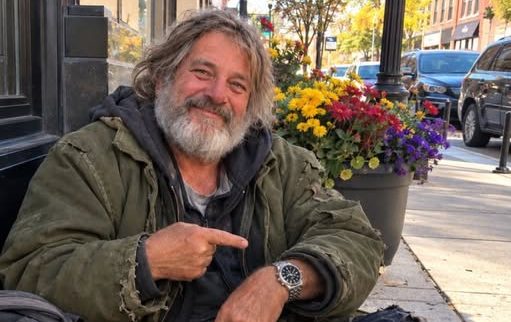
I visited a thrift store on the other side of town and purchased a faded brown jacket with a torn pocket, an old pair of jeans, and battered shoes with a loose sole.
I left my expensive watch at home.
I put my wallet in a drawer.
I skipped shaving and rubbed a little dust onto my hands and the knees of my jeans.
The only valuable item I carried was my cellphone, hidden inside my jacket. I also took four dollars in crumpled bills and loose change.
At twelve fifteen, I parked two blocks from Rosie’s and walked toward the restaurant.
My heart felt strangely heavy.
I knew the building better than I knew my own house. I had chosen the tables, installed the lights, painted the walls, and personally hung the framed photograph of my mother beside the entrance.
Yet when I approached the glass doors, I felt like someone who had no business being there.
I pushed the door open.
The little bell above it rang.
I had installed that bell eleven years earlier because my mother loved the sound of a traditional shop door.
For a moment, I stood still, listening to it fade.
Then I approached the hostess station.
A young woman named Madison stood behind the counter, looking at her phone.
She was twenty-six and had been working at Rosie’s for eight months. I remembered approving her hiring paperwork because Kyle had described her as efficient and professional.
She didn’t look up when I approached.
“Excuse me, miss,” I said politely. “Could I have a glass of water and maybe some soup? I’ve only got four dollars.”
Madison slowly raised her head.
Her eyes moved from my worn jacket to my dirty shoes.
Her expression changed immediately.
“Sorry,” she said. “We’re completely booked.”
I glanced into the dining room.
Nearly half the tables were empty.
“Are those tables reserved?” I asked.
“Yes.”
I looked at a booth beside the window. Nobody was sitting there, and no reservation sign had been placed on it.
“I don’t mind sitting somewhere out of the way.”
Madison sighed loudly.
“Sir, we’re not a shelter. You should try somewhere cheaper.”
Her words struck me harder than I expected.
I had heard rude comments before. I knew some people were impatient or unkind.
But this was my restaurant.
The restaurant where my mother had taught me that a person’s worth had nothing to do with the clothes they wore.
I looked at her again.
“Are you sure there’s nothing I can order for four dollars?”
She rolled her eyes.
“Not here.”
I was about to turn around when a gentle voice came from behind me.
“Sir, wait a moment.”
I turned.
A young waitress with dark hair tied into a loose ponytail had stepped out of the kitchen.
Her name was Amber Collins.
She had been working at Rosie’s for only three months, and I had met her just once during a brief staff meeting.
She looked at my clothes, then at the four dollars resting in my palm.
Unlike Madison, she didn’t look disgusted.
She looked concerned.
“Are you hungry?” she asked.
“Yes, ma’am.”
“Then come with me. There’s a lovely table by the window.”
Madison immediately interrupted.
“Amber, those seats are reserved!”
Amber looked toward the empty tables.
“Then show me who’s reserved them.”
Madison opened her mouth, but nothing came out.
Amber gently guided me to a table near the window and pulled out a chair.
“Please sit down. I’ll be right back.”
I watched her disappear into the kitchen.
A few minutes later, she returned carrying a generous bowl of hot chicken-and-dumpling soup, fresh bread, and a cup of coffee.
The aroma brought back memories of my mother’s kitchen.
Amber placed the tray carefully in front of me.
“Here you go, sir. Enjoy your lunch.”
I reached for the four dollars.
“I don’t think I have enough for all this.”
She smiled.
“Keep your money. Today’s meal is my treat.”
“But you shouldn’t have to pay for my food.”
“I don’t mind.”
She pulled out a small notepad and checked the other tables.
“Someone helped me once when I had nothing,” she explained. “I was nineteen, sleeping in my car after my mother died. A woman at a diner bought me breakfast without asking questions. She made me feel human again.”
Amber paused.
“I promised myself that if I ever had the chance to help somebody else, I would.”
I stared at her.
For the first time that day, I felt my eyes filling with tears.
My mother would have loved this young woman.
I was reaching for my spoon when the kitchen door swung open.
Kyle Brenner marched toward my table, his face red with anger.
Madison followed behind him.
He stopped beside my chair and looked at the bowl of soup as though it were evidence of a crime.
“What’s this supposed to be?”
Amber stepped forward.
“He came in hungry, Kyle. I gave him some soup.”
“Did he pay?”
“I’m paying for his meal.”
Kyle laughed bitterly.
“Amber, how many times do I have to explain this? We’re running a restaurant, not a charity.”
“It’s one meal.”
“One meal today, five tomorrow! You think our customers want to sit beside people who look like him?”
Several diners turned to watch.
I slowly put down my spoon.
“Sir, I’m not bothering anyone,” I said quietly. “I only wanted something warm to eat.”
Kyle leaned toward me.
“Then you picked the wrong restaurant.”
He grabbed my arm.
“Get up. You’re leaving.”
I tried to pull away without causing a scene.
“Please. There’s no need for that.”
“I said get out!”
He yanked me out of my chair.
Amber rushed forward.
“Kyle, stop! He hasn’t done anything!”
Kyle ignored her and dragged me toward the entrance.
My worn shoe caught against the edge of the carpet, and I stumbled sideways.
That’s when I saw something that made my stomach tighten.
An elderly woman was standing at the register, holding out her credit card.
Madison accepted it with a bright smile.
Then, instead of immediately processing the payment through the restaurant’s official terminal, she lowered the card beneath the counter.
There was a small black electronic device partially concealed behind the register.
Madison passed the card through it.
Only afterward did she use the regular payment terminal.
The entire movement lasted perhaps two seconds.
But I had spent two decades in the restaurant business. I knew that payment information had to be handled securely, and I knew that an unexplained second device could be a serious warning sign.
I watched Madison return the card to the elderly woman.
Then I noticed Kyle.
He had seen me watching.
For one brief moment, the anger disappeared from his face.
Something else replaced it.
Fear.
He tightened his grip on my arm.
“OUT!” he shouted.
A few customers gasped.
The elderly woman looked startled, clutching her purse against her chest.
Amber called after us.
“This is wrong, Kyle!”
He shoved the door open and pushed me onto the sidewalk.
“Don’t bother coming back!”
The door slammed behind me.
I stood outside, breathing heavily.
Through the window, I saw Kyle straighten his shirt and return to the dining room as though nothing had happened.
Madison leaned toward him and whispered something.
He looked directly at me.
Then he pointed toward the street, warning me to leave.
I stepped away from the window.
My hands were trembling.
I had walked into Rosie’s expecting to discover an employee who was rude to poor customers.
Instead, I had witnessed what might have been a payment-security violation, and my manager’s reaction suggested that he was desperate to keep me from noticing it.
I took my cellphone from my jacket and called Luis.
He answered almost immediately.
“Frank?”
“I saw it,” I whispered.
There was a long silence.
“What did you see?”
“A black device beneath the register. Madison used it before processing an elderly customer’s payment.”
Luis exhaled shakily.
“Then it’s happening again.”
My blood ran cold.
“Again?”
He lowered his voice.
“Frank, there’s something else you need to know. And if I’m right, those customers aren’t the only people who’ve been losing money.”
I looked back at the restaurant.
“What are you talking about, Luis?”
He paused.
“Meet me tonight. Somewhere private. Bring nobody from the restaurant.”
“Why can’t you tell me now?”
“Because I don’t know who’s listening.”
Then he hung up.
I stood on the sidewalk, staring at the restaurant sign bearing my mother’s name.
For the first time in twenty years, I wondered whether Rosie’s had become something my mother would no longer recognize.
And I knew I couldn’t simply walk inside, announce who I was, and fire everyone who had humiliated me.
Not yet.
If a crime was taking place, I needed evidence.
I needed the truth.
And I needed to protect the people who had trusted me with their money, their meals, and their dignity.
That evening, I would learn just how far the betrayal reached.
But first, I had to find out why my own employees were so afraid of the man I had trusted to run my restaurant.
PART 2: THE SECRET HIDING BENEATH THE CASH REGISTER
At seven that evening, I met Luis in the parking lot behind an old grocery store three miles from Rosie’s.
He arrived in his battered pickup truck and looked around before getting out.
“Did anybody follow you?” he asked.
“Not that I noticed.”
He nodded toward the passenger seat.
“Get in.”
Inside the truck, Luis reached into a canvas bag and pulled out a thick envelope.
“I should have told you sooner,” he said.
“Then tell me now.”
He rubbed his face with both hands.
“About four months ago, Kyle started telling the staff that the restaurant was losing money. He said food costs were rising and we needed to tighten everything up.”
I nodded.
“I remember the budget meeting.”
“He introduced a new procedure for card payments. He told Madison to run every card through a second device before using the regular terminal. He said it was for accounting.”
“Did you ask him why?”
“I did. He told me to stick to the kitchen.”
Luis opened the envelope.
Inside were printed receipts, photographs of register screens, and handwritten notes.
“I started paying attention after Mrs. Whitmore complained about being charged twice. She’s been eating at Rosie’s every Sunday for nine years. She told me her bank account showed two unfamiliar transactions after she visited us.”
My jaw tightened.
“What did you do?”
“I told her to contact her bank. Then I checked the register when nobody was around.”
He handed me a photograph.
It showed the black device beneath the counter.
“I took that picture three weeks ago. I didn’t know what it was, but I knew Kyle hadn’t told you about it.”
I studied the photograph.
“Why didn’t you come directly to me?”
Luis looked ashamed.
“Because Kyle threatened my job.”
He explained that Kyle had told the kitchen staff that anyone who questioned his procedures would be dismissed. Luis was sixty-one, supporting his wife and a grandson who lived with them. He couldn’t afford to lose his income.
“I was scared,” he admitted. “But then I saw what happened to that old woman last week. She came back crying because her bank had frozen her card. She said she didn’t understand how someone could steal from an old lady who had done nothing wrong.”
Luis looked down at his hands.
“That night, I decided I couldn’t stay quiet anymore.”
I placed a hand on his shoulder.
“You did the right thing.”
Then I opened the envelope again.
“What else is in here?”
Luis pulled out a handwritten list.
Names.
Dates.
Amounts.
He had recorded complaints from customers who believed they had been charged incorrectly after dining at Rosie’s.
The list contained twenty-three entries.
Some amounts were small. Others were hundreds of dollars.
“I don’t know if all of these are connected,” he said. “But the complaints started around the same time Kyle introduced that device.”
I felt sick.
“Did you see anyone taking money?”
“No. I never saw cash disappear. But Kyle has been coming in early, before the rest of us arrive. Sometimes he stays late after closing.”
I thought about the restaurant’s declining revenue.
The unexplained accounting discrepancies.
The regular customers who had quietly stopped coming.
And the fear in Kyle’s eyes when he realized I had noticed the device.
“Do you think Madison knows what’s happening?”
Luis hesitated.
“I don’t know. Sometimes she looks nervous. Other times, she acts like everything is normal.”
That uncertainty mattered.
I didn’t want to accuse someone without proof.
“Did Kyle ever tell you what the second device was for?”
Luis shook his head.
“No. But two weeks ago, I heard him talking to someone in his office. He said something about ‘the monthly totals’ and ‘making sure nobody could trace the accounts.'”
I stared at him.
“Did you hear the other person’s name?”
“No.”
For several seconds, neither of us spoke.
Then I made a decision.
“We’re not going to confront him. We’re going to protect the evidence and contact the proper authorities.”
Luis looked relieved.
“Thank you, Frank.”
I drove home and spent the next hour reviewing the restaurant’s financial records.
The more I examined, the more concerned I became.
There were discrepancies between the daily sales reports and the deposits recorded in our bank statements. Several refunds lacked supporting documentation. A number of customer complaints had been marked as resolved even though I had never authorized the refunds.
None of those facts alone proved criminal activity.
Together, however, they demanded an independent investigation.
I called my accountant, Patricia Wells, who had handled Rosie’s books for nearly a decade.
I told her I needed an urgent review of our payment records, refund history, and merchant-processing arrangements.
She asked why.
“I have reason to believe someone may be misusing customer payment information,” I said. “I don’t want to make accusations until we know what’s happening.”
Her tone changed immediately.
“Frank, don’t touch that device. Don’t try to access anything you aren’t authorized to access. Preserve your records and contact law enforcement.”
“That’s my plan.”
“And notify your payment processor’s fraud department through a verified contact number. If customer card information may have been compromised, you need professional guidance.”
She was right.
Before doing anything else, I contacted the appropriate bank and payment-processing representatives using the official contact information in my records.
I explained what I had witnessed and requested that the matter be handled as a potential payment-security incident.
Then I called the police non-emergency number.
An officer took my initial report and explained that investigators would need evidence before determining whether a crime had occurred.
I provided the dates, the photograph Luis had taken, and the names of the customers who had reported suspicious transactions.
I also explained that I was the restaurant’s owner.
The officer listened carefully.
“Mr. Delgado, don’t confront your employees or attempt to seize any device yourself. If there’s a criminal investigation, let the investigators handle the evidence.”
“I understand.”
“We’ll contact you about the next steps.”
I hung up feeling both relieved and deeply unsettled.
For twenty years, I had believed that if I treated people fairly, they would treat my business fairly in return.
I had learned that trust was essential.
But I was beginning to understand that trust without oversight could become a dangerous weakness.
The next morning, I arrived at Rosie’s at eight.
I wore my usual navy suit, polished shoes, and the silver watch my mother had given me for my fortieth birthday.
When I entered, the bell rang.
Every conversation in the dining room seemed to stop.
Madison looked up from the hostess station.
Her face went pale.
“Mr. Delgado?”
Kyle emerged from his office almost immediately.
“Frank! What a surprise.”
His smile was so wide that it looked painful.
“I didn’t know you were coming in today.”
“I own the place, Kyle. I don’t need an appointment.”
He laughed nervously.
“Of course. Absolutely.”
I looked around.
Amber was carrying a tray of coffee. When she saw me, she stopped in her tracks.
Her eyes widened.
Then she slowly lowered the tray.
“You were…” she whispered.
“Yes,” I said. “The man who needed soup.”
Her face filled with concern.
“I’m so sorry. I should have—”
I gently shook my head.
“You did exactly what you should have done.”
Her eyes became wet.
Kyle interrupted.
“Frank, perhaps we should discuss this privately.”
“Certainly.”
I followed him into his office.
The moment the door closed, his smile disappeared.
“What exactly are you doing?” he demanded.
“I’m reviewing the restaurant’s operations.”
“Why?”
“Because customers are complaining, revenue doesn’t match our records, and I’ve discovered an unapproved payment device beneath the register.”
Kyle stared at me.
For a moment, I thought he might deny everything.
Instead, he leaned back in his chair and laughed.
“That thing? It’s a backup reader. Madison uses it when the main terminal acts up.”
“Who authorized its installation?”
“I did.”
“Why wasn’t it included in our payment-security documentation?”
His smile faded.
“I don’t have to explain every little operational decision to you.”
I looked at him steadily.
“You absolutely do when it involves my customers’ payment information.”
Kyle stood.
“Frank, you’re making a mistake. You don’t understand what it’s like to manage this place every day. You come in occasionally, look at the books, and expect everything to work perfectly.”
I didn’t respond.
He continued.
“Maybe you should focus on your other restaurant and let me do my job.”
There it was.
Not an explanation.
Not a denial supported by records.
An attempt to push me away.
I rose from my chair.
“Effective immediately, no one is to alter, delete, or dispose of business records. I’m conducting a formal review of our procedures.”
Kyle’s face tightened.
“You can’t just walk in here and accuse people.”
“I haven’t accused anyone of a crime. I’ve identified serious concerns that need to be investigated.”
I left his office.
For the remainder of the morning, I stayed in the dining room and observed.
Amber treated every customer with the same kindness she had shown me the day before.
Madison, however, kept glancing toward Kyle’s office.
At eleven forty, a man in a gray jacket entered through the back door.
He wasn’t wearing a uniform, and I didn’t recognize him.
Kyle met him near the kitchen.
They spoke quietly for less than a minute.
Then the stranger handed Kyle a small envelope.
Kyle slipped it into his pocket.
When the man turned, he noticed me watching.
He immediately looked away.
I started toward them, but Kyle stepped between us.
“Frank, this is a supplier,” he said quickly.
“Which supplier?”
“One of our regular vendors.”
“What’s his company called?”
Kyle hesitated.
“Northstar Services.”
I had never heard of it.
“Send me the contract and invoices.”
“Of course.”
The stranger left without saying a word.
I watched his vehicle disappear down the street.
Then I returned to my office and called the officer who had taken my report.
I described what I had seen and asked whether the new information should be added to the case.
He advised me to document the encounter and avoid approaching the stranger myself.
I did exactly that.
At two that afternoon, my accountant called.
“Frank, I found something concerning.”
I closed my office door.
“What is it?”
“Several transactions don’t match your restaurant’s official sales records. There are also unexplained withdrawals and refunds. I’m not ready to draw conclusions, but the discrepancies are substantial enough that we need to examine them carefully.”
“How substantial?”
“More than eighty thousand dollars across the period I’ve reviewed. That figure may change as I complete the reconciliation, and not all of it necessarily represents a loss.”
I gripped the edge of my desk.
Eighty thousand dollars.
Money that should have gone toward employee wages, food suppliers, repairs, and the future of the restaurant.
“Patricia, I want everything documented. Don’t alter any original records.”
“Already doing that.”
After we hung up, I sat silently for several minutes.
Then my cellphone rang again.
It was Amber.
She sounded frightened.
“Mr. Delgado, I need to tell you something, but I’m afraid Kyle will find out.”
“You’re safe to talk to me. What’s happened?”
“I found something in the office printer this morning. It was a report about the payment device. There were instructions on it, and my name was mentioned.”
My pulse quickened.
“What kind of instructions?”
“I don’t know everything. But it said that if anyone asked about the device, I was supposed to say it was a backup reader. It also mentioned a company called Northstar.”
I glanced at the office door.
“Do you still have the report?”
“No. Kyle took it from me and told me to forget I’d seen it.”
“Amber, don’t confront him. Don’t try to retrieve anything yourself. Tell the police exactly what you remember, and preserve any records you already have lawful access to.”
She was silent for a moment.
“Mr. Delgado, there’s something else.”
“What?”
“Madison isn’t the only person who uses that device.”
My stomach tightened.
“Who else?”
Amber whispered the words that changed everything.
“Kyle uses it himself. Sometimes, after the restaurant closes, he brings out a laptop and connects it to the register. I’ve seen him do it three times.”
I looked toward the dining room.
Customers were eating beneath the warm lights. A little boy was laughing at something his father had said. An elderly couple shared a slice of apple pie.
They had no idea what might be happening behind the counter.
I thanked Amber and ended the call.
Then I contacted the police again and requested that the new information be added to my report.
I didn’t know whether Kyle was stealing money, compromising payment information, or hiding something else.
But I knew the situation had gone far beyond rude service.
And I knew that if I delayed any longer, more people might be hurt.
That afternoon, the police informed me that an investigator would contact me about arranging an examination of the relevant evidence.
I agreed to cooperate fully.
For the first time since opening Rosie’s, I felt afraid of what the investigation might uncover.
Not because I feared losing money.
Because I feared discovering how many people had trusted my restaurant—and how badly that trust might have been betrayed.
PART 3: THE TRUTH THAT DESTROYED KYLE’S CAREFULLY BUILT LIE
The following morning, I arrived at Rosie’s before sunrise.
I wanted to be there when the investigators arrived, but I did not want to interfere with their work.
At eight thirty, Detective Hannah Brooks called me.
She explained that investigators were reviewing the information I had provided and would need access to relevant business records, payment-processing documentation, and the device in question.
I gave them the contact details for my accountant and payment processor.
I also told them that Kyle and Madison were still working at the restaurant.
“Do not attempt to question them on our behalf,” Detective Brooks advised. “If we need interviews or evidence from the premises, we’ll coordinate with you.”
I agreed.
At nine fifteen, two investigators arrived at Rosie’s.
I greeted them at the entrance and led them to the office.
Kyle emerged from the kitchen as soon as he saw them.
His face changed.
“What’s going on?” he demanded.
One investigator introduced herself and explained that they were there to examine a reported payment-security concern.
Kyle immediately turned toward me.
“Frank, what have you done?”
“I reported what I observed.”
“This is ridiculous!”
The investigator calmly asked him to step aside while they explained the purpose of their visit.
Madison stood frozen behind the counter.
Amber came out of the kitchen, wiping her hands on her apron.
When she saw me, I gave her a small nod.
She nodded back.
The investigators followed the appropriate procedures to document the device and review the records they were authorized to examine.
I stayed out of their way.
About forty minutes later, Detective Brooks asked to speak with me privately.
“We can’t tell you everything while the investigation is ongoing,” she said. “However, the device you’ve reported is not documented as an authorized component of your payment system. We’re treating the matter seriously.”
“Do you know what it was doing?”
“We’re working to establish that. We need technical examination and transaction records before we can make a reliable determination.”
I appreciated her honesty.
I had spent the previous two days imagining every possible explanation.
Now I wanted facts, not guesses.
The investigators continued their work.
At one point, Kyle began pacing near his office.
“This is a waste of time,” he muttered. “You’re disrupting my business over a piece of equipment.”
Nobody responded.
Then Madison suddenly spoke.
“I didn’t know.”
Everyone turned toward her.
She was trembling.
“I didn’t know what it was really for.”
Kyle snapped his head toward her.
“Madison, stop talking.”
The investigator looked at him.
“Sir, please allow her to speak if she chooses to do so.”
Madison swallowed hard.
“Kyle told me it was an accounting device. He said it was required by the payment company. He told me I’d lose my job if I refused to use it.”
Kyle’s face turned crimson.
“That’s a lie!”
Madison began to cry.
“He told me the second swipe was just a verification step. I believed him.”
I felt a complicated mixture of anger and sympathy.
If Madison had knowingly participated in wrongdoing, she would need to answer for her actions. But if she had been misled or coerced, that mattered too.
I wasn’t going to decide her guilt based on a frightened confession.
The investigator asked her to provide a formal account of what she knew.
Kyle demanded to speak to his lawyer.
The atmosphere in the restaurant changed completely.
For the first time, the people who had worked under Kyle’s authority seemed to realize that he no longer controlled the situation.
But the most important revelation came later that afternoon.
Detective Brooks called me with an update.
“Mr. Delgado, we’ve obtained preliminary information indicating that some customer payment data may have been captured through the unauthorized device. We’re working with the relevant financial institutions and technical specialists to determine the scope.”
I closed my eyes.
“Have customers lost money?”
“Several transactions are under review. We cannot yet attribute every reported loss to the device, but there are indications of suspicious activity. The investigation is ongoing.”
I thanked her.
Then I asked the question that had been haunting me.
“What about the money missing from my restaurant?”
“We’re examining that separately. The payment-data issue and your accounting discrepancies may be connected, but we won’t assume that until the evidence establishes it.”
That distinction was important.
I didn’t want the truth distorted by my anger.
I wanted every customer protected, every transaction traced, and every person responsible held accountable.
By late afternoon, the investigators had completed their initial examination.
They instructed me to preserve the restaurant’s records and work with the payment processor to follow its incident-response procedures.
I also arranged for an independent review of our accounting and access controls.
Kyle was no longer permitted to manage payment operations while the review proceeded.
His employment status would be handled through the appropriate process, with legal advice guiding any further action.
As he gathered his belongings, he stopped in front of me.
“You’ve ruined everything,” he said.
I looked at him.
“No, Kyle. I didn’t ruin anything. I asked why customers were being treated badly, and I reported what I saw.”
He shook his head.
“You have no idea how difficult it is to keep a business profitable.”
“I know exactly how difficult it is. I washed dishes for six dollars an hour to build this place.”
“Then you should understand.”
“I understand that businesses can struggle. I understand that employees make mistakes. I understand that people sometimes need help.”
I paused.
“But none of those things gives anyone the right to exploit customers or intimidate employees.”
Kyle stared at me for a long moment.
Then he walked out.
I watched him disappear through the glass doors.
The little bell rang above his head.
For the first time, the sound didn’t bring me comfort.
It reminded me of how close I had come to losing everything my mother had taught me.
Over the following weeks, the investigation continued.
The payment processor identified suspicious activity associated with the unauthorized device. Financial institutions worked to determine which transactions required further investigation and which customers needed assistance.
My accountant completed a detailed review of the restaurant’s books.
The findings were disturbing.
There were unsupported refunds, discrepancies in deposits, and transactions that could not be reconciled with legitimate restaurant sales. Investigators examined whether these issues were connected to Kyle’s activities or involved other people.
Some of the accounting irregularities were explained by poor documentation. Others remained under investigation.
I learned that a business can be damaged in two different ways.
Sometimes, money disappears.
Other times, people lose faith.
The second kind of damage can be much harder to repair.
I contacted every customer whose information we could lawfully identify as potentially affected, following guidance from our payment processor, financial institutions, and legal advisers.
We established a dedicated phone line for questions and provided clear instructions for reporting suspicious transactions.
I also offered refunds where our records established that customers had been improperly charged.
Mrs. Whitmore, the elderly woman whose card I had seen at the register, was among the first people I called.
When she arrived at Rosie’s, she looked nervous.
“Mr. Delgado,” she said, “I almost stopped coming here forever.”
I led her to a table by the window.
“I don’t blame you.”
She folded her hands on the table.
“I’ve been coming here since my husband died. He used to sit right there.” She pointed to the booth across from us. “We celebrated our fortieth anniversary in this restaurant.”
I swallowed hard.
“I’m sorry we failed you.”
She looked around.
“Are you going to close?”
The question hurt more than I expected.
“I don’t know what the future holds,” I admitted. “But I promise you this: we’re going to make things right wherever we can, and we’re changing the way this place operates.”
She studied my face.
“Your mother wouldn’t have wanted this.”
“No,” I whispered. “She wouldn’t.”
Mrs. Whitmore reached across the table and placed her hand over mine.
“Then don’t let this be the end of her restaurant.”
Those words stayed with me.
I knew I couldn’t simply replace the payment system, change the management, and pretend everything was fine.
Rosie’s needed to become a place where kindness was more than a slogan painted on the wall.
So I began making changes.
Every payment terminal was reviewed and authorized through our processor.
Staff received updated training on payment security, customer privacy, and professional conduct.
We established a clear process for reporting suspicious activity without fear of retaliation.
Refunds and financial adjustments required documented approval.
An independent accountant reviewed our financial controls regularly.
And I introduced a simple policy that became the heart of our restaurant.
No customer would ever be judged by their appearance or the amount of money they had.
If someone was hungry and couldn’t afford a meal, employees could contact the manager on duty to arrange assistance through a small community meal fund I established in my mother’s name.
The fund wasn’t designed to attract publicity.
It was there to help people quietly, respectfully, and without humiliation.
Amber became one of the strongest advocates for the program.
She helped us create a system that allowed customers to receive a meal without being questioned in front of other diners.
Luis helped train the kitchen staff and ensured that meals provided through the program were prepared with the same care as every other order.
And Madison?
She faced a formal review of her actions and provided information to the investigators. I did not promise her immunity or excuse anything she had done. The authorities would determine whether her conduct had crossed any legal lines.
I did, however, make sure that the restaurant’s employment decisions were based on documented facts rather than rumor or revenge.
Over time, Rosie’s began to recover.
Some customers returned immediately.
Others needed weeks or months before they felt comfortable coming back.
I didn’t blame them.
Trust isn’t something you can demand from people after you’ve given them a reason to doubt you.
You have to earn it again.
One rainy Tuesday morning, almost three months after I had disguised myself as a homeless man, I arrived at Rosie’s before opening.
Amber was arranging clean cups near the coffee station.
Luis was checking the day’s soup.
The restaurant smelled of fresh bread, roasted chicken, and cinnamon.
For the first time in months, I felt a little peace.
Then the bell above the entrance rang.
An elderly man stepped inside.
He wore a thin coat and carried a plastic bag containing everything he appeared to own.
He looked toward the tables, then down at his shoes.
“Excuse me,” he said quietly. “How much is your cheapest soup?”
Amber approached him.
“Good morning, sir. Our soup comes with fresh bread.”
He shifted uncomfortably.
“I’ve only got two dollars.”
Amber smiled.
“Then I’m glad you came in today.”
She led him to the table beside the window.
I watched from the kitchen entrance as she brought him a bowl of chicken-and-dumpling soup and a cup of coffee.
The man stared at the food.
“Are you sure?” he asked. “I don’t want to cause trouble.”
Amber pulled out a chair.
“You’re not causing trouble. You’re our guest.”
He lowered his head.
For several seconds, he didn’t speak.
Then he began to cry.
Not loudly.
Just quiet, exhausted tears that seemed to come from somewhere deep inside him.
Amber stood beside the table without rushing him.
I felt my throat tighten.
I remembered the four dollars I had held in my hand that day.
I remembered Kyle dragging me toward the door.
I remembered the black device beneath the counter and the fear in Luis’s voice.
And I remembered why I had built Rosie’s in the first place.
It had never been about the money.
It had never been about the reputation.
It had been about making sure that someone who was hungry could walk through a door and find a little dignity on the other side.
I walked toward the man’s table.
“How’s the soup?” I asked.
He looked up, embarrassed.
“Wonderful, sir. I haven’t eaten anything this good in a long time.”
“Then you’re welcome to come back.”
He glanced at me uncertainly.
“Even if I can’t afford it?”
I pulled out the chair across from him.
“Especially then.”
His eyes filled with tears again.
“Why would you do that for a stranger?”
I smiled, thinking of my mother.
“Because someone once taught me that a hungry person deserves a meal before anyone asks what they can pay.”
He nodded slowly.
Then he picked up his spoon.
I stood and returned to the kitchen.
Amber caught my eye and smiled.
Luis gave me a quiet thumbs-up from beside the stove.
For a moment, I could almost hear my mother’s voice.
Remember, Frank. You never know what someone is carrying when they walk through your door.
That afternoon, I placed her photograph back in its original position beside the entrance.
I had taken it down briefly during renovations, but now I wanted every person who entered Rosie’s to see it.
Beneath the photograph, I placed a small brass plaque.
It read:
ROSIE’S
Founded on the belief that every person deserves dignity, kindness, and a place at the table.
If you’re hungry, come in.
If you can pay, we’re grateful.
If you cannot, you are still welcome.
I stepped back and read the words one final time.
Twenty years earlier, I had opened Rosie’s hoping to build a successful restaurant.
I had succeeded in ways I never imagined.
But the real test hadn’t come when business was booming or when customers praised our food.
It had come when I dressed like a man nobody wanted to serve and discovered what my restaurant had become when I wasn’t watching.
I had gone looking for rude employees.
I found a warning sign that led to a serious investigation, a frightened worker who finally spoke up, and a young waitress whose kindness reminded me what the business was supposed to mean.
The authorities would continue handling the case according to the evidence. The financial damage would take time to assess, and rebuilding customer confidence would take even longer.
But Rosie’s would survive—not because I was determined to protect my profits, but because I was determined to protect the values on which it had been built.
That evening, just before closing, I stood by the entrance and listened to the little bell ring as the last customers left.
For years, I had thought of that sound as a welcome.
Now I understood that it was also a responsibility.
Every time the bell rang, someone was placing a small piece of trust in our hands.
And no matter how tired we were, how busy the kitchen became, or how much money a customer carried, we had a duty to honor that trust.
My mother had spent thirty-eight years teaching people that kindness didn’t have to be expensive.
It only had to be real.
And I had spent one terrible Thursday discovering how easily a business could forget that lesson.
I locked the door, turned off the dining-room lights, and looked once more at her photograph.
“I’m sorry it took me so long, Mom,” I whispered. “But I understand now.”
Then I smiled.
Because for the first time in months, I knew that if my mother could walk through the doors of Rosie’s tomorrow, she would recognize the place again.
And that meant more to me than anything else I had ever built.
THE END