PART 1 — THE CROOKED YELLOW SUN “Put that away,” she whispered. I stared at her. “What?” “The photograph.” Her voice was barely audible. “Please.”
My heart was pounding so hard I could hear it.
I slowly lowered my phone.
The woman looked around the café.
She seemed frightened.
Not confused.
Not surprised.
Frightened.
I stepped closer.
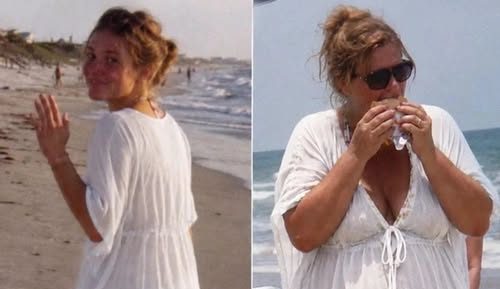
“Where did you get that cover-up?”
She looked down at it.
“I told you. I’ve had it for years.”
“Who gave it to you?”
She didn’t answer.
“Please,” I said. “My daughter disappeared wearing that.”
Her face went pale.
“What was her name?”
“Nora.”
The woman swallowed.
“Nora what?”
“Vance.”
Her eyes filled with something I couldn’t understand.
Recognition?
Fear?
Grief?
Then she whispered,
“You shouldn’t have found me.”
My entire body went cold.
Michael stepped forward.
“Ma’am, what are you talking about?”
She looked at him.
Then back at me.
“I don’t know your daughter.”
“You just asked her name.”
“I was trying to understand.”
“Then explain the cover-up.”
She glanced toward the street.
“Not here.”
“Where?”
She hesitated.
“Come with me.”
Every instinct told me not to follow a stranger.
But this wasn’t any stranger.
She was wearing the last piece of clothing my daughter had worn before disappearing.
Eight years of searching had taught me not to ignore impossible things.
We followed her into a small side street behind the café.
She stopped beside an old bookstore.
“My name is Evelyn.”
She looked around again.
“I bought this at a secondhand shop.”
“When?”
“About seven years ago.”
My heart sank.
Seven years.
That meant the cover-up had changed hands sometime after Nora disappeared.
“Where was the shop?”
“About twenty miles from here.”
“Do you remember the name?”
Evelyn shook her head.
“No.”
“Then how did you get it?”
“A box of clothing was being sold.”
“Did the seller know where it came from?”
“I don’t know.”
“Was there anything else?”
She thought.
“A few children’s clothes. An old backpack. Some photographs.”
My breath caught.
“Photographs?”
“I didn’t keep them.”
“Why?”
“Because they weren’t mine.”
I could barely speak.
“Was Nora in them?”
Evelyn looked at me.
“I don’t know.”
“Then why are you scared?”
She looked down.
“Because three years ago, someone came looking for the cover-up.”
My heart stopped.
“Who?”
“A man.”
“What did he want?”
“The clothing.”
“Why?”
“I don’t know.”
“Did he say a name?”
She shook her head.
“But he knew exactly what he was looking for.”
Michael stepped closer.
“Did he threaten you?”
“No.”
“Then why are you afraid?”
Evelyn looked at me.
“Because after he left, I received a note.”
“What did it say?”
She hesitated.
Then she whispered,
“Some things should stay buried.”
My knees almost gave out.
I grabbed the wall.
Michael caught my arm.
“This can’t be happening.”
Evelyn reached into her purse.
She pulled out a small envelope.
“I kept this because I thought someday someone would come looking.”
She handed it to me.
Inside was a faded photograph.
A young girl stood beside an older woman.
The picture was blurry.
The girl’s face was turned slightly away.
But I recognized the turquoise fabric.
And beneath it, barely visible—
The crooked yellow sun.
I stared at the photograph.
“Where was this taken?”
“I don’t know.”
“Who is the woman?”
“I don’t know.”
I looked closer.
Behind them was a building.
A white wooden structure.
Above the door was a sign.
Only three letters were visible.
HAV—
I suddenly remembered something.
Nora had once talked about a place called Haven.
It was a summer camp she’d wanted to attend.
But we never went.
I looked at Evelyn.
“Where did you get this?”
“I told you. The clothing box.”
“Who sold it?”
“I don’t remember her name.”
“Then help me find the shop.”
She nodded.
“I’ll try.”
That evening, Michael and I sat in our hotel room staring at the photograph.
Neither of us slept.
At 6:15 the next morning, Evelyn called.
“I found the shop.”
My heart raced.
“What was it?”
“An old consignment store called Harbor Finds.”
“Address?”
She gave it to me.
We drove there immediately.
The shop was nearly empty.
An elderly man stood behind the counter.
When I showed him the photograph, he stared at it.
Then he looked at me.
“I know that girl.”
My breath caught.
“You do?”
He nodded slowly.
“She came through here years ago.”
“When?”
“About eight years ago.”
My hands began shaking.
“Are you sure?”
“Yes.”
“What was her name?”
He hesitated.
Then he said,
“She called herself Nora.”
I almost collapsed.
Michael grabbed my shoulder.
“Where is she?”
The man looked toward the back room.
“I don’t know.”
“What do you mean?”
“She wasn’t alone.”
My heart stopped.
“Who was with her?”
He lowered his voice.
“An older woman.”
“Who?”
“I don’t know her name.”
“Where did they go?”
He pointed toward a box beneath the counter.
“There was something left behind.”
I opened it.
Inside were several old receipts, photographs, and pieces of clothing.
Then I saw something that made me stop breathing.
A small silver bracelet.
I knew it immediately.
Nora had worn it every day.
There was a tiny heart charm attached to it.
I had given it to her for her sixteenth birthday.
I picked it up with trembling fingers.
“This belonged to my daughter.”
The shopkeeper nodded.
“She gave it to the woman.”
“Why?”
“I don’t know.”
“Did she say anything?”
He looked at me.
“She told me something strange.”
“What?”
“She said, ‘If my mother ever comes looking for me, tell her I’m safe.’”
I started crying.
Michael covered his mouth.
“She knew we’d look for her.”
The shopkeeper nodded.
Then he reached beneath the counter and pulled out another photograph.
This one was clearer.
Nora was older.
Maybe nineteen or twenty.
She was standing beside the same older woman.
And on the back, someone had written a sentence.
“She doesn’t know who she can trust.”
I turned the photograph over again.
“Where was this taken?”
The shopkeeper pointed to the building in the background.
“Haven House.”
My heart stopped.
“Where is it?”
He gave me an address.
It was less than thirty miles away.
I looked at Michael.
For eight years, we’d searched hundreds of miles.
And suddenly, we had a place.
A name.
A photograph.
And proof that our daughter had been alive after the day she disappeared.
But as we walked toward the car, my phone rang.
Unknown number.
I answered.
Nobody spoke.
Then a man’s voice whispered:
“Stop looking.”
The call ended.
Michael stared at me.
I looked back toward the store.
And for the first time in eight years, I wasn’t searching for a missing child.
I was searching for my daughter.
And someone desperately wanted me to stop.
❤️ FOLLOW OUR PAGE FOR PART 2
After eight years, I finally discovered proof that Nora was alive after the day she vanished. But someone called me and warned me to stop searching. Follow our page for Part 2 to discover what we found at Haven House.
PART 2 — THE DOOR AT HAVEN HOUSE
We drove to Haven House before sunrise.
It stood at the end of a narrow road surrounded by trees.
The building was old.
White wooden siding.
Green shutters.
A weathered sign above the entrance.
HAVEN HOUSE — WOMEN’S RESIDENTIAL PROGRAM
I stared at it.
The letters matched the photograph.
My hands were shaking.
Michael reached for mine.
“Ready?”
“No.”
He nodded.
“Neither am I.”
We walked inside.
A receptionist looked up.
“Can I help you?”
I pulled out the photograph.
“Do you know this girl?”
The woman’s expression changed.
She looked at the picture.
Then at me.
“I can’t discuss residents.”
“She was my daughter.”
The receptionist froze.
“What was her name?”
“Nora Vance.”
The woman looked toward a hallway.
Then back at me.
“I think you should speak to our director.”
Five minutes later, an older woman entered the room.
Her name was Margaret.
She studied my face.
Then she whispered,
“You’re Nora’s mother.”
My knees went weak.
“You know her?”
Margaret nodded.
“She lived here.”
“When?”
“Eight years ago.”
“Is she alive?”
Margaret looked at me.
“Yes.”
I began sobbing.
Michael put his arm around me.
“Where is she?”
Margaret hesitated.
“She left several years ago.”
“Where?”
“I don’t know.”
“Please.”
“She asked us never to reveal her location.”
“Why?”
Margaret looked toward the window.
“Because she was afraid someone would find her.”
“Who?”
Margaret didn’t answer.
Then she said,
“Your daughter didn’t disappear that afternoon.”
I stared at her.
“What?”
“She left voluntarily.”
“No.”
“I know how that sounds.”
“She was sixteen.”
“I know.”
“Why would my sixteen-year-old daughter leave us?”
Margaret sighed.
“Because she believed she was protecting you.”
I couldn’t breathe.
“Protecting us from what?”
Margaret finally told us.
Nora had discovered something about her father.
My husband, Michael, looked stunned.
“What?”
Margaret explained that before Nora disappeared, she’d overheard an argument involving someone connected to Michael’s business.
There had been financial fraud.
Threats.
And pressure.
Nora became convinced that someone was watching our family.
She was terrified they would hurt us.
So when a woman named Clara approached her at the beach, Nora went with her.
Clara was a counselor connected to Haven House.
She believed Nora was in danger.
But they couldn’t immediately return her home without risking exposing her location.
Nora agreed to stay temporarily.
Temporary became weeks.
Weeks became months.
And then Nora became afraid to come home.
I couldn’t understand.
“You’re telling me my daughter was alive all these years?”
“Yes.”
“And you never contacted me?”
Margaret’s eyes filled with tears.
“Nora begged us not to.”
I was furious.
“You let me believe she was dead!”
“We didn’t know where she was after she left.”
“But you knew she was alive!”
“For a time.”
I turned away.
Eight years.
Eight years of birthdays.
Eight Christmases.
Eight Mother’s Days.
I had spent them wondering whether my daughter was alive.
Margaret handed me a folder.
“Nora left this.”
Inside were letters.
Dozens of them.
Every envelope had my name.
I opened one.
Mom,
I’m sorry.
I couldn’t read the rest.
My hands shook too badly.
Another letter said:
I want to come home. I’m just scared.
Another:
Please don’t stop loving me.
I pressed the letters against my chest.
Then I noticed a more recent envelope.
It was dated only three months earlier.
My heart stopped.
“Where did this come from?”
Margaret looked surprised.
“She sent it.”
“Where is she?”
Margaret shook her head.
“I don’t know.”
I opened it.
Inside was one sentence.
“Mom, if you’re reading this, I’m finally ready to come home.”
There was an address.
My hands trembled.
It was in a town nearly six hundred miles away.
The same town where we’d seen Evelyn.
The same town where Nora’s cover-up had resurfaced.
Michael looked at me.
“She was there.”
I nodded.
We drove through the night.
When we reached the address, we found a small house.
I stood outside for several seconds.
Then I knocked.
Nothing.
I knocked again.
The door opened.
And there she was.
Not sixteen anymore.
Twenty-four.
Her hair was longer.
Her face had changed.
But her eyes were the same.
The eyes I’d searched for in every crowd for eight years.
She stared at me.
I stared at her.
Neither of us spoke.
Then she whispered,
“Mom?”
I broke.
I pulled her into my arms.
She sobbed against my shoulder.
“I thought you hated me.”
I held her tighter.
“I never stopped loving you.”
“I wanted to come home.”
“I know.”
“I was scared.”
“I know.”
“I watched your interviews.”
I pulled back.
“What?”
She wiped her tears.
“I saw you searching for me.”
My heart broke.
“Then why didn’t you come home?”
She looked at Michael.
“Because I was afraid the person who took me would find you.”
Michael stepped closer.
“What person?”
Nora’s expression changed.
She looked terrified.
Then she said the words that explained everything.
“The man who called you.”
I froze.
“You know him?”
She nodded.
“I do.”
“Who is he?”
Nora looked toward the window.
“He was the reason I left.”
“Tell me.”
She took a breath.
“He wasn’t a stranger.”
I waited.
Nora whispered,
“He was someone we trusted.”
Then she reached into a drawer.
She pulled out an old photograph.
It showed our family years ago.
My husband.
Me.
Nora.
And another man standing beside us.
I knew him immediately.
He had been my husband’s closest friend.
He had attended Nora’s sixteenth birthday party.
He had helped search for her after she disappeared.
And according to Nora—
he was the person who knew where she’d been all along.
I looked at my daughter.
“What did he do?”
Nora took my hand.
“I’ll tell you everything.”
And for the first time in eight years, my daughter was finally home.
But the truth about why she disappeared was only beginning.
The next morning, Nora sat between Michael and me at the kitchen table.
There were tears.
Questions.
Anger.
And eventually, forgiveness.
She explained that she had discovered the man was involved in financial crimes connected to Michael’s business.
He had threatened her after she accidentally overheard a conversation.
When Nora told him she would expose him, he panicked.
He convinced her that our family would be harmed if she spoke.
Clara, the woman who had helped Nora leave the beach, had believed she was protecting her.
But the situation spiraled.
Nora became afraid.
And over time, she became convinced that returning home would put us in danger.
The man continued monitoring the situation from a distance.
He even participated in the search for her.
That’s why he always seemed to know just enough to stay ahead of investigators.
But Nora had kept evidence.
Documents.
Photographs.
Recordings.
And eventually, investigators were able to connect him to the threats.
The truth finally came out.
He hadn’t physically abducted Nora.
But he had manipulated and threatened a frightened sixteen-year-old until she believed disappearing was the only way to protect her family.
He was eventually held accountable for the crimes that could be proven.
For our family, though, the most important thing was much simpler.
Nora was home.
The first morning she slept in her old bedroom, I stood outside her door.
I listened to her breathing.
I couldn’t believe it.
For eight years, I had dreamed of that sound.
She opened her eyes.
“Mom?”
“Yes?”
“Are you still there?”
I smiled through tears.
“I’m not going anywhere.”
She smiled.
“Good.”
Years passed.
Healing wasn’t instant.
There were difficult conversations.
Therapy.
Anger.
Questions that didn’t have easy answers.
But slowly, our family found its way back to each other.
Nora kept the turquoise cover-up.
She had repaired it again herself.
The crooked yellow sun was still there.
One afternoon, we sat together on the beach.
Nora looked at the old cover-up.
“You know what Grandma said about this?”
“What?”
“That the crooked sun made it special.”
I smiled.
“She was right.”
Nora looked at me.
“I thought I’d never see you again.”
I took her hand.
“Neither did I.”
She leaned against my shoulder.
For years, I had thought the last photograph of my daughter was a goodbye.
I was wrong.
It was only the last photograph of one chapter.
The woman I met wearing Nora’s cover-up had unknowingly carried the first clue back into my life.
A crooked yellow sun.
A piece of fabric.
A forgotten photograph.
And one sentence written by a frightened girl:
“Mom, if you’re reading this, I’m finally ready to come home.”
That sentence became the greatest gift I had ever received.
Because sometimes hope doesn’t arrive dramatically.
Sometimes it comes quietly.
A stranger walks past you.
The wind lifts the corner of an old piece of fabric.
And suddenly, the impossible becomes possible again.
I spent eight years asking the same question:
Where is my daughter?
I finally learned the answer.
She had never stopped looking for the way home.
And neither had I.